

Hey there! As a supplier of Vacuum Ball Valves, I often get asked about how these valves work in tandem with pneumatic actuators. So, I thought I'd take some time to break it down for you in a way that's easy to understand.
Let's start with the basics. A vacuum ball valve is a type of valve that uses a ball to control the flow of fluid or gas. The ball has a hole in the middle, and when the valve is open, the hole aligns with the flow path, allowing the fluid or gas to pass through. When the valve is closed, the ball is rotated so that the hole is perpendicular to the flow path, blocking the flow.
Now, a pneumatic actuator is a device that uses compressed air to generate linear or rotary motion. In the context of a vacuum ball valve, the pneumatic actuator is used to rotate the ball and open or close the valve.
So, how does it all work? Well, it all starts with the compressed air supply. The compressed air is typically supplied through a control system that regulates the pressure and flow of the air. When the control system sends a signal to open the valve, the compressed air is directed to the pneumatic actuator.
The pneumatic actuator consists of a cylinder and a piston. When the compressed air enters the cylinder, it pushes the piston, which in turn rotates the ball in the vacuum ball valve. The rotation of the ball allows the fluid or gas to flow through the valve.
Conversely, when the control system sends a signal to close the valve, the compressed air is directed to the other side of the piston in the pneumatic actuator. This causes the piston to move in the opposite direction, rotating the ball back to its closed position and blocking the flow of fluid or gas.
One of the key advantages of using a pneumatic actuator with a vacuum ball valve is the speed and precision of operation. Pneumatic actuators can open and close the valve very quickly, which is important in applications where rapid flow control is required. Additionally, the use of compressed air allows for precise control of the valve position, ensuring accurate flow regulation.
Another advantage is the reliability and durability of pneumatic actuators. They are designed to withstand harsh environments and can operate continuously for long periods of time without requiring frequent maintenance. This makes them a popular choice for industrial applications where reliability is crucial.
Now, let's talk about some of the different types of vacuum ball valves that can be used with pneumatic actuators. One common type is the Pneumatic Actuator WCB Flange Ball Valve. This valve features a WCB (cast carbon steel) body and flanged connections, making it suitable for a wide range of industrial applications. The pneumatic actuator provides fast and reliable operation, allowing for efficient flow control.
Another option is the Flanged Stainless Steel Ball Valve. This valve is made from stainless steel, which offers excellent corrosion resistance and is ideal for applications where the fluid or gas being handled is corrosive. The flanged connections provide a secure and leak-free seal, and the pneumatic actuator ensures precise control of the valve.
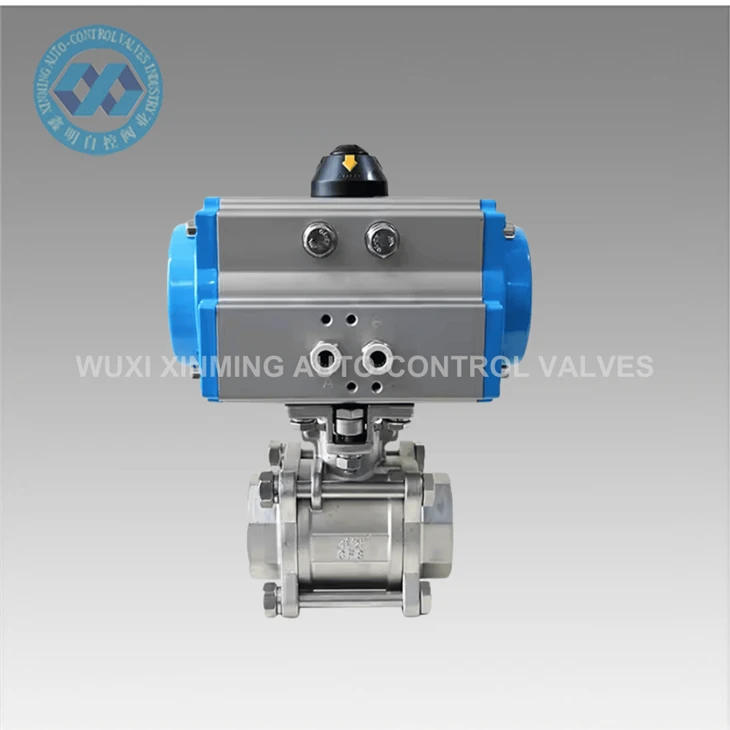
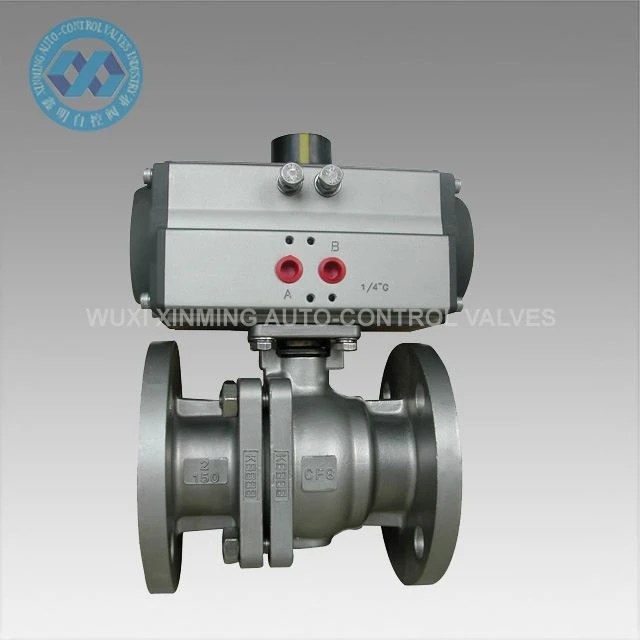
For applications that require high-temperature resistance, the Pneumatic threaded ball valve is a great choice. This valve is designed to withstand high temperatures and pressures, making it suitable for use in industries such as oil and gas, chemical processing, and power generation. The threaded connections make it easy to install and remove, and the pneumatic actuator provides reliable operation even in challenging environments.
In conclusion, the combination of a pneumatic actuator and a vacuum ball valve offers a highly efficient and reliable solution for flow control in a variety of industrial applications. The speed, precision, and durability of pneumatic actuators make them an ideal choice for use with vacuum ball valves, ensuring accurate and rapid flow regulation.
If you're in the market for a vacuum ball valve with a pneumatic actuator, I encourage you to reach out to me. I can provide you with more information about our products and help you choose the right valve and actuator combination for your specific needs. Whether you're looking for a standard valve or a custom solution, I'm here to assist you. So, don't hesitate to contact me for more details and let's start the conversation about your procurement requirements.
References
- Engineering Handbook of Valves and Actuators
- Industrial Pneumatic Systems: Design and Applications




