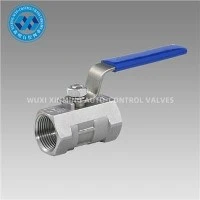
Hey there! As a supplier of pneumatic ball valves, I often get asked about how to adjust the opening and closing speed of these valves. It's a crucial aspect, especially when you want to optimize the performance of your systems. In this blog, I'll share some practical tips and insights on this topic.
First off, let's understand why adjusting the opening and closing speed matters. In different industrial applications, the speed at which a pneumatic ball valve opens or closes can have a significant impact. For instance, in a process where a sudden change in flow rate can cause issues like water hammer in a piping system, a slower opening or closing speed can prevent damage. On the other hand, in some high - speed processes, a faster valve operation might be required to maintain efficiency.
Factors Affecting the Opening and Closing Speed
There are several factors that can influence the opening and closing speed of a pneumatic ball valve. One of the most important ones is the air pressure supplied to the pneumatic actuator. The actuator is the part that drives the movement of the ball inside the valve. If you increase the air pressure, the actuator will generally move faster, resulting in a quicker opening or closing of the valve. Conversely, reducing the air pressure will slow down the operation.

Another factor is the size of the valve. Larger valves usually have more mass to move, so they might open and close more slowly compared to smaller ones, even with the same air pressure. The type of actuator also plays a role. Some actuators are designed for high - speed operation, while others are more focused on precision and slower movement.
Adjusting the Air Pressure
Adjusting the air pressure is one of the most straightforward ways to change the opening and closing speed. Most pneumatic systems have a pressure regulator that you can use to control the air pressure going to the valve actuator. To do this, you'll need to locate the pressure regulator in your pneumatic system. It's usually a device with a gauge and an adjustment knob.
Start by checking the current air pressure. You can do this by looking at the gauge on the pressure regulator. If you want to increase the opening and closing speed, slowly turn the adjustment knob clockwise to increase the pressure. Keep an eye on the gauge to make sure you don't exceed the recommended pressure for your valve and actuator. If you want to slow down the operation, turn the knob counter - clockwise to reduce the pressure.
It's important to make small adjustments and test the valve operation after each change. This way, you can find the optimal speed for your specific application.
Using Flow Control Valves
Flow control valves are another useful tool for adjusting the opening and closing speed of a pneumatic ball valve. These valves are installed in the air supply line to the actuator. They work by restricting the flow of air, which in turn controls the speed at which the actuator moves.
There are two main types of flow control valves: needle valves and throttle valves. Needle valves have a fine - threaded stem that allows for very precise adjustment of the air flow. Throttle valves, on the other hand, are more commonly used for general flow control and are easier to adjust.
To use a flow control valve, simply install it in the air supply line between the pressure regulator and the valve actuator. Then, adjust the valve to increase or decrease the air flow. Similar to adjusting the air pressure, make small changes and test the valve operation after each adjustment.

Actuator - Specific Adjustments
Some pneumatic actuators come with built - in adjustment mechanisms. For example, some rotary actuators have adjustable stops that can be used to limit the rotation angle, which can indirectly affect the opening and closing speed. Others may have adjustable damping or cushioning features that can slow down the movement at the end of the stroke.
If your actuator has these features, refer to the manufacturer's manual for instructions on how to make the adjustments. It's important to follow the guidelines carefully to ensure proper operation and avoid damaging the actuator.
Real - World Examples
Let's take a look at some real - world scenarios where adjusting the opening and closing speed of a pneumatic ball valve is crucial. In a food processing plant, a High Temperature Stainless Steel Bidirectional Pneumatic Actuator Sanitary Food Cut - off Ball Valve is used to control the flow of liquid ingredients. To prevent splashing and ensure accurate dosing, a slower opening and closing speed is required. By adjusting the air pressure and using a flow control valve, the plant operators can achieve the desired speed.

In a chemical processing plant, a Double Sleeve Polyvinyl Chloride Ball Valve is used to control the flow of corrosive chemicals. In this case, a faster opening and closing speed might be needed to respond quickly to changes in the process. The operators can increase the air pressure and adjust the flow control valve accordingly.

In an oil and gas pipeline, a Pneumatic Equipment WCB/SS304/SS316 V Type Pneumatic Flange/Welded/Thread Cast Forged Ball Valve is used to control the flow of oil or gas. Depending on the pipeline conditions and the requirements of the process, the opening and closing speed may need to be adjusted to prevent pressure surges and ensure safe operation.
Conclusion
Adjusting the opening and closing speed of a pneumatic ball valve is an important part of optimizing the performance of your industrial systems. By understanding the factors that affect the speed, such as air pressure, valve size, and actuator type, and using tools like pressure regulators and flow control valves, you can achieve the desired speed for your specific application.
If you're in the market for a pneumatic ball valve or need more advice on adjusting the opening and closing speed, don't hesitate to reach out. We're here to help you find the right solutions for your needs. Contact us for more information and let's start a conversation about your procurement requirements.
References
- Pneumatic Valve Handbook, Various Manufacturers
- Industrial Automation Textbooks
- Technical Papers on Fluid Control Systems