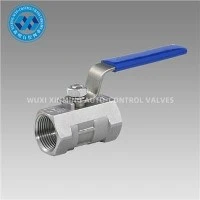
Selecting the right sanitary ball valve for high - temperature applications is a critical decision that can significantly impact the efficiency, safety, and longevity of your industrial processes. As a trusted sanitary ball valve supplier, I understand the complexities involved in this selection process. In this blog, I will guide you through the key factors to consider when choosing a sanitary ball valve for high - temperature settings.
Material Compatibility
The first and foremost consideration when choosing a sanitary ball valve for high - temperature applications is the material of the valve. High temperatures can cause materials to expand, deform, or even corrode, which can lead to valve failure. Therefore, it is essential to select materials that can withstand the specific temperature range of your application.
Stainless steel is a popular choice for high - temperature sanitary ball valves. It offers excellent corrosion resistance, high strength, and good thermal stability. For instance, 316L stainless steel is widely used in the food, beverage, and pharmaceutical industries due to its superior resistance to corrosion and ability to maintain its mechanical properties at elevated temperatures.
In addition to the body material, the ball and seat materials are also crucial. The ball should be made of a hard and wear - resistant material that can withstand the high - temperature and high - pressure conditions. Tungsten carbide or ceramic balls are often used in high - temperature applications as they have excellent hardness and wear resistance. The seat material should be able to form a tight seal with the ball even at high temperatures. PTFE (polytetrafluoroethylene) is a common seat material, but it has a relatively low melting point. For high - temperature applications, reinforced PTFE or other high - temperature polymers such as PEEK (polyether ether ketone) may be more suitable.
Temperature Rating
Each sanitary ball valve has a specific temperature rating, which indicates the maximum temperature at which the valve can operate safely and effectively. It is crucial to choose a valve with a temperature rating that exceeds the maximum temperature of your application. This provides a safety margin and ensures that the valve will not fail due to overheating.
When determining the temperature rating, you need to consider not only the process temperature but also any potential temperature spikes or fluctuations. For example, in some industrial processes, there may be short - term temperature surges during start - up or shutdown. A valve with a higher temperature rating can better withstand these transient conditions.
Pressure Rating
High - temperature applications often go hand in hand with high pressures. Therefore, it is essential to consider the pressure rating of the sanitary ball valve. The pressure rating indicates the maximum pressure that the valve can withstand without leaking or failing.
The pressure rating of a valve is affected by several factors, including the material, design, and size of the valve. When selecting a valve for high - temperature and high - pressure applications, you need to ensure that the valve's pressure rating is sufficient for your specific process conditions. A valve with an inadequate pressure rating may experience leakage, which can lead to product loss, safety hazards, and damage to the equipment.
Valve Design
The design of the sanitary ball valve also plays a crucial role in high - temperature applications. There are several types of ball valve designs, including floating ball valves and trunnion - mounted ball valves.
Floating ball valves are the most common type of ball valves. In a floating ball valve, the ball is not fixed and is free to move slightly within the valve body. This design allows the ball to be pushed against the seat by the fluid pressure, creating a tight seal. However, floating ball valves may not be suitable for very high - pressure and high - temperature applications as the ball may be more prone to deformation.

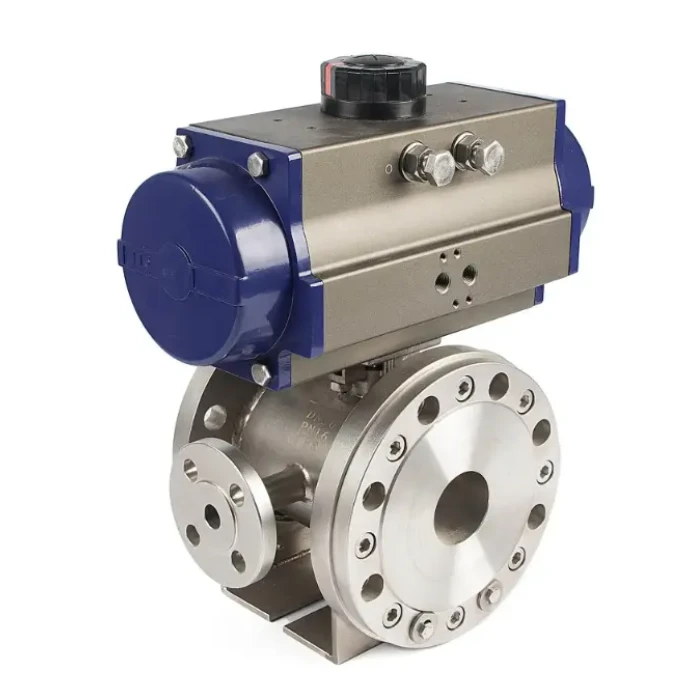
Trunnion - mounted ball valves, on the other hand, have a fixed ball that is supported by trunnions at the top and bottom. This design provides better stability and can withstand higher pressures and temperatures. Trunnion - mounted ball valves are often used in large - diameter and high - pressure applications.
Another important design consideration is the valve's end connections. Flanged connections are commonly used in high - temperature applications as they provide a strong and reliable connection. They can withstand high pressures and temperatures and are easy to install and maintain. You can explore our Flanged Stainless Steel Ball Valve for more details.
Actuation Type
The actuation type of the sanitary ball valve is another factor to consider. There are several types of actuators available, including manual, pneumatic, and electric actuators.
Manual actuators are the simplest and most cost - effective option. They are suitable for applications where the valve does not need to be operated frequently or where automation is not required. However, manual operation may not be practical in high - temperature environments as it can be difficult and dangerous for operators to access the valve.
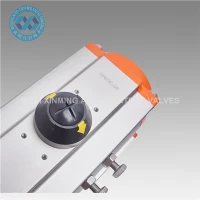
Pneumatic actuators are widely used in industrial applications as they offer fast and reliable operation. They are powered by compressed air and can be easily integrated into automated control systems. For high - temperature applications, you can consider our Pneumatic threaded ball valve, which is designed to withstand high temperatures and provide efficient operation.
Electric actuators are another option. They offer precise control and can be programmed to operate according to specific schedules or conditions. Electric actuators are suitable for applications where accurate positioning and control are required.
Hygiene and Cleanability
In sanitary applications, hygiene is of utmost importance. The valve should be easy to clean and sterilize to prevent the growth of bacteria and other contaminants. The design of the valve should minimize dead spaces where product can accumulate and provide smooth surfaces that are easy to clean.
Some sanitary ball valves are designed with a full - port or reduced - port configuration. Full - port valves have a larger flow path, which reduces pressure drop and makes it easier to clean the valve. Reduced - port valves, on the other hand, have a smaller flow path but are more compact and may be suitable for applications where space is limited.
Cost and Maintenance
Cost is always a consideration when choosing a sanitary ball valve. However, it is important not to compromise on quality for the sake of cost. A high - quality valve may have a higher initial cost but can save you money in the long run by reducing maintenance costs and downtime.
Maintenance requirements are also an important factor. A valve that is easy to maintain and repair can reduce downtime and increase the overall efficiency of your process. Look for valves that have easily accessible parts and come with a comprehensive maintenance manual.
Conclusion
Choosing the right sanitary ball valve for high - temperature applications requires careful consideration of several factors, including material compatibility, temperature and pressure ratings, valve design, actuation type, hygiene, and cost. As a sanitary ball valve supplier, we offer a wide range of high - quality valves that are designed to meet the specific needs of high - temperature applications. For example, our Stainless Steel Flanged Floating Jacketed Ball Valve For Investment Casting is a great option for high - temperature and high - pressure applications.
If you are in the process of selecting a sanitary ball valve for your high - temperature application, I encourage you to contact us for more information and to discuss your specific requirements. Our team of experts is ready to assist you in making the right choice and ensuring the success of your project.
References
- ASME B16.34 - Valve Flanges and Fittings - Flanged, Threaded, and Welding End
- ISO 5208 - Industrial valves - Pressure testing of valves
- API 6D - Pipeline Valves - Specification for Pipeline Valves