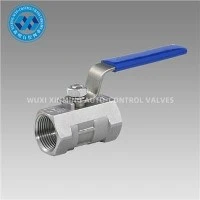
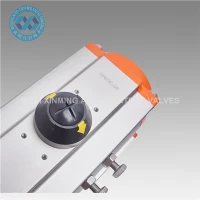
When it comes to industrial automation and control systems, pneumatic actuators play a crucial role. They are devices that convert compressed air energy into mechanical motion, and they come in two primary types: rotary and linear. As a pneumatic actuator supplier, I often encounter customers who are unsure whether to choose a pneumatic rotary actuator or a linear actuator for their specific applications. In this blog post, I'll delve into the factors you should consider when making this decision.
Understanding the Basics: Rotary vs. Linear Actuators
Before we discuss the selection process, it's essential to understand the fundamental differences between pneumatic rotary and linear actuators.
A pneumatic rotary actuator is designed to produce a rotational or angular movement. It typically rotates through a specific angle, commonly 90 degrees or 180 degrees, although other angles are also available. Rotary actuators are ideal for applications where a turning or twisting motion is required, such as opening and closing valves, operating conveyor systems, or rotating workpieces in manufacturing processes.
On the other hand, a pneumatic linear actuator generates a straight-line or linear motion. It moves in a single axis, either pushing or pulling an object. Linear actuators are commonly used in applications where a linear displacement is needed, such as lifting, pushing, or pulling loads, adjusting the position of components, or controlling the movement of slides and gates.
Factors to Consider When Choosing Between Rotary and Linear Actuators
1. Motion Requirements
The most critical factor in choosing between a rotary and a linear actuator is the type of motion required for your application. If your task involves rotating an object, a rotary actuator is the obvious choice. For example, in a process where you need to open and close a Sanitary Stainless Steel 304 316 Ball Valve, a rotary actuator can provide the necessary 90-degree rotation to control the flow of fluids.
Conversely, if your application demands a straight-line movement, a linear actuator is more suitable. For instance, in a packaging machine, a linear actuator can be used to push products onto a conveyor belt or to adjust the position of a sealing mechanism.
2. Load Capacity
Another important consideration is the load capacity of the actuator. Both rotary and linear actuators come in various sizes and configurations, each with its own load-bearing capabilities.
Rotary actuators are typically rated based on the torque they can generate. Torque is the rotational force that causes an object to rotate around an axis. When selecting a rotary actuator, you need to ensure that it can generate enough torque to overcome the resistance of the load and perform the required rotation.
Linear actuators, on the other hand, are rated based on the force they can exert in a linear direction. This force is measured in pounds or newtons. You should choose a linear actuator with a force rating that is sufficient to move the load without overloading the actuator.
3. Speed and Precision
The speed and precision requirements of your application also play a significant role in the actuator selection process.
Rotary actuators can achieve relatively high speeds of rotation, making them suitable for applications that require rapid movement. However, the precision of rotation may be limited, especially in high-speed applications. If your application requires precise angular positioning, you may need to consider additional feedback devices or control systems.
Linear actuators can provide precise linear motion, making them ideal for applications that require accurate positioning. They can be controlled to move at a specific speed and stop at a precise location. However, the maximum speed of linear actuators is generally lower than that of rotary actuators.
4. Space Constraints
The available space in your application is another factor to consider. Rotary actuators typically have a more compact design, especially when compared to linear actuators with long strokes. If space is limited, a rotary actuator may be a better choice.
However, if you have sufficient space and require a long linear displacement, a linear actuator may be more appropriate. Linear actuators can be designed with different stroke lengths to meet the specific requirements of your application.
5. Environmental Conditions
The environmental conditions in which the actuator will operate are also important. Pneumatic actuators are generally robust and can withstand a wide range of environmental conditions. However, some applications may require actuators that are specifically designed to operate in harsh environments.
For example, in industries such as food processing, pharmaceuticals, or chemical manufacturing, the actuators may need to be made of corrosion-resistant materials to prevent contamination. Our Harsh Conditions Demand Our Reliability Pneumatic Actuators are designed to meet these requirements, with features such as stainless steel construction and sealed enclosures to protect against dust, moisture, and chemicals.
6. Cost
Cost is always a consideration when making any purchasing decision. The cost of pneumatic actuators can vary depending on factors such as size, load capacity, speed, precision, and additional features.
In general, rotary actuators tend to be less expensive than linear actuators, especially for applications with lower load requirements. However, if your application requires a high level of precision or a long stroke, the cost of a linear actuator may be justified.
Application Examples
Rotary Actuator Applications
- Valve Control: Rotary actuators are widely used in valve control applications, such as in water treatment plants, oil and gas pipelines, and chemical processing facilities. They can provide the necessary rotational motion to open and close valves, controlling the flow of fluids and gases.
- Conveyor Systems: In conveyor systems, rotary actuators can be used to rotate conveyor belts, transfer products between different conveyors, or position workpieces for further processing.
- Robotics: Rotary actuators are also used in robotics to provide the joints with the necessary rotational motion. They can be used to control the movement of robotic arms, grippers, and other components.
Linear Actuator Applications
- Material Handling: Linear actuators are commonly used in material handling applications, such as lifting and moving heavy loads, pushing products onto shelves, or adjusting the height of workstations.
- Automotive Manufacturing: In automotive manufacturing, linear actuators are used to control the movement of assembly lines, adjust the position of tools and fixtures, and perform other linear motion tasks.
- Medical Equipment: Linear actuators are also used in medical equipment, such as hospital beds, patient lifts, and diagnostic machines. They can provide the precise linear motion required for these applications.
Conclusion
Choosing between a pneumatic rotary and linear actuator depends on several factors, including motion requirements, load capacity, speed and precision, space constraints, environmental conditions, and cost. As a pneumatic actuator supplier, I can help you evaluate your specific application needs and recommend the most suitable actuator for your project.
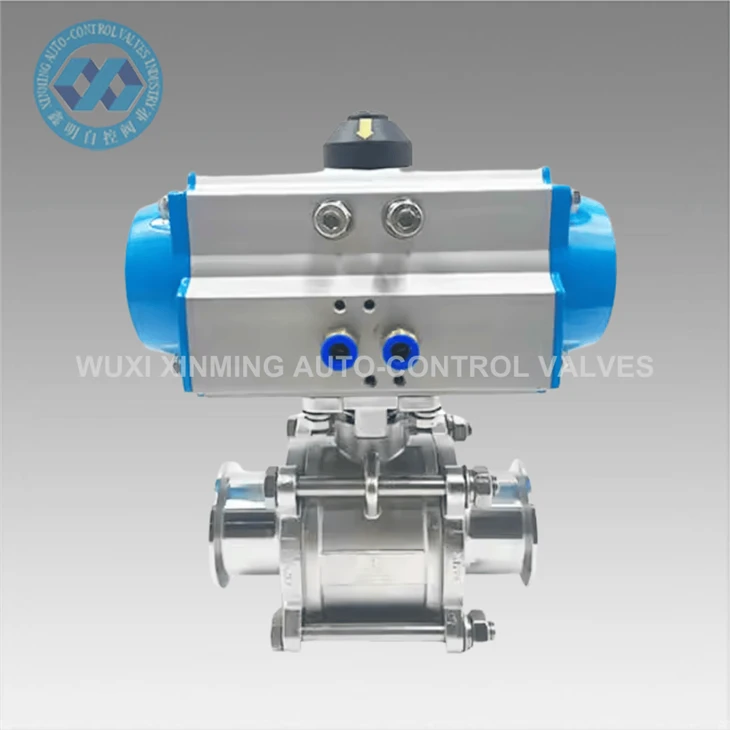
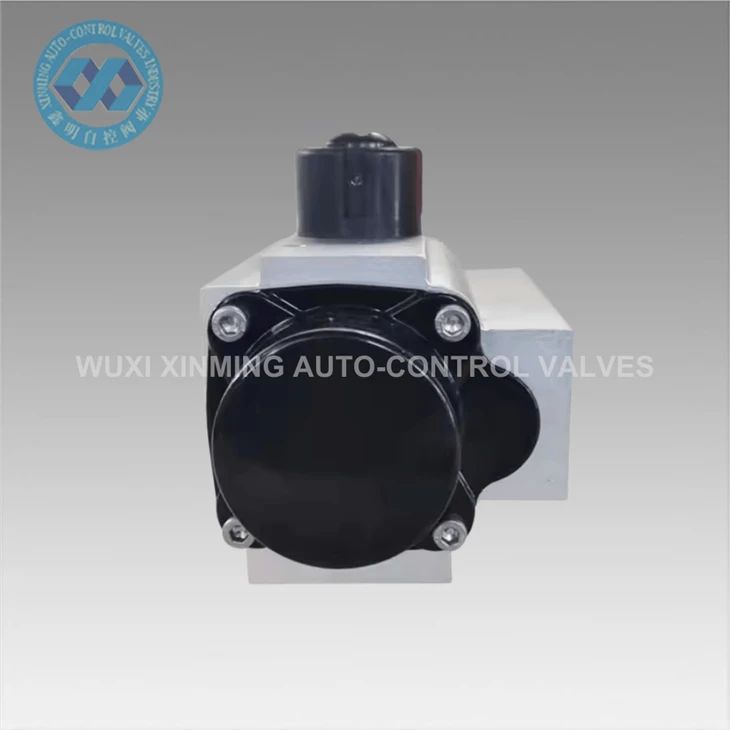
Our Versatile Pneumatic Actuators For Diverse Automation Needs are designed to meet a wide range of industrial applications, offering high performance, reliability, and cost-effectiveness. If you have any questions or need assistance in selecting the right actuator for your application, please don't hesitate to contact us. We look forward to discussing your requirements and helping you find the best solution for your automation needs.
References
- "Pneumatic Actuators: Principles, Types, and Applications." Industrial Automation Handbook.
- "Selection Guide for Pneumatic Actuators." Pneumatic Component Manufacturer's Association.
- "Design Considerations for Pneumatic Actuator Systems." Journal of Fluid Power and Motion Control.