Controlling the opening and closing of a vacuum ball valve is a crucial aspect in various industrial applications, especially when dealing with systems that require precise regulation of fluid or gas flow under vacuum conditions. As a trusted Vacuum Ball Valve supplier, I am well - versed in the mechanisms and techniques involved in operating these valves effectively. In this blog, I will delve into the different methods and considerations for controlling the opening and closing of vacuum ball valves.


Understanding the Basics of Vacuum Ball Valves
Before we discuss the control methods, it's essential to understand what a vacuum ball valve is. A vacuum ball valve is a type of valve that uses a spherical disc (the ball) to control the flow of media. The ball has a hole (bore) through the center, and when the bore is aligned with the pipeline, the valve is open, allowing the media to flow. When the ball is rotated 90 degrees, the bore is perpendicular to the pipeline, and the valve is closed, blocking the flow.
Vacuum ball valves are commonly used in industries such as semiconductor manufacturing, vacuum furnaces, and chemical processing, where maintaining a vacuum environment and controlling the flow of gases or liquids accurately are of utmost importance.
Manual Control
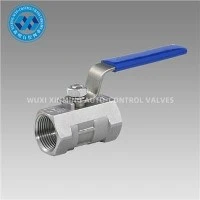
The simplest way to control the opening and closing of a vacuum ball valve is through manual operation. Manual valves are equipped with a handle or a lever that can be turned by hand. This method is straightforward and cost - effective, making it suitable for applications where the valve does not need to be adjusted frequently or where automation is not required.
To open a manually operated vacuum ball valve, you simply turn the handle or lever in the direction indicated for opening (usually a counter - clockwise turn). To close the valve, you turn it in the opposite direction (clockwise). Manual valves are easy to install and maintain, and they provide a direct and tactile way of controlling the valve. However, they have limitations in terms of precision and speed of operation, especially in large - scale industrial applications.
Pneumatic Control
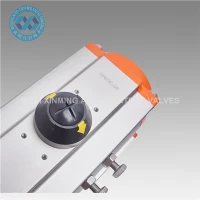
Pneumatic control is a popular method for operating vacuum ball valves in industrial settings. Pneumatic actuators use compressed air to generate the force needed to open and close the valve. These actuators are connected to the valve stem and can be controlled remotely using a control system.
There are two main types of pneumatic actuators: single - acting and double - acting. Single - acting actuators use compressed air to move the valve in one direction (either open or close), and a spring is used to return the valve to its original position. Double - acting actuators use compressed air to move the valve in both directions, providing more precise control.
The advantage of pneumatic control is its speed and reliability. Pneumatic actuators can open and close the valve quickly, making them suitable for applications where rapid response is required. They are also relatively simple to install and maintain, and they can be integrated into existing control systems easily. For example, our 3 Way Ball Valve With 180 Degree Turn Pneumatic Actuator is designed to provide efficient and precise control in complex flow systems.
Electric Control
Electric control is another option for controlling vacuum ball valves. Electric actuators use an electric motor to drive the valve stem, allowing for precise control of the valve position. Electric actuators can be programmed to open and close the valve at specific times or in response to certain signals.
One of the main advantages of electric control is its accuracy. Electric actuators can be controlled with high precision, making them suitable for applications where precise flow regulation is required. They are also quiet and do not require a compressed air supply, which can be an advantage in some environments. However, electric actuators are generally more expensive than pneumatic actuators, and they may require more complex wiring and control systems.
Hydraulic Control
Hydraulic control is used in applications where high - force operation is required. Hydraulic actuators use a hydraulic fluid (usually oil) to generate the force needed to open and close the valve. The hydraulic system consists of a pump, a reservoir, and control valves that regulate the flow of the hydraulic fluid.
Hydraulic control offers high - power operation and precise control. It can handle large - sized valves and high - pressure applications. However, hydraulic systems are more complex and expensive than pneumatic or electric systems. They also require regular maintenance to prevent leaks and ensure proper operation.
Considerations for Control
When choosing a control method for a vacuum ball valve, several factors need to be considered:
- Application Requirements: The specific requirements of the application, such as the frequency of operation, the need for rapid response, and the level of precision required, will determine the most suitable control method.
- Cost: The cost of the control system, including the actuator, the control valves, and the installation and maintenance costs, should be taken into account.
- Environment: The operating environment, such as the presence of dust, moisture, or corrosive substances, can affect the performance and lifespan of the control system.
- Compatibility: The control system should be compatible with the existing equipment and control infrastructure in the plant.
Our Product Range
As a Vacuum Ball Valve supplier, we offer a wide range of vacuum ball valves with different control options. Our 3 Way Ball Valve is designed to provide flexible flow control in complex piping systems. It can be equipped with manual, pneumatic, electric, or hydraulic actuators according to your specific needs.
We also have 1PC Thread Ball Valve, which is a compact and reliable valve suitable for small - scale applications. These valves can be easily installed and are available with different control mechanisms to meet your requirements.
Contact Us for Purchase and Consultation
If you are looking for high - quality vacuum ball valves and professional advice on valve control, we are here to help. Our team of experts can assist you in choosing the right valve and control system for your application. Whether you need a simple manual valve or a complex automated control system, we have the solutions to meet your needs. Contact us today to start the procurement process and discuss your requirements in detail.
References
- Valve Handbook, 4th Edition, by J. H. Perry and C. W. Green
- Industrial Valves: Selection, Operation, and Maintenance, by R. A. Smith