Hey there! As a supplier of 110V solenoid valves, I often get asked about the flow rate of these valves. So, I thought I'd take a few minutes to break it down for you and give you a better understanding of what goes into determining the flow rate of a 110V solenoid valve.
First off, let's talk about what a solenoid valve is. A solenoid valve is an electromechanically operated valve that uses an electromagnetic solenoid to control the flow of fluid or gas. When an electrical current is applied to the solenoid, it creates a magnetic field that moves a plunger or piston, which in turn opens or closes the valve. Solenoid valves are used in a wide range of applications, from industrial automation to home appliances.
Now, let's get to the main question: what is the flow rate of a 110V solenoid valve? Well, the flow rate of a solenoid valve depends on several factors, including the size of the valve, the pressure of the fluid or gas, and the type of valve.
The size of the valve is one of the most important factors in determining the flow rate. Generally speaking, the larger the valve, the higher the flow rate. This is because a larger valve has a larger opening, which allows more fluid or gas to pass through. For example, a 1/2-inch solenoid valve will have a higher flow rate than a 1/4-inch solenoid valve.
The pressure of the fluid or gas is another important factor. The higher the pressure, the higher the flow rate. This is because the pressure forces the fluid or gas through the valve at a faster rate. However, it's important to note that there is a limit to how much pressure a solenoid valve can handle. If the pressure is too high, it can damage the valve or cause it to malfunction.
The type of valve also plays a role in determining the flow rate. There are several different types of solenoid valves, including direct-acting, pilot-operated, and proportional valves. Direct-acting solenoid valves are the simplest type of valve and are typically used for low-flow applications. Pilot-operated solenoid valves are more complex and are used for high-flow applications. Proportional solenoid valves are used to control the flow rate of a fluid or gas in a precise manner.
So, how do you determine the flow rate of a 110V solenoid valve? Well, the best way to determine the flow rate is to consult the manufacturer's specifications. The manufacturer will typically provide a flow rate chart or table that shows the flow rate of the valve at different pressures and temperatures. You can also use a flow meter to measure the actual flow rate of the valve.
At our company, we offer a wide range of 110V solenoid valves with different flow rates to meet the needs of our customers. Whether you need a valve for a low-flow application or a high-flow application, we have the right valve for you.
One of our popular products is the Pneumatic Air Control Solenoid Valve Fast Response Type. This valve is designed for fast response times and is ideal for applications where quick opening and closing of the valve is required. It has a high flow rate and is available in a variety of sizes.
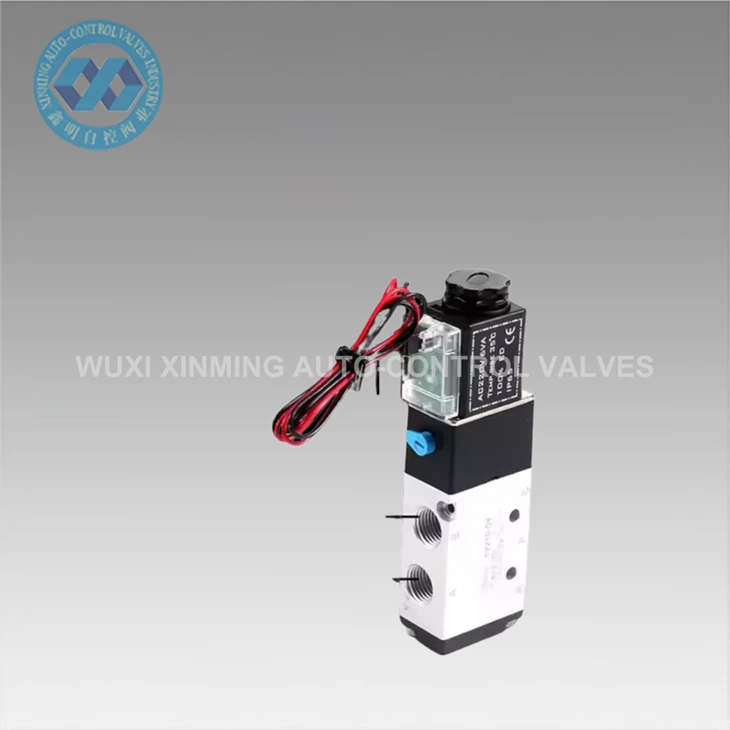

Another popular product is the Durable Pneumatic Solenoid Valve. This valve is built to last and is designed for use in harsh environments. It has a high flow rate and is available in a variety of sizes and configurations.
We also offer the Pneumatic Solenoid Valve 5 Way 2-position Control Air 12V 24V. This valve is used to control the flow of air in a pneumatic system. It has a high flow rate and is available in a variety of voltages.
If you're in the market for a 110V solenoid valve, we'd love to hear from you. Our team of experts can help you choose the right valve for your application and provide you with all the information you need to make an informed decision. Whether you're a small business or a large corporation, we have the products and services to meet your needs.
In conclusion, the flow rate of a 110V solenoid valve depends on several factors, including the size of the valve, the pressure of the fluid or gas, and the type of valve. If you're in the market for a 110V solenoid valve, be sure to consult the manufacturer's specifications and choose a valve that meets your specific needs. And if you have any questions or need help choosing the right valve, don't hesitate to contact us. We're here to help!
References
- "Solenoid Valve Basics." Emerson Automation Solutions.
- "Understanding Solenoid Valves." Parker Hannifin Corporation.
- "Flow Rate Calculation for Solenoid Valves." ASCO Numatics.