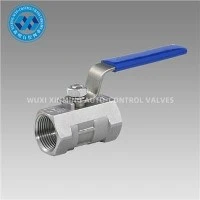
Hey there! As a thread ball valve supplier, I've seen my fair share of issues when it comes to ensuring a tight shut-off. It's a crucial aspect, whether you're dealing with industrial applications or just some plumbing work at home. In this blog, I'll share some tips and tricks on how to make sure your thread ball valve shuts off tight every time.


First off, let's talk about what a thread ball valve is. It's a type of valve that uses a ball with a hole in the middle to control the flow of fluid. When the ball is turned so that the hole aligns with the flow, the valve is open. When it's turned 90 degrees, the solid part of the ball blocks the flow, and the valve is closed. Sounds simple, right? Well, getting that tight shut-off can be a bit more complicated.
Choosing the Right Valve
The first step in ensuring a tight shut-off is to choose the right valve for the job. You need to consider factors like the type of fluid you're dealing with, the pressure and temperature of the system, and the size of the pipeline. For example, if you're working with corrosive fluids, you'll want a valve made from a material that can withstand that kind of environment. Stainless steel is a great option in many cases.
We offer a wide range of thread ball valves to suit different needs. Check out our Stainless Steel Flanged Floating Jacketed Ball Valve For Investment Casting. It's designed for high-pressure and high-temperature applications, and the jacketed design provides extra protection. Another option is our Pneumatic Explosion-Proof Ball Valve, which is ideal for hazardous environments where explosion protection is a must.
Proper Installation
Once you've chosen the right valve, proper installation is key. Here are some things to keep in mind:
- Clean the Pipeline: Before installing the valve, make sure the pipeline is clean and free of debris. Any dirt or particles can get in the way and prevent a tight seal.
- Use the Right Sealant: Depending on the type of valve and the application, you may need to use a sealant on the threads. Make sure you choose a sealant that's compatible with the fluid and the valve material.
- Tighten the Valve Correctly: Don't over-tighten or under-tighten the valve. Over-tightening can damage the valve or the pipeline, while under-tightening can lead to leaks. Follow the manufacturer's instructions for the correct torque.
Maintenance and Inspection
Regular maintenance and inspection are essential for ensuring a tight shut-off over time. Here's what you can do:
- Lubricate the Valve: Some valves may require lubrication to operate smoothly. Check the manufacturer's recommendations and use the appropriate lubricant.
- Inspect the Seals: Over time, the seals in the valve can wear out. Check the seals regularly for signs of damage or wear, and replace them if necessary.
- Test the Valve: Periodically test the valve to make sure it's shutting off properly. You can do this by closing the valve and checking for any leaks.
Troubleshooting
Even with proper installation and maintenance, you may still encounter issues with a tight shut-off. Here are some common problems and how to fix them:
- Leaking Valve: If the valve is leaking, it could be due to a damaged seal, a loose connection, or a problem with the valve itself. Check the seals and connections first, and if that doesn't solve the problem, you may need to replace the valve.
- Difficult to Turn: If the valve is difficult to turn, it could be due to a lack of lubrication, a build-up of debris, or a problem with the valve mechanism. Try lubricating the valve first, and if that doesn't work, you may need to clean or repair the valve.
Conclusion
Ensuring a tight shut-off of a thread ball valve is crucial for the safety and efficiency of your system. By choosing the right valve, installing it properly, maintaining it regularly, and troubleshooting any issues, you can ensure that your valve works as it should.
If you have any questions or need help choosing the right thread ball valve for your application, don't hesitate to reach out. We're here to help you find the best solution for your needs. Whether you're looking for a Stainless Steel Flanged Floating Jacketed Ball Valve For Investment Casting, a Pneumatic Explosion-Proof Ball Valve, or a Thin Ball Valve, we've got you covered.
Let's start a conversation and find the perfect valve for your project.
References
- Valve Handbook, various editions
- Industry standards and guidelines for valve installation and maintenance