Selecting a pneumatic actuator can be a bit of a head - scratcher, but don't worry! As a pneumatic actuator supplier, I'm here to walk you through the key factors to consider so you can make the best choice for your needs.
Understanding Pneumatic Actuators
First off, let's quickly go over what pneumatic actuators are. They're devices that use compressed air to create mechanical motion. They're commonly used to control valves and other equipment in various industries like manufacturing, oil and gas, and food processing.

1. Application Requirements
The very first thing you gotta think about is your application. What is the actuator going to be used for? Is it to operate a ball valve, a butterfly valve, or something else? Different applications have different demands.
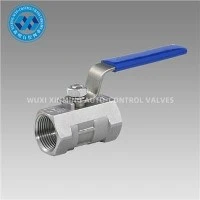
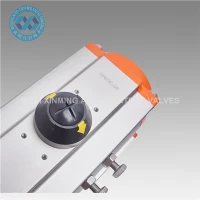
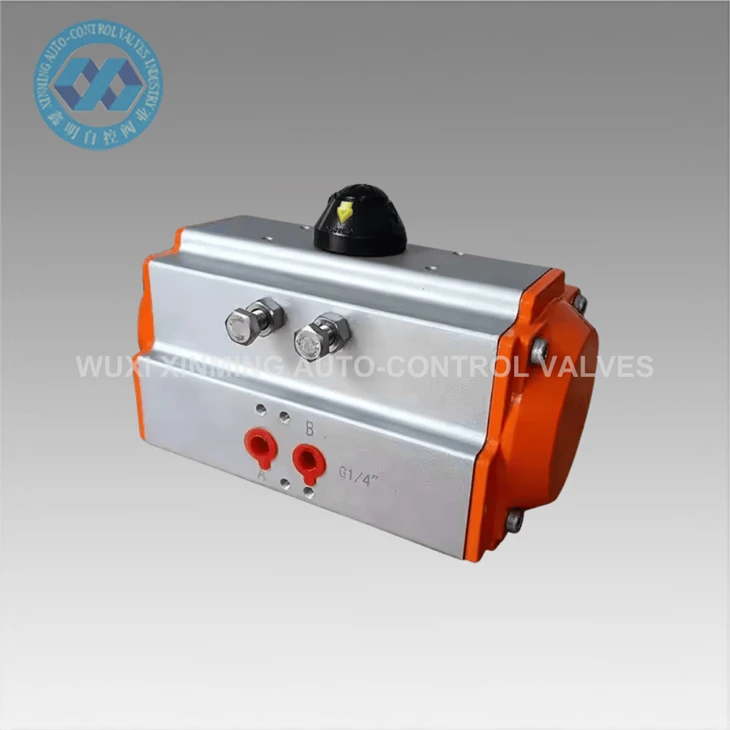
For example, if you're dealing with a ball or butterfly valve, a Quarter Turn Air Actuator For Ball/butterfly Valve Double Acting Pneumatic Rotary Actuator might be the right fit. These actuators are designed to rotate a valve through a 90 - degree turn, which is perfect for quickly opening or closing a ball or butterfly valve.
2. Torque Requirements
Torque is a measure of the rotational force that the actuator needs to apply to operate the valve or equipment. You need to accurately calculate the torque requirements for your application. This depends on factors like the valve size, the type of valve (e.g., gate valve, globe valve), and the fluid pressure.
If the torque is too low, the actuator won't be able to open or close the valve properly. On the other hand, if it's too high, you're just wasting money on an over - powered actuator. As a supplier, I can help you analyze your system and figure out the exact torque requirements.
3. Actuator Type
There are several types of pneumatic actuators, and each has its own pros and cons. The most common types are rack - and - pinion and scotch - yoke actuators.
A Rack And Pinion Pneumatic Actuator is simple, reliable, and cost - effective. It uses a rack (a linear gear) and a pinion (a circular gear) to convert linear motion into rotational motion. These actuators are widely used in a variety of applications because they're easy to install and maintain.
Scotch - yoke actuators, on the other hand, are more complex but can provide higher torque output. They're often used in applications where high torque is required, such as large industrial valves.
4. Operating Pressure
The operating pressure of the actuator is another crucial factor. You need to know the pressure of the compressed air supply in your system. Most pneumatic actuators can operate within a certain pressure range, typically between 30 and 120 psi (pounds per square inch).
If the operating pressure is outside the actuator's specified range, it can lead to poor performance or even damage to the actuator. So, make sure to choose an actuator that can handle the pressure of your air supply.
5. Mounting Configuration
How the actuator is going to be mounted is also important. The mounting configuration should be compatible with your valve or equipment. There are different mounting styles, such as flange - mounted, direct - mounted, and bracket - mounted.
For example, if you're using a valve with a standard flange connection, you'll want to choose an actuator with a compatible flange mounting option. This ensures a secure and proper connection between the actuator and the valve.
6. Environmental Conditions
The environment in which the actuator will operate plays a big role in the selection process. If the actuator is going to be used in a harsh environment, such as a chemical plant or an outdoor area with high humidity or extreme temperatures, you need to choose an actuator that can withstand these conditions.
Some actuators are designed with special coatings or materials to resist corrosion, dust, and moisture. Make sure to consider the environmental factors when making your decision.
7. Control Options
There are different ways to control a pneumatic actuator. You can use manual controls, such as hand - operated valves, or automated controls, such as solenoid valves and programmable logic controllers (PLCs).
If you need precise control of the actuator's position and speed, an automated control system might be the way to go. For simpler applications, a manual control might be sufficient.
8. Cost and Maintenance
Last but not least, you have to think about the cost and maintenance of the actuator. The initial cost of the actuator is important, but you also need to consider the long - term maintenance costs.
Some actuators are more expensive upfront but require less maintenance over time. Others might be cheaper initially but have higher maintenance requirements. As a supplier, I can help you find a balance between cost and maintenance to get the best value for your money.
Making the Right Choice
Selecting a pneumatic actuator is all about finding the right balance between your application requirements, performance, and cost. By considering all the factors I've mentioned above, you can narrow down your options and choose the actuator that's perfect for your needs.
If you're still not sure which pneumatic actuator is right for you, don't hesitate to reach out. We're here to help you with the selection process, answer any questions you might have, and provide you with high - quality pneumatic actuators. For instance, take a look at our Ball Valve With High Quality AT25/32/40 Double Acting Pneumatic Actuator, which combines great performance and reliability.
Whether you're a small business or a large industrial company, we can work with you to find the best solution. Contact us today to start the procurement negotiation process and get the pneumatic actuator that will take your operations to the next level.
References
- Sturm, T. B. (2016). Industrial Valve Handbook: A Guide for Installing, Operating, and Maintaining Valves in Commercial and Industrial Applications. McGraw - Hill Education.
- Tompkins, J. A. (2013). Pneumatics: A Technician's and Engineer's Guide. Routledge.