

As a supplier of PVC ball valves, I am often asked about the types of chemicals these valves are resistant to. PVC, or polyvinyl chloride, is a widely used thermoplastic polymer known for its durability, chemical resistance, and cost - effectiveness. PVC ball valves are popular in various industries due to their ability to handle a range of chemicals.
1. Acid Resistance
PVC ball valves exhibit good resistance to many acids. Hydrochloric acid (HCl), a strong acid commonly used in industries such as metal pickling, food processing, and chemical synthesis, can be effectively handled by PVC ball valves. In concentrations typically used in industrial applications (up to about 37% at room temperature), PVC shows excellent resistance. The non - reactive nature of PVC prevents the acid from corroding the valve body and internal components, ensuring long - term performance and reliable operation.
Sulfuric acid (H₂SO₄) is another important industrial acid. PVC ball valves can withstand dilute sulfuric acid solutions (up to about 50% concentration at room temperature). However, as the concentration and temperature increase, the chemical resistance of PVC may decrease. High - concentration sulfuric acid is a strong oxidizing agent and can cause degradation of PVC over time. For applications involving more concentrated sulfuric acid, alternative valve materials may be more suitable.
Phosphoric acid (H₃PO₄) is widely used in the fertilizer, food, and beverage industries. PVC ball valves offer good resistance to phosphoric acid in a wide range of concentrations and temperatures commonly encountered in these applications. They can handle phosphoric acid solutions up to about 85% concentration at room temperature without significant chemical attack.
2. Alkali Resistance
PVC ball valves also have a certain degree of resistance to alkalis. Sodium hydroxide (NaOH), a strong base used in many industrial processes such as soap and detergent manufacturing, paper production, and water treatment, can be managed by PVC ball valves. In relatively low - concentration solutions (up to about 20% at room temperature), PVC shows good resistance. However, at higher concentrations and elevated temperatures, the performance of PVC may be affected. The hydroxide ions in the solution can react with the PVC polymer, leading to swelling and potential loss of mechanical properties.
Potassium hydroxide (KOH) is similar to sodium hydroxide in its chemical properties. PVC ball valves can handle low - concentration potassium hydroxide solutions, but like with sodium hydroxide, higher concentrations and temperatures require careful consideration.

3. Salt Solutions
Many salt solutions are well - tolerated by PVC ball valves. Sodium chloride (NaCl), the common table salt, is widely used in industries such as water treatment, food processing, and chemical manufacturing. PVC ball valves can handle sodium chloride solutions in a wide range of concentrations without significant corrosion. Other salts such as calcium chloride (CaCl₂), magnesium chloride (MgCl₂), and potassium chloride (KCl) also pose little threat to PVC ball valves under normal operating conditions.
4. Organic Chemicals
PVC ball valves have varying degrees of resistance to organic chemicals. Alcohols such as methanol, ethanol, and isopropanol are commonly used in laboratories, chemical synthesis, and the pharmaceutical industry. PVC ball valves generally offer good resistance to these alcohols in low - to - moderate concentrations at room temperature. However, some organic solvents like acetone, benzene, and toluene can cause swelling and softening of PVC. These solvents have strong solvating properties and can penetrate the PVC polymer, disrupting its molecular structure and reducing its mechanical strength.
5. Other Chemicals
PVC ball valves are also resistant to many other chemicals such as carbon dioxide (CO₂) in gas or solution form. In water treatment applications, where carbon dioxide is used to adjust the pH of water, PVC ball valves can be used to control the flow of carbonated water. Chlorine, which is widely used for water disinfection, can be handled by PVC ball valves in low - concentration solutions. However, high - concentration chlorine can cause oxidation of PVC, so proper selection and monitoring are required.
It's important to note that the chemical resistance of PVC ball valves can be affected by factors such as temperature, pressure, and the duration of exposure. Higher temperatures generally accelerate chemical reactions and can reduce the chemical resistance of PVC. Similarly, high pressures can also have an impact on the valve's performance and integrity.
When considering the use of PVC ball valves in a specific chemical application, it is recommended to refer to chemical resistance charts provided by valve manufacturers or conduct small - scale tests. These tests can help determine the suitability of PVC ball valves under the actual operating conditions.
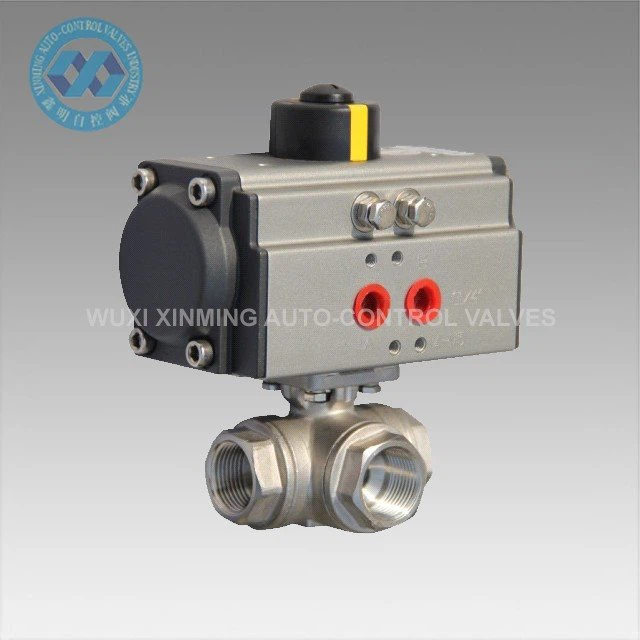
If you are looking for high - quality PVC ball valves or other types of ball valves, we also offer a wide range of products. For example, we have the Pneumatic Stainless Steel 3 Way Ball Valve, which is suitable for applications requiring precise flow control in multiple directions. Our Pneumatic Actuator WCB Flange Ball Valve is designed for applications where a flanged connection is needed, providing a secure and reliable installation. And our Pneumatic Ball Valve offers efficient and automated flow control.
If you have any questions about our products or need assistance in selecting the right valve for your chemical application, please feel free to contact us for a consultation. We are committed to providing you with the best valve solutions to meet your specific needs.
References
- "Handbook of Chemical Resistance of Plastics and Elastomers"
- Manufacturer's technical data sheets on PVC ball valves
- Industry standards and guidelines related to valve selection for chemical applications




