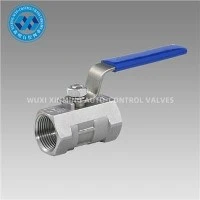
Hey there! As a supplier of 220V Solenoid Valves, I often get asked about how to select the right pipe size for these valves. It's a crucial decision that can significantly impact the performance and efficiency of your system. So, I thought I'd share some insights on this topic.
Understanding the Basics
First off, let's talk about what a 220V solenoid valve is. A 220V Solenoid Valve is an electromechanically operated valve that uses an electric current to control the flow of liquids or gases. These valves are commonly used in various industries, including industrial automation, HVAC systems, and water treatment plants.
The pipe size you choose for your solenoid valve depends on several factors. The most important ones are the flow rate, pressure, and the type of fluid or gas you're dealing with.
Flow Rate
The flow rate is the amount of fluid or gas that passes through the valve per unit of time. It's usually measured in gallons per minute (GPM) or cubic meters per hour (m³/h). To determine the right pipe size based on the flow rate, you need to know the maximum flow rate your system requires.
If you choose a pipe that's too small, it can restrict the flow and cause a drop in pressure. This can lead to reduced performance and even damage to the valve over time. On the other hand, if you choose a pipe that's too large, it can be more expensive and may not provide the necessary velocity for proper operation.
To calculate the required pipe size based on the flow rate, you can use the following formula:
[Q = A \times V]
Where:
- (Q) is the flow rate (in GPM or m³/h)
- (A) is the cross - sectional area of the pipe (in square inches or square meters)
- (V) is the velocity of the fluid or gas (in feet per second or meters per second)
The velocity of the fluid or gas is an important factor. For most applications, a velocity of 3 - 8 feet per second (0.9 - 2.4 meters per second) is recommended. This ensures proper flow without causing excessive noise or erosion.
Let's say you have a flow rate of 10 GPM and you want to maintain a velocity of 5 feet per second. First, you need to convert the flow rate to cubic feet per second:
[10 \text{ GPM}=\frac{10}{448.83} \text{ ft³/s}\approx0.0223 \text{ ft³/s}]
Using the formula (Q = A\times V), we can solve for (A):
[A=\frac{Q}{V}=\frac{0.0223}{5}=0.00446 \text{ ft²}]
The cross - sectional area of a circular pipe is given by (A=\frac{\pi d^{2}}{4}), where (d) is the diameter of the pipe. Solving for (d):
[d=\sqrt{\frac{4A}{\pi}}=\sqrt{\frac{4\times0.00446}{\pi}}\approx0.075 \text{ ft}]
Converting to inches, (d = 0.075\times12 = 0.9) inches. So, you'd probably want to choose a 1 - inch pipe.


Pressure
The pressure in your system also plays a role in pipe size selection. Higher pressures require thicker - walled pipes to prevent leaks and failures. When the pressure is high, a smaller pipe may be able to handle the same flow rate as a larger pipe at lower pressure.
You need to consider both the static pressure (the pressure when the fluid or gas is not flowing) and the dynamic pressure (the pressure when the fluid or gas is flowing). Make sure the pipe you choose can withstand the maximum pressure in your system.
Type of Fluid or Gas
The type of fluid or gas you're using can affect the pipe size selection as well. For example, if you're dealing with a viscous fluid, you may need a larger pipe to ensure proper flow. Viscous fluids have a higher resistance to flow, so a larger cross - sectional area can help reduce the pressure drop.
On the other hand, if you're using a gas, you need to consider its compressibility. Gases can expand and contract, so the pipe size needs to be selected to accommodate these changes.
Other Considerations
In addition to the flow rate, pressure, and type of fluid or gas, there are a few other things to keep in mind.
- Fittings and Connections: The type of fittings and connections you use can also impact the performance of the system. Make sure they are compatible with the pipe size and the solenoid valve.
- Future Expansion: If you plan to expand your system in the future, it may be a good idea to choose a slightly larger pipe size to accommodate the increased flow rate.
Our Product Range
We offer a wide range of Industrial Automation Pneumatic Air Control Actuator Solenoid Valve and Long Life Pneumatic Air Control Solenoid Valve that are suitable for various applications. Our valves are designed to provide reliable and efficient performance, and we can help you select the right pipe size for your specific needs.
Contact Us for Purchase
If you're in the market for a 220V solenoid valve and need help with pipe size selection or have any other questions, don't hesitate to reach out. We're here to assist you in making the right choice for your system. Whether you're a small business or a large industrial operation, we can provide the solutions you need.
References
- Crane Technical Paper No. 410, "Flow of Fluids Through Valves, Fittings, and Pipe"
- Perry's Chemical Engineers' Handbook