Hey there! As a supplier of 110V solenoid valves, I've got a ton of knowledge about these nifty devices. In this blog, I'm gonna break down the different types of 110V solenoid valves for you.
First off, let's understand what a solenoid valve is. It's a valve that uses an electromagnetic solenoid to control the flow of fluid or gas. The 110V part refers to the voltage it operates on, which is commonly used in many regions.
Direct - Acting Solenoid Valves
These are the simplest type of solenoid valves. They work directly by using the magnetic field created by the solenoid to move the valve plunger. When the solenoid is energized, the plunger moves, allowing or blocking the flow of the medium.
One of the big advantages of direct - acting 110V solenoid valves is their quick response time. They can open and close in a fraction of a second, which makes them great for applications where rapid control is needed. For example, in some small - scale industrial processes where you need to precisely control the flow of a liquid or gas at short intervals.

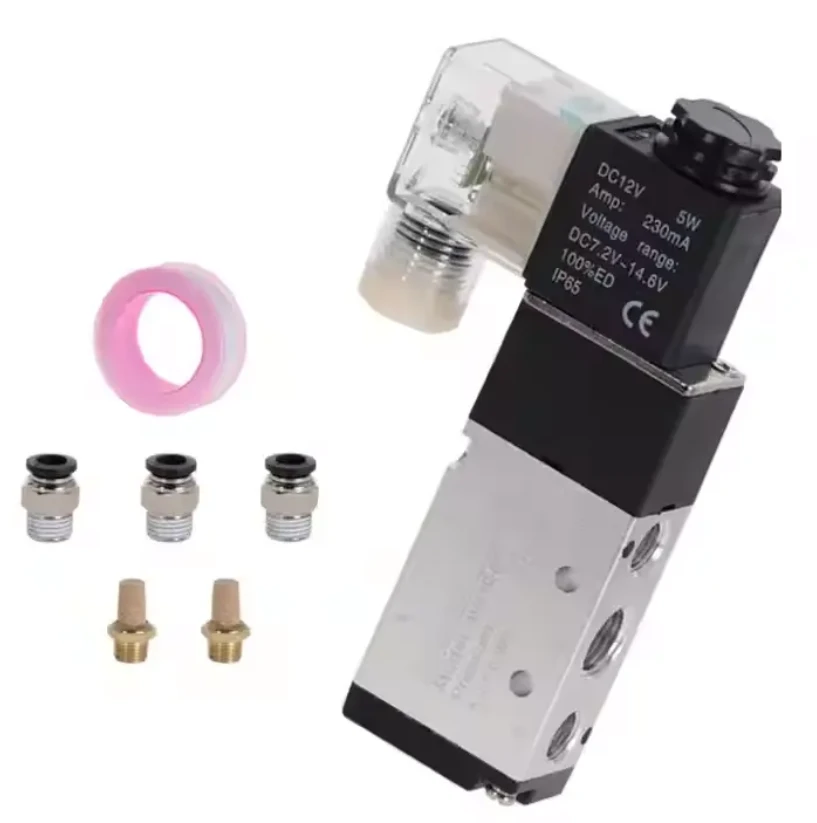
However, they do have a limitation. They are usually limited in terms of the size of the orifice they can control. So, if you need to control a large flow rate, a direct - acting valve might not be the best choice. You can check out the Industrial Automation Pneumatic Air Control Actuator Solenoid Valve for more info on solenoid valves suitable for industrial automation, some of which might be direct - acting types.
Pilot - Operated Solenoid Valves
Pilot - operated solenoid valves are a bit more complex. They use a combination of the solenoid and a pilot system to control the flow. The solenoid first controls the flow through a small pilot orifice, which then creates a pressure difference that moves the main valve disc.
The advantage of pilot - operated 110V solenoid valves is that they can handle much larger flow rates compared to direct - acting valves. They are commonly used in applications like water supply systems, where you need to control the flow of large volumes of water.
But they do have a drawback. They require a certain minimum pressure to operate properly. If the pressure is too low, the valve might not open or close correctly. So, you need to make sure that the system pressure is within the specified range for these valves.
Normally Open and Normally Closed Solenoid Valves
This classification is based on the default state of the valve. A normally open (NO) solenoid valve allows the flow of the medium when the solenoid is not energized. When the solenoid is energized, the valve closes, blocking the flow.
On the other hand, a normally closed (NC) solenoid valve blocks the flow when the solenoid is not energized. When the solenoid gets power, it opens, allowing the medium to pass through.
The choice between a NO and NC valve depends on the application. For example, in a safety - critical system, a normally closed valve might be preferred. If there is a power failure, the valve will automatically close, preventing the flow of a potentially dangerous medium. In some continuous - flow processes, a normally open valve could be more suitable. You can explore the Long Life Pneumatic Air Control Solenoid Valve, which might come in both NO and NC configurations.
Pneumatic Solenoid Valves
Pneumatic solenoid valves are specifically designed to control the flow of air or other gases in pneumatic systems. They are widely used in industrial automation, robotics, and many other applications where precise control of air pressure and flow is required.
The Pneumatic Solenoid Valve 5 Way 2 - position Control Air 12V 24V is a great example of a pneumatic solenoid valve. The 5 - way, 2 - position design means that it has five ports and two possible positions. This allows for more complex control of the air flow, such as reversing the direction of a pneumatic cylinder.
Pneumatic solenoid valves can be either direct - acting or pilot - operated, depending on the specific requirements of the system. They are known for their reliability and durability, making them a popular choice in many industries.
Selection Considerations
When choosing a 110V solenoid valve, there are several factors to consider. First, think about the type of medium you need to control. Is it a liquid, a gas, or a combination? Different valves are designed to work with different types of media.
The flow rate is another important factor. As I mentioned earlier, direct - acting valves are better for small flow rates, while pilot - operated valves can handle larger ones. You also need to consider the pressure of the system. Make sure the valve can operate within the pressure range of your application.
The environment where the valve will be used is also crucial. If it's a harsh environment with high temperatures, corrosive substances, or a lot of dust, you need to choose a valve that is designed to withstand these conditions.
Why Choose Our 110V Solenoid Valves?
As a supplier, we offer a wide range of 110V solenoid valves to meet different needs. Our valves are made with high - quality materials, ensuring long - term reliability and performance. We have a team of experts who can help you select the right valve for your specific application.
Whether you need a direct - acting valve for a quick - response application, a pilot - operated valve for large - flow control, or a pneumatic valve for your automation system, we've got you covered.
If you're interested in purchasing 110V solenoid valves or have any questions about our products, don't hesitate to reach out. We're here to assist you in finding the perfect solution for your requirements. Let's start a conversation and see how we can work together to make your project a success.
References
- "Solenoid Valves: Principles, Operation, and Selection" - A technical guide on solenoid valve technology.
- Industry - specific manuals on industrial automation and fluid control systems.