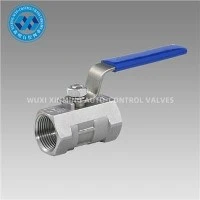
Hey there! As a supplier of sanitary ball valves, I've got a ton of experience when it comes to making sure these valves perform top - notch. In this blog, I'll walk you through how to test the performance of a sanitary ball valve.
1. Visual Inspection
Before we even start the actual performance testing, a good old - fashioned visual inspection is essential. Take a close look at the valve. Check for any obvious signs of damage like cracks, dents, or scratches on the body, ball, and stem of the valve. A damaged valve can compromise its performance right off the bat. Also, examine the seals and gaskets. They should be in good condition, without any signs of wear, aging, or deformation. If you spot any issues during this visual check, it's a red flag, and you might want to consider replacing the valve or the faulty parts.
2. Pressure Testing
One of the most important aspects of testing a sanitary ball valve is pressure testing. This helps us determine how well the valve can handle different levels of pressure without leaking.
Hydrostatic Pressure Testing
For hydrostatic pressure testing, we use water as the test medium. First, close the valve and connect it to a pressure - testing rig. Fill the valve and the connected pipes with water, making sure to bleed out any air. Then, gradually increase the pressure to the test pressure. This test pressure is usually determined by industry standards or the valve's specifications.
For most sanitary ball valves, the test pressure is around 1.5 times the maximum working pressure. Keep the pressure steady for a specific period, usually 5 - 10 minutes. During this time, carefully inspect the valve for any signs of leakage. Check all the joints, seals, and the valve body itself. If you see any water dripping or seeping, it means there's a problem with the valve's sealing performance.
Pneumatic Pressure Testing
Pneumatic pressure testing uses air or an inert gas like nitrogen. The process is similar to hydrostatic testing, but there are a few differences. Since gases are more compressible than liquids, the pressure build - up and release need to be done more carefully. Also, because gas leaks can be harder to detect visually, we often use a soapy water solution to check for leaks.
Apply the soapy water to all the potential leak points on the valve. If there's a leak, the escaping gas will form bubbles in the soapy water. Just like in hydrostatic testing, maintain the test pressure for a set time and monitor the valve closely.
3. Flow Testing
Flow testing is another crucial part of evaluating a sanitary ball valve's performance. It helps us understand how well the valve can control the flow of fluid through it.
Open - Flow Testing
In open - flow testing, fully open the valve and let the fluid (either water or a representative process fluid) flow through it at a known flow rate. Measure the pressure drop across the valve using pressure gauges installed upstream and downstream of the valve. The pressure drop indicates the resistance the valve offers to the flow.


A low - pressure drop means the valve has good flow characteristics, allowing the fluid to pass through easily. High - pressure drops can lead to increased energy consumption and reduced system efficiency. Compare the measured pressure drop with the valve's specified pressure - drop curve. If the measured value is significantly higher than the specified value, it could mean there's an issue with the valve's internal design or blockages inside the valve.
Flow - Control Testing
Flow - control testing is used to check how well the valve can regulate the flow rate. Gradually adjust the valve from fully open to fully closed and measure the corresponding flow rates at different valve positions. This helps us create a flow - control curve for the valve.
A well - performing sanitary ball valve should be able to provide smooth and precise flow control. If the flow rate changes erratically or if the valve doesn't close off the flow completely when fully closed, there's a problem with its flow - control performance.
4. Torque Testing
Torque testing is all about how much force is required to open and close the valve. This is important because it affects the ease of operation and the long - term durability of the valve.
Use a torque wrench to measure the torque required to open and close the valve. The torque values should be within the range specified by the valve manufacturer. If the torque is too high, it could mean there's friction inside the valve, perhaps due to misalignment, damaged parts, or improper lubrication. On the other hand, if the torque is too low, it might indicate a loose or worn - out internal mechanism.
5. Seat Leakage Testing
Seat leakage testing is focused on the valve's ability to seal when it's closed. There are different methods to test seat leakage, but one common way is to use a tracer gas, such as helium.
First, close the valve and create a sealed chamber around the valve seat. Introduce the tracer gas into one side of the valve. Then, use a gas - detection device to measure the amount of gas that leaks through the seat to the other side.
The allowable seat leakage rate is usually specified by industry standards. If the measured leakage rate exceeds this limit, the valve's seat sealing performance is not up to par.
6. Cycle Testing
Cycle testing involves opening and closing the valve multiple times to simulate real - world usage. This helps us check the valve's durability and reliability over time.
Set up an automated testing rig to open and close the valve at a specific frequency. The number of cycles can vary depending on the valve's intended application, but it's usually in the thousands. During cycle testing, monitor the valve's performance, including torque requirements, flow characteristics, and seat leakage.
If the valve starts to show signs of wear, such as increased torque, reduced flow, or increased seat leakage as the number of cycles increases, it might not be suitable for long - term use.
Our Product Range
We offer a wide variety of sanitary ball valves to meet different customer needs. For example, we have the Pneumatic Actuator Wafer Thin Ball Valve, which is known for its compact design and excellent performance. Our Pneumatic Ball Valve Brass Ball Valve High Quality Ball Valve is made of high - quality brass, providing good corrosion resistance. And if you need a valve with a 180 - degree rotation, our 180 Degree Pneumatic Actuator 3 Way Ball Valve is a great choice.
If you're in the market for sanitary ball valves and want to ensure you're getting a high - performance product, don't hesitate to reach out. We can provide detailed product information and help you with the testing process to make sure the valve meets your specific requirements. Contact us for procurement and let's start a great business relationship!
References
- ASME B16.34 - Valves - Flanged, Threaded, and Welding End
- API 598 - Valve Inspection and Testing
- ISO 5208 - Industrial valves - Pressure testing of valves