Hey there! As a supplier of soft - seal ball valves, I often get asked about the available end connections for these valves. So, I thought I'd take the time to break it all down for you in this blog post.
Threaded End Connections
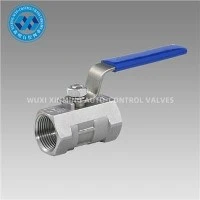
One of the most common end connections for soft - seal ball valves is the threaded connection. Threaded connections are super handy because they're easy to install and don't require any special tools most of the time. You can just screw the valve onto the pipe, and you're good to go.
There are two main types of threaded connections: NPT (National Pipe Thread) and BSP (British Standard Pipe). NPT is widely used in North America, while BSP is more common in Europe and other parts of the world. The great thing about threaded connections is that they provide a tight seal, which helps prevent any leaks.
If you're interested in a valve with a threaded end connection, we have some great options. For example, our 3PC Thread Ball Valve is a top - notch choice. It's made with high - quality materials and is designed to last. The 3 - piece design makes it easy to maintain and repair if needed. You can use it in a variety of applications, from residential plumbing to industrial settings.
Flanged End Connections
Flanged end connections are another popular option for soft - seal ball valves. Flanges are flat, circular discs with holes around the edge. You bolt the valve to the pipe using these flanges, which creates a very strong and secure connection.


Flanged connections are ideal for high - pressure applications because they can handle a lot of stress without leaking. They're also great for larger - diameter pipes, where a threaded connection might not be practical.
One of the benefits of flanged connections is that they allow for easy disassembly and reassembly. This is really useful if you need to clean or replace the valve in the future. And since the connection is so secure, you can be confident that your system will operate safely.
Welded End Connections
Welded end connections offer the highest level of reliability and leak - proof performance. With a welded connection, the valve is permanently joined to the pipe using a welding process. This creates a seamless and continuous flow path, which is great for applications where any leakage could be a major problem.
Welded connections are commonly used in industries such as oil and gas, chemical processing, and power generation. They can withstand extreme temperatures and pressures, making them a reliable choice for harsh environments.
However, welded connections do have some drawbacks. They require skilled welders to install, and once the valve is welded in place, it's very difficult to remove or replace without cutting the pipe. So, you need to be really sure about the valve's placement and performance before you go for a welded connection.
Socket Weld End Connections
Socket weld end connections are a type of welded connection, but they're a bit different from the traditional butt - weld connections. In a socket weld, the pipe is inserted into a socket in the valve, and then the joint is welded around the outside.
Socket weld connections are often used for smaller - diameter pipes. They're relatively easy to install compared to some other types of welded connections, and they still provide a good seal. They're also suitable for applications where space is limited, as they don't require as much clearance as flanged connections.
Pneumatic Actuator and Internal Thread Combinations
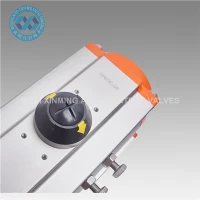
If you're looking for a valve that's easy to operate remotely, our Pneumatic Ball Valve With Internal Thread is a great option. The pneumatic actuator allows you to open and close the valve using compressed air. This is really useful in industrial settings where you need to control the flow of fluids from a distance.
The internal thread makes it easy to connect the valve to the pipe, and the combination of the pneumatic actuator and the soft - seal ball valve provides a reliable and efficient solution for many applications.
Another option in this category is our Pneumatic Actuator 3PC Thread Ball Valve. It combines the benefits of a 3 - piece design, a threaded connection, and a pneumatic actuator. This valve is perfect for applications where you need both easy maintenance and remote operation.
Conclusion
In conclusion, there are several available end connections for soft - seal ball valves, each with its own advantages and disadvantages. Threaded connections are easy to install and suitable for a wide range of applications. Flanged connections are great for high - pressure and large - diameter pipes. Welded connections offer the best leak - proof performance, especially in harsh environments. And socket weld connections are a good choice for smaller pipes and limited - space applications.
If you're in the market for a soft - seal ball valve, I hope this blog post has helped you understand the different end connections available. We have a wide range of valves to meet your specific needs, whether you're looking for a simple threaded valve for your home or a high - performance valve for an industrial plant.
If you have any questions or are interested in purchasing our products, feel free to reach out. We're here to help you find the perfect valve for your application and to guide you through the selection process. Let's start a conversation and see how we can work together to solve your valve needs.
References
- Valve Handbook, Crane Co.
- Pipe Fitting Handbook, Victaulic