As a supplier of butterfly valves, I often get asked about the perks of these devices. But today, I'm going to flip the script and talk about what I see as the disadvantages of butterfly valves. Let's dive in and take an honest look at some areas where these valves might not be the best fit.
1. Limited Shut - off Capability
One of the major drawbacks of butterfly valves is their limited shut - off capability. Unlike some other valve types, like ball valves or gate valves, butterfly valves can't always provide a perfect seal. When the valve is in the closed position, there's often a small amount of leakage. This is because the disc of the butterfly valve rotates within the valve body, and there's always a small clearance between the disc and the valve seat.
For applications where zero leakage is an absolute must, such as in the pharmaceutical or food and beverage industries, butterfly valves might not be the ideal choice. For example, in a pharmaceutical manufacturing process where precise control of fluid flow and complete shut - off are required to prevent contamination, the slight leakage from a butterfly valve could compromise the quality of the final product.
2. Pressure Drop Concerns
Another significant disadvantage is the pressure drop that occurs when fluid flows through a butterfly valve. Due to the design of the valve, where the disc is always in the flow path, it creates an obstruction. This obstruction causes the fluid to change direction and flow around the disc, resulting in a loss of pressure.

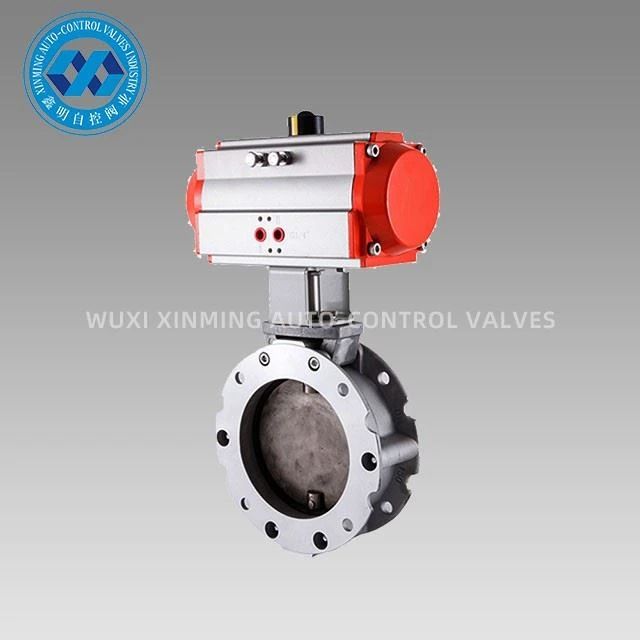
In systems where maintaining a consistent pressure is crucial, like in high - pressure hydraulic systems or some industrial piping networks, the pressure drop caused by a butterfly valve can be a real problem. A large pressure drop means that more energy is required to move the fluid through the system, which can lead to increased operating costs over time.
3. Limited Temperature and Pressure Range
Butterfly valves also have limitations when it comes to temperature and pressure. Most standard butterfly valves are designed to operate within a relatively narrow range of temperatures and pressures. At high temperatures, the materials used in the valve, such as the seat and the disc, can expand or degrade. This can lead to a loss of sealing performance and even structural damage to the valve.
Similarly, in high - pressure applications, the valve may not be able to withstand the forces exerted on it. The disc could deflect or the valve body could crack under extreme pressure. So, for applications involving high - temperature or high - pressure fluids, you might need to look at more specialized valve types.
4. Cavitation Risks
Cavitation is another issue associated with butterfly valves. Cavitation occurs when the pressure of a liquid drops below its vapor pressure, causing vapor bubbles to form. When these bubbles collapse, they can create high - energy shockwaves that damage the valve components.
In a butterfly valve, the rapid change in flow direction and the pressure drop around the disc can create conditions that are conducive to cavitation. Over time, cavitation can erode the valve seat, disc, and other internal parts, reducing the valve's lifespan and performance. This is particularly a concern in applications where the fluid is flowing at high velocities, such as in some water treatment plants or power generation facilities.
5. Flow Control Limitations at Low Flow Rates
Butterfly valves are not the most precise when it comes to controlling flow at low rates. The large disc of the valve can make it difficult to achieve fine - tuned control of small amounts of fluid. When the valve is only slightly open, the flow can be turbulent and difficult to regulate accurately.
In applications where precise control of low - flow rates is necessary, such as in laboratory settings or some chemical dosing systems, other valve types like needle valves or globe valves might be more suitable.
6. Maintenance Challenges
Maintenance of butterfly valves can also be a bit of a headache. The internal components of the valve, such as the disc and the seat, can be difficult to access for inspection and repair. In some cases, the entire valve may need to be removed from the pipeline to perform maintenance tasks.
Also, the rubber or elastomeric seats used in many butterfly valves can wear out over time, especially in applications where the fluid is abrasive or corrosive. Replacing these seats can be a time - consuming process and may require specialized tools.
Our Solutions
Despite these disadvantages, we at [our company] offer a range of butterfly valves that are designed to minimize these issues. For example, our Efficient Pneumatic Flanged Butterfly Valve Accurate Fluid Regulation is engineered to reduce pressure drop and provide better flow control. It uses advanced materials and design techniques to improve sealing performance and durability.
Our Pneumatic Actuator Powder Aluminum Butterfly Valve is suitable for a wider range of temperatures and pressures compared to standard butterfly valves. The powder - coated aluminum construction provides better resistance to corrosion and wear, extending the valve's lifespan.
And if you're looking for a valve that can handle high - temperature and high - pressure applications, our Triple Eccentric Pneumatic Butterfly Valve is an excellent choice. This valve's triple - eccentric design reduces wear on the seat and disc, provides a tighter seal, and can withstand more extreme operating conditions.
If you're dealing with the challenges mentioned above and think our butterfly valves might be the solution for you, don't hesitate to reach out for a more in - depth discussion and a personalized quote. We're here to help you find the right valve for your specific needs. Whether it's choosing the right material, size, or actuator type, we have the expertise to guide you through the process. So, let's have a chat and see how we can work together to optimize your fluid control systems.
References
- "Valve Handbook" by Cranes Technical Services
- "Fluid Mechanics and Machinery" by P. N. Modi and S. M. Seth