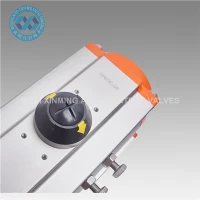
In the industrial automation field, limit switch boxes play a crucial role in controlling the movement and position of machinery. They are used to detect the presence, absence, or position of an object and send a signal to a control system. When it comes to choosing a limit switch box, one of the most common questions is whether a mechanical limit switch box or an electronic one is better. As a supplier of limit switch boxes, I'll provide an in - depth analysis to help you make an informed decision.
Mechanical Limit Switch Boxes
Mechanical limit switch boxes have been around for a long time and are well - known for their simplicity and reliability. They operate based on physical contact. When an object comes into contact with the actuator of the switch, it causes a mechanical movement that opens or closes an electrical circuit.


Advantages
- Durability: Mechanical limit switch boxes are built to withstand harsh industrial environments. They can handle high levels of vibration, shock, and temperature variations. For example, in heavy - duty manufacturing plants where large machinery is in operation, mechanical limit switch boxes can continue to function properly even under extreme conditions.
- Simple Design: Their design is straightforward, which means they are easy to install, maintain, and repair. There are fewer components compared to electronic limit switch boxes, reducing the chances of complex malfunctions. A maintenance technician with basic electrical knowledge can quickly diagnose and fix issues with a mechanical limit switch box.
- Cost - Effective: Generally, mechanical limit switch boxes are more affordable than their electronic counterparts. This makes them an attractive option for small and medium - sized enterprises that are looking to control costs without sacrificing too much on quality.
Disadvantages
- Limited Precision: Mechanical limit switches rely on physical contact, which can lead to wear and tear over time. This wear can cause a change in the actuation point, resulting in reduced precision. In applications where high precision is required, such as in some semiconductor manufacturing processes, mechanical limit switch boxes may not be the best choice.
- Slow Response Time: The mechanical movement involved in the operation of these switches takes time. This can be a drawback in high - speed applications where a rapid response is needed to ensure the safety and efficiency of the machinery.
Electronic Limit Switch Boxes
Electronic limit switch boxes use electronic sensors to detect the presence or position of an object. These sensors can be based on various technologies such as inductive, capacitive, or optical.
Advantages
- High Precision: Electronic limit switch boxes offer a high level of precision. They can detect objects with great accuracy, even in the micron range. This makes them ideal for applications in the aerospace, medical device manufacturing, and high - tech electronics industries where precision is of utmost importance.
- Fast Response Time: Since they do not rely on mechanical movement, electronic limit switch boxes can provide a very fast response. In high - speed conveyor systems or automated assembly lines, this fast response can significantly improve the overall productivity of the operation.
- Non - Contact Operation: Electronic sensors can detect objects without physical contact. This eliminates the problem of wear and tear associated with mechanical switches, increasing the lifespan of the switch box. It also makes them suitable for applications where contact with the object is not desirable, such as in the food and beverage industry where hygiene is a major concern.
Disadvantages
- Sensitivity to Environmental Conditions: Electronic limit switch boxes are more sensitive to environmental factors such as electromagnetic interference (EMI), dust, and moisture. In a factory with a lot of electrical equipment or in a dusty environment, the performance of electronic limit switch boxes may be affected.
- Higher Cost: The advanced technology used in electronic limit switch boxes makes them more expensive than mechanical ones. This can be a deterrent for companies on a tight budget.
Applications
The choice between a mechanical and an electronic limit switch box also depends on the specific application.
Mechanical Limit Switch Boxes
- Heavy - Duty Manufacturing: In industries like mining, construction, and steel production, mechanical limit switch boxes are widely used. For example, in a mining operation, they can be used to control the movement of conveyor belts or the position of large machinery. The APL312 Limit Switch Box is a great option for such heavy - duty applications. Its robust construction can withstand the harsh conditions of these industries.
- Agricultural Equipment: Tractors, harvesters, and other agricultural machinery often use mechanical limit switch boxes. These switches are used to control the movement of various parts of the equipment, such as the lifting and lowering of implements.
Electronic Limit Switch Boxes
- Automotive Manufacturing: In automotive assembly lines, high precision and fast response times are essential. Electronic limit switch boxes are used to ensure the accurate positioning of parts during the assembly process. For example, in the installation of engines or body panels, electronic switches can provide the necessary precision.
- Cleanroom Environments: In semiconductor manufacturing and pharmaceutical production, cleanroom environments are required. Electronic limit switch boxes with non - contact operation are ideal for these applications as they do not generate dust or particles that could contaminate the products. The APL210 Limit Switch Box is suitable for such cleanroom applications due to its high - precision and non - contact operation.
Special Considerations
In some hazardous environments, such as those with flammable gases or dust, explosion - proof limit switch boxes are required. Both mechanical and electronic options are available in explosion - proof designs. The Explosion - proof Limit Switch Box is designed to prevent the ignition of explosive substances in the surrounding environment, ensuring the safety of the operation.
Conclusion
There is no one - size - fits - all answer to the question of whether a mechanical limit switch box or an electronic one is better. It depends on a variety of factors, including the application requirements, the environment in which the switch box will be used, and the budget.
If you are looking for a cost - effective, durable, and simple solution for a less - demanding application, a mechanical limit switch box may be the right choice. On the other hand, if high precision, fast response, and non - contact operation are crucial, an electronic limit switch box is the way to go.
As a supplier of limit switch boxes, we have a wide range of products to meet your specific needs. Whether you need a mechanical or an electronic limit switch box, we can provide you with the best solution. If you are interested in purchasing limit switch boxes or have any questions about our products, please feel free to contact us for a detailed discussion and to start the procurement process.
References
- "Industrial Automation Handbook", published by McGraw - Hill
- "Limit Switches: Principles and Applications", an industry - specific technical guide.