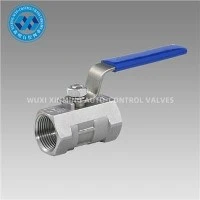
Hey there, folks! As a supplier of welded ball valves, I've seen my fair share of these valves in different states, from brand - spanking new to completely worn out. Today, I'm gonna share with you the signs that indicate a welded ball valve is past its prime.
1. Leakage
One of the most obvious signs of a worn - out welded ball valve is leakage. You might notice a small drip at first, and if you ignore it, it can turn into a full - blown gush. Leakage can happen for a few reasons. Over time, the seals inside the valve can degrade. These seals are what keep the fluid or gas from escaping. High - pressure applications can put a lot of stress on the seals, causing them to crack or wear thin.
Another cause could be damage to the ball itself. The ball is the key component that controls the flow. If it gets scratched or pitted, it won't fit snugly against the seats, allowing fluid to seep through. For example, in a pipeline carrying abrasive materials, the ball can get damaged pretty quickly. If you see any signs of leakage around the valve body or connections, it's a red flag that the valve might be worn out.
2. Difficulty in Operation
A well - functioning welded ball valve should open and close smoothly. If you find that you have to use excessive force to turn the valve handle, that's a big problem. This could be due to several factors. One common issue is the build - up of debris inside the valve. Over time, dirt, sediment, and rust can accumulate in the valve cavity, making it hard for the ball to rotate freely.
The stem, which connects the handle to the ball, can also be a culprit. If the stem gets bent or corroded, it won't be able to transfer the force properly, and you'll end up struggling to operate the valve. Sometimes, the bearings that support the ball can wear out, causing increased friction and making the valve difficult to turn. If you're having a hard time opening or closing your valve, it's time to take a closer look.
3. Unusual Noises
Welded ball valves are usually pretty quiet when they're working correctly. But if you start hearing strange noises like grinding, clicking, or rattling when you operate the valve, it's a sign that something's wrong. Grinding noises often indicate that there's debris or wear between the ball and the seats. As the ball moves, it's rubbing against rough surfaces, creating that unpleasant grinding sound.
Clicking noises can be a sign of loose components inside the valve. Maybe a screw has come loose or a part has become misaligned. Rattling noises are also a bad sign. They could mean that there's a problem with the internal structure of the valve, like a broken spring or a loose ball. If you hear any of these noises, don't just ignore them. It's a clear indication that the valve is in trouble.
4. Inconsistent Flow Control
The main job of a welded ball valve is to control the flow of fluid or gas. If you notice that the flow rate is inconsistent, or if the valve doesn't seem to be able to shut off the flow completely, it's a sign of wear. This could be because the ball is not seating properly against the seats. As the valve wears, the ball might not be able to create a tight seal, allowing some fluid to bypass even when the valve is supposed to be closed.
In some cases, the valve might not be able to open fully, restricting the flow. This can be due to damage to the ball or the stem. If you're experiencing problems with flow control, it's likely that the valve is worn out and needs to be replaced or repaired.
5. Visible Physical Damage
Take a good look at the valve body. If you see any cracks, dents, or corrosion on the outside, it's a sign that the valve has been through a lot. Cracks can weaken the structural integrity of the valve, making it more likely to fail under pressure. Dents can also affect the internal components, causing misalignment and preventing the valve from working properly.
Corrosion is another big issue. It can eat away at the metal, reducing the thickness of the valve body and the internal parts. This not only weakens the valve but can also lead to leakage. If you notice any visible physical damage, it's a strong indication that the valve is worn out.
Related Products
If you're in the market for other types of ball valves, we also offer some great options. Check out our 2PC Thread Ball Valve, which is known for its durability and easy installation. Our PVC Ball Valve is a cost - effective choice for many applications, and the High Performance PVC Ball Valve is designed for more demanding situations.
Conclusion
So, there you have it, the signs that your welded ball valve might be worn out. Leakage, difficulty in operation, unusual noises, inconsistent flow control, and visible physical damage are all things to watch out for. If you notice any of these signs, it's important to take action quickly. Ignoring the problem can lead to bigger issues down the road, like system failures or safety hazards.
If you're looking for a reliable welded ball valve or need help with valve maintenance and replacement, don't hesitate to reach out. We're here to assist you with all your valve needs. Whether you're in a small - scale project or a large industrial application, we've got the expertise and the products to meet your requirements. Contact us today to start a conversation about your valve needs and let's find the best solution together.


References
- Valve Handbook, 4th Edition by Robert W. Fischer and David A. Stine
- Industrial Valves: Design and Application by Henri R. Netter