What is the air consumption of a pneumatic ball valve actuator?
As a trusted ball valve supplier, I often encounter inquiries from customers regarding the air consumption of pneumatic ball valve actuators. Understanding this parameter is crucial for efficient system design, cost - effectiveness, and proper operation of pneumatic systems. In this blog, I will delve into the concept of air consumption in pneumatic ball valve actuators, factors affecting it, and how it impacts your overall system.

Understanding Air Consumption in Pneumatic Ball Valve Actuators
The air consumption of a pneumatic ball valve actuator refers to the volume of compressed air that the actuator uses to perform its opening and closing operations. This consumption is typically measured in units such as cubic feet per minute (CFM) or liters per minute (L/min). It is an essential factor to consider because compressed air generation can be energy - intensive and costly.
When a pneumatic actuator is activated, compressed air enters the actuator's cylinder. The air pressure acts on the piston or diaphragm inside the actuator, causing it to move and rotate the ball valve stem to open or close the valve. The amount of air required for this movement depends on several factors.
Factors Affecting Air Consumption
- Actuator Size and Type: Larger actuators generally require more air to operate because they have larger cylinders or diaphragms. Double - acting actuators, which use compressed air for both opening and closing, typically consume more air compared to spring - return actuators. Spring - return actuators use compressed air only for one direction of movement (either opening or closing), and a spring provides the force for the return movement.
- Valve Torque Requirements: Valves with higher torque requirements need more force to open and close. This means that the pneumatic actuator must generate more pressure, which in turn requires more compressed air. Factors such as valve size, seat material, and operating pressure affect the torque requirements. For example, a large - diameter ball valve with a high - pressure rating will have higher torque requirements and thus a higher air consumption.
- Operating Pressure: The pressure of the compressed air supplied to the actuator plays a significant role in air consumption. Higher operating pressures can reduce the volume of air needed to generate the required force. However, increasing the operating pressure also increases the energy consumption of the air compressor, so a balance must be struck between pressure and air volume.
- Cycle Frequency: If the valve is cycled (opened and closed) frequently, the air consumption will be higher. Each cycle requires a certain amount of air to move the actuator, so more cycles mean more air is used over a given period.
Calculating Air Consumption
Calculating the air consumption of a pneumatic ball valve actuator is not always straightforward, as it depends on the factors mentioned above. However, some general guidelines can be followed. Manufacturers often provide air consumption data for their actuators based on standard operating conditions. These data can be used as a starting point for estimating the air requirements of your system.
For a simple estimation, you can use the following formula for a double - acting actuator:
[V=\frac{A\times S\times N}{1728}]
Where:
- (V) is the air consumption in cubic feet per minute (CFM)
- (A) is the cross - sectional area of the actuator piston in square inches
- (S) is the stroke length of the piston in inches
- (N) is the number of cycles per minute
For spring - return actuators, the air consumption is typically calculated only for the movement that uses compressed air.
Importance of Managing Air Consumption
Managing the air consumption of pneumatic ball valve actuators is essential for several reasons. Firstly, it helps in reducing energy costs. Compressed air generation accounts for a significant portion of the energy consumption in many industrial facilities. By optimizing the air consumption of actuators, you can lower the load on the air compressor and save on electricity or other energy sources.
Secondly, it ensures the reliability and longevity of the pneumatic system. Excessive air consumption can lead to overloading of the air compressor, which can cause premature wear and tear and increase the risk of system failures. By accurately calculating and controlling air consumption, you can design a more efficient and reliable system.
Our Product Offerings
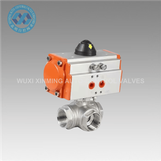
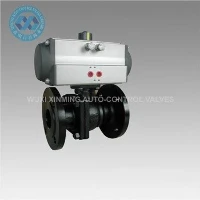
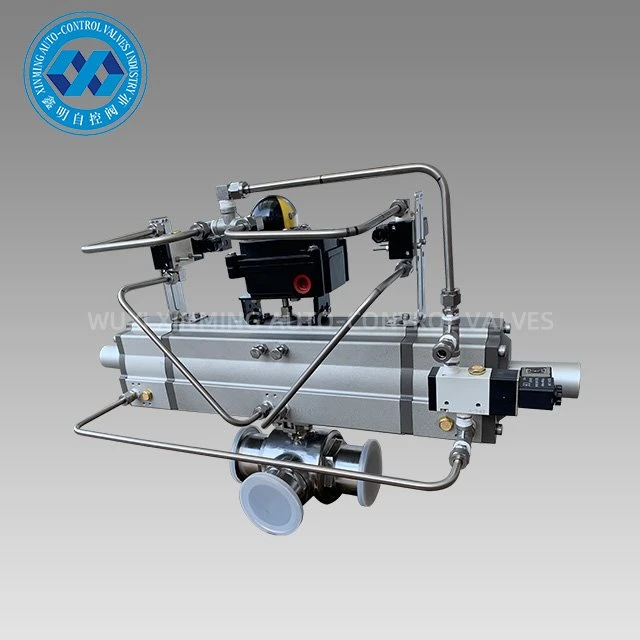
As a ball valve supplier, we offer a wide range of pneumatic ball valve actuators with different sizes, types, and air consumption characteristics to meet the diverse needs of our customers. Our products include 3 Way Ball Valve With Pneumatic Actuator, Pneumatic Actuator Jacketed Flange Ball Vavle, and Tee High Platform Stainless Steel T - L - type Pneumatic Ball Valve.
We understand that every application is unique, and we work closely with our customers to select the most suitable actuator based on their specific requirements. Our team of experts can help you calculate the air consumption for your application and provide solutions to optimize energy efficiency.
Conclusion
The air consumption of a pneumatic ball valve actuator is a critical parameter that affects the performance and cost - effectiveness of your pneumatic system. By understanding the factors that influence air consumption and taking steps to manage it, you can design a more efficient and reliable system.
If you are in the market for high - quality ball valves and pneumatic actuators, we invite you to contact us for a detailed discussion. Our team is ready to assist you in selecting the right products for your application and providing you with the best solutions for your pneumatic system needs.
References
- ASHRAE Handbook - HVAC Systems and Equipment.
- ISO standards related to pneumatic actuators and valves.
- Manufacturer's technical documentation for pneumatic ball valve actuators.