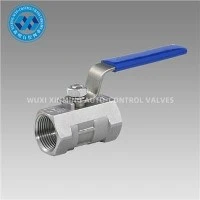
In the realm of industrial flow control, pneumatic ball valves play a pivotal role. These valves are widely used across various industries, from chemical processing to water treatment, due to their reliability, durability, and efficient operation. When it comes to pneumatic ball valves, one of the key decisions that engineers and procurement managers need to make is whether to choose a full - port or a reduced - port valve. As a leading supplier of pneumatic ball valves, I am here to shed light on the differences between these two types of valves to help you make an informed decision.
Structural Differences
The most obvious difference between a full - port and a reduced - port pneumatic ball valve lies in their internal structure. A full - port pneumatic ball valve, as the name suggests, has a ball with an opening that is the same size as the pipeline diameter. This means that when the valve is fully open, there is a straight - through flow path with minimal obstruction. The flow area remains constant throughout the valve, allowing for unimpeded fluid or gas flow.
On the other hand, a reduced - port pneumatic ball valve has a ball with an opening that is smaller than the pipeline diameter. This results in a restriction in the flow path when the valve is open. The reduced - port design typically has a flow area that is approximately one pipe size smaller than the nominal pipe size of the valve.
Flow Capacity
The structural differences between full - port and reduced - port valves directly impact their flow capacity. Full - port valves offer a significantly higher flow capacity compared to reduced - port valves. Since there is no reduction in the flow area, the fluid or gas can pass through the valve with much less resistance. This is particularly important in applications where high flow rates are required, such as in large - scale industrial processes or in systems where rapid filling or emptying is necessary.
For example, in a chemical plant where large volumes of chemicals need to be transferred between storage tanks and processing units, a full - port pneumatic ball valve would be the ideal choice. It would allow for a smooth and efficient flow of the chemicals, minimizing pressure drops and reducing the energy required to pump the fluids.
In contrast, reduced - port valves have a lower flow capacity due to the restricted flow path. They are suitable for applications where lower flow rates are acceptable, or where space constraints make it difficult to install a full - port valve. For instance, in a small - scale laboratory setup where only a limited amount of fluid needs to be controlled, a reduced - port valve can be a cost - effective and practical solution.
Pressure Drop
Pressure drop is another important factor to consider when comparing full - port and reduced - port pneumatic ball valves. Pressure drop refers to the loss of pressure that occurs as the fluid or gas flows through the valve. A lower pressure drop indicates a more efficient valve, as less energy is required to maintain the flow.
Full - port valves generally have a much lower pressure drop compared to reduced - port valves. The unrestricted flow path allows the fluid or gas to flow smoothly through the valve, resulting in minimal energy loss. This is beneficial in systems where maintaining a consistent pressure is crucial, such as in hydraulic systems or in pipelines that transport high - pressure gases.


Reduced - port valves, however, have a higher pressure drop due to the restriction in the flow path. The smaller opening in the ball causes the fluid or gas to accelerate as it passes through the valve, leading to increased turbulence and energy loss. In applications where pressure drop is a concern, the use of a reduced - port valve may require additional pumping power to compensate for the loss.
Cost
Cost is often a significant consideration in any procurement decision. In general, full - port pneumatic ball valves are more expensive than reduced - port valves. The larger ball and the more complex manufacturing process required to ensure a full - size flow path contribute to the higher cost. Additionally, the larger size of full - port valves may also result in higher installation and maintenance costs.
Reduced - port valves, on the other hand, are more cost - effective. Their smaller size and simpler design make them less expensive to manufacture. They also require less space for installation, which can further reduce the overall cost of the system. For budget - conscious projects or applications where the performance requirements can be met with a reduced - port valve, choosing a reduced - port valve can result in significant cost savings.
Applications
The choice between a full - port and a reduced - port pneumatic ball valve also depends on the specific application. Full - port valves are commonly used in applications where high flow rates, low pressure drop, and minimal flow restriction are required. Some examples of these applications include:
- Oil and gas pipelines: Full - port valves are used to control the flow of crude oil, natural gas, and refined products in pipelines. Their high flow capacity and low pressure drop ensure efficient transportation of these valuable resources.
- Power generation plants: In power plants, full - port valves are used to control the flow of steam, water, and other fluids in the boiler, turbine, and cooling systems. The ability to handle high flow rates and maintain a consistent pressure is essential for the safe and efficient operation of the power plant.
- Water treatment facilities: Full - port valves are used in water treatment plants to control the flow of raw water, treated water, and chemicals. They ensure a smooth and continuous flow of water through the treatment process, minimizing the risk of clogging and improving the overall efficiency of the plant.
Reduced - port valves, on the other hand, are suitable for applications where lower flow rates, space constraints, or cost - effectiveness are the primary considerations. Some examples of these applications include:
- Residential plumbing systems: Reduced - port valves are commonly used in residential plumbing systems to control the flow of water to faucets, toilets, and other fixtures. Their smaller size and lower cost make them a practical choice for home installations.
- Instrumentation and control systems: In instrumentation and control systems, reduced - port valves are used to control the flow of small amounts of fluid or gas for measuring and regulating purposes. Their ability to provide precise flow control in a compact design makes them ideal for these applications.
- HVAC systems: Reduced - port valves are used in heating, ventilation, and air conditioning (HVAC) systems to control the flow of refrigerant, water, and air. They help to regulate the temperature and humidity in buildings while minimizing energy consumption.
Our Product Offerings
As a trusted supplier of pneumatic ball valves, we offer a wide range of full - port and reduced - port valves to meet the diverse needs of our customers. Our Double Acting Plastic Pneumatic Actuator Ball Valve is a high - quality option that combines the benefits of a plastic construction with the reliability of a pneumatic actuator. It is available in both full - port and reduced - port configurations, making it suitable for a variety of applications.
Our Pneumatic Thread Ball Valves For Industrial Flow Control are designed for industrial use, with a robust construction and precise flow control. These valves are available in different sizes and port configurations, allowing you to choose the one that best suits your requirements.
We also offer the Pneumatic Actuator 3PC Thread Ball Valve, which features a three - piece design for easy maintenance and repair. This valve is available in full - port and reduced - port options, providing flexibility and reliability in industrial flow control applications.
Contact Us for Procurement
If you are in the market for pneumatic ball valves and need further assistance in choosing between full - port and reduced - port valves, or if you have any other questions about our products, please do not hesitate to contact us. Our team of experts is ready to provide you with professional advice and support to help you make the right decision for your application. We are committed to providing high - quality products and excellent customer service, and we look forward to working with you on your next project.
References
- Valves Handbook, 4th Edition, by J. S. Berkowitz
- Industrial Valves: Selection, Installation, and Maintenance, by Robert W. Sturm
- Pneumatic Systems Design and Application, by David W. Eash