In the realm of fluid control systems, ball valves play a pivotal role. They are used in a wide range of industries, from oil and gas to water treatment, and from chemical processing to food and beverage production. As a leading ball valve supplier, I often encounter customers who are unsure about the differences between manual and automated ball valves. In this blog post, I will delve into the characteristics, advantages, and disadvantages of both types of ball valves, helping you make an informed decision for your specific application.
Manual Ball Valves
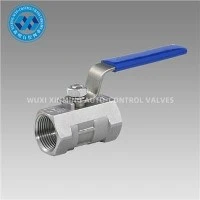
Manual ball valves are the most basic type of ball valves. They are operated by a handle or a lever, which is connected to the ball inside the valve. When the handle is turned, the ball rotates, either allowing or blocking the flow of fluid through the valve.
Characteristics
- Simple Design: Manual ball valves have a straightforward design, consisting of a body, a ball, a stem, and a seat. This simplicity makes them easy to install, operate, and maintain.
- Cost - Effective: Compared to automated ball valves, manual ball valves are generally more affordable. They do not require additional components such as actuators, controllers, or power sources, which reduces the overall cost.
- Reliable: With fewer moving parts, manual ball valves are less prone to mechanical failures. They can provide reliable service for a long time, especially in applications where the valve does not need to be operated frequently.
Advantages
- Easy to Use: Manual ball valves can be operated by hand, without the need for any external power. This makes them suitable for applications where power is not available or where a simple and immediate control is required.
- Visual Indication: The position of the handle provides a clear visual indication of the valve's status. A handle parallel to the pipe indicates that the valve is open, while a handle perpendicular to the pipe indicates that the valve is closed.
- Low Maintenance: Manual ball valves have a simple structure, which means they require less maintenance. Regular inspections and lubrication of the stem are usually sufficient to keep the valve in good working condition.
Disadvantages
- Limited Automation: Manual ball valves cannot be integrated into automated control systems. This makes them unsuitable for applications where remote operation or precise control is required.
- High Labor Intensity: In large - scale industrial applications, operating manual ball valves can be time - consuming and labor - intensive, especially when there are multiple valves that need to be opened or closed frequently.
Automated Ball Valves
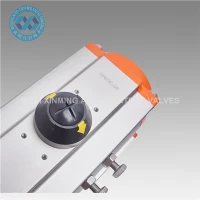
Automated ball valves are equipped with actuators that can open and close the valve automatically. The actuators can be powered by electricity, compressed air, or hydraulic fluid, depending on the application requirements.
Characteristics
- Precise Control: Automated ball valves can be programmed to open and close at specific times or in response to certain signals. This allows for precise control of the fluid flow, which is essential in many industrial processes.
- Remote Operation: Automated ball valves can be controlled remotely, either through a local control panel or a centralized control system. This is particularly useful in applications where the valves are located in hazardous or hard - to - reach areas.
- Integration with Systems: Automated ball valves can be easily integrated into larger control systems, such as programmable logic controllers (PLCs) or distributed control systems (DCSs). This enables seamless operation and monitoring of the entire process.
Advantages
- Increased Efficiency: Automated ball valves can open and close quickly, reducing the response time and improving the overall efficiency of the system. They can also be operated simultaneously, which is beneficial in applications where multiple valves need to be coordinated.
- Safety: In hazardous environments, automated ball valves can be used to isolate the flow of dangerous fluids quickly. They can also be programmed to close automatically in case of emergencies, such as leaks or over - pressure.
- Data Collection and Monitoring: Automated ball valves can be equipped with sensors to collect data on the valve's position, flow rate, pressure, and temperature. This data can be used for process optimization, maintenance planning, and troubleshooting.
Disadvantages
- Higher Cost: Automated ball valves are more expensive than manual ball valves. The cost of the actuator, controller, and associated wiring can significantly increase the overall investment.
- Complex Maintenance: Automated ball valves have more complex components, which require more advanced maintenance skills and tools. Regular maintenance and calibration are necessary to ensure the proper functioning of the actuator and the control system.
- Dependence on Power Source: Automated ball valves rely on an external power source to operate. In the event of a power failure, the valves may not be able to function properly, unless they are equipped with a backup power supply.
Applications
The choice between manual and automated ball valves depends on the specific application requirements.
Manual Ball Valve Applications
- Small - Scale Systems: Manual ball valves are commonly used in small - scale plumbing systems, such as residential or commercial buildings. They are also suitable for small - scale industrial applications where the flow rate is relatively low and the control requirements are simple.
- Isolation Valves: Manual ball valves are often used as isolation valves to shut off the flow of fluid during maintenance or repair work. They can be easily operated by hand to isolate a specific section of the pipeline.
Automated Ball Valve Applications
- Large - Scale Industrial Processes: Automated ball valves are widely used in large - scale industrial processes, such as oil and gas refining, chemical production, and power generation. In these applications, precise control, remote operation, and integration with control systems are crucial.
- Safety - Critical Systems: Automated ball valves are essential in safety - critical systems, such as fire protection systems and emergency shutdown systems. They can be programmed to respond quickly to emergencies, ensuring the safety of the personnel and the equipment.
Our Product Offerings
As a ball valve supplier, we offer a wide range of manual and automated ball valves to meet the diverse needs of our customers. Our products include 3 Way Ball Valve With Pneumatic Actuator, Pneumatic Ball Valve With Internal Thread, and Three Stage Pneumatic Rotary Actuator Ball Valve Made in China.
Our manual ball valves are made of high - quality materials, ensuring durability and reliability. They are available in different sizes, end connections, and pressure ratings to suit various applications. Our automated ball valves are equipped with advanced actuators and control systems, providing precise and efficient fluid control.
If you are looking for high - quality ball valves for your project, whether it is a manual valve for a simple application or an automated valve for a complex industrial process, we are here to help. Our team of experts can provide you with professional advice and customized solutions based on your specific requirements.
Conclusion
In summary, manual and automated ball valves have their own unique characteristics, advantages, and disadvantages. Manual ball valves are simple, cost - effective, and easy to use, but they are limited in terms of automation and labor - intensive in large - scale applications. Automated ball valves offer precise control, remote operation, and integration with systems, but they are more expensive and require more complex maintenance.
When choosing between manual and automated ball valves, it is important to consider the specific application requirements, such as the flow rate, pressure, temperature, control precision, and operating environment. By understanding the differences between the two types of valves, you can make an informed decision that will ensure the optimal performance and reliability of your fluid control system.
If you have any questions or need further information about our ball valve products, please feel free to contact us. We are committed to providing you with the best products and services to meet your needs.


References
- Miller, R. W. (2018). Flow Measurement Engineering Handbook. McGraw - Hill Education.
- Walas, S. M. (2010). Chemical Process Equipment: Selection and Design. Butterworth - Heinemann.
- Perry, R. H., & Green, D. W. (2007). Perry's Chemical Engineers' Handbook. McGraw - Hill Professional.