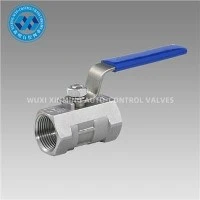
As a leading supplier of flange ball valves, I've witnessed firsthand the importance of understanding the differences between full - port and reduced - port flange ball valves. This knowledge is crucial for customers in various industries, as it directly impacts the performance, efficiency, and cost - effectiveness of their systems.
Structural Differences
The most obvious difference between full - port and reduced - port flange ball valves lies in their internal diameter. A full - port flange ball valve has a ball with an opening that is the same size as the pipeline's inner diameter. This design creates a straight - through flow path, allowing for unobstructed fluid movement. In contrast, a reduced - port flange ball valve has a ball with an opening smaller than the pipeline's inner diameter. This reduction in the flow area results in a more restricted flow path.
The structural design of full - port valves is more complex and requires more material. The larger ball and the need for a wider valve body to accommodate it increase the manufacturing cost. On the other hand, reduced - port valves are simpler in construction. The smaller ball and valve body use less material, which makes them generally more cost - effective in terms of production.
Flow Characteristics
When it comes to flow characteristics, full - port flange ball valves offer significant advantages. The unrestricted flow path minimizes pressure drop across the valve. Pressure drop is the decrease in fluid pressure as it passes through the valve. A low pressure drop means that the system can maintain a more consistent flow rate with less energy consumption. This is especially important in applications where large volumes of fluid need to be transferred quickly, such as in oil and gas pipelines or water treatment plants.
Reduced - port flange ball valves, however, have a higher pressure drop due to the restricted flow area. The fluid has to pass through a smaller opening, which creates turbulence and resistance. As a result, more energy is required to maintain the same flow rate compared to a full - port valve. This can lead to increased operating costs over time, especially in high - flow applications.
Application Scenarios
Full - port flange ball valves are ideal for applications where a high flow rate and low pressure drop are essential. For example, in chemical processing plants, where large quantities of chemicals need to be transferred between different stages of the production process, full - port valves ensure smooth and efficient flow. They are also commonly used in food and beverage industries, where the cleanliness and unobstructed flow are crucial to prevent contamination and ensure product quality.
Reduced - port flange ball valves are more suitable for applications where flow rate is not the primary concern. In systems where the fluid flow is relatively low or where the pressure in the system is high enough to overcome the pressure drop, reduced - port valves can be a cost - effective choice. They are often used in residential plumbing systems, small - scale industrial applications, and some low - flow control systems.
Cost Considerations
As mentioned earlier, the initial cost of full - port flange ball valves is typically higher than that of reduced - port valves. This is mainly due to the larger size of the components and the more complex manufacturing process. However, when considering the long - term costs, full - port valves can be more economical in high - flow applications. The lower pressure drop reduces energy consumption, which can lead to significant savings on operating costs over the valve's lifespan.
Reduced - port valves, with their lower initial cost, are an attractive option for budget - conscious projects. But it's important to factor in the potential increase in energy costs due to the higher pressure drop. In some cases, the savings on the initial purchase may be offset by the additional energy expenses over time.


Maintenance and Durability
Full - port flange ball valves, with their larger components, are generally more robust and durable. The larger ball and valve body can withstand higher pressures and more severe operating conditions. They are also less prone to clogging because of the unobstructed flow path. This means less frequent maintenance and a longer service life.
Reduced - port valves, while still durable, may require more frequent maintenance. The restricted flow area can cause debris and particles in the fluid to accumulate more easily, leading to clogging and potential damage to the valve. Regular cleaning and inspection are necessary to ensure proper operation.
Related Products
If you are interested in exploring more valve options, we also offer a variety of related products. For instance, our Pneumatic Ball Valve With Internal Thread provides a convenient solution for applications that require automated control. The internal thread design allows for easy installation in pipelines.
Our 180 Degree Pneumatic Actuator 3 Way Ball Valve, 3 Way Ball Valve With Pneumatic Actuator is suitable for applications where fluid diversion or mixing is required. The pneumatic actuator provides reliable and precise control.
And for applications that need a tee - shaped valve with pneumatic actuation, our Pneumatic Actuator Flange Tee Ball Valve is an excellent choice. It combines the advantages of a flange connection and pneumatic control.
Conclusion
In conclusion, the choice between a full - port and a reduced - port flange ball valve depends on various factors, including flow requirements, pressure drop tolerance, budget, and application scenarios. As a flange ball valve supplier, we are committed to providing our customers with the most suitable valve solutions based on their specific needs. Whether you need a full - port valve for high - flow applications or a reduced - port valve for cost - effective low - flow systems, we have the expertise and products to meet your requirements.
If you are interested in purchasing flange ball valves or have any questions about our products, please feel free to contact us for a detailed discussion. Our team of experts is ready to assist you in making the right choice for your project.
References
- Valve Handbook, 4th Edition, by J. S. T. Nakos and M. A. Stiles
- Fluid Mechanics and Thermodynamics of Turbomachinery, 5th Edition, by S. L. Dixon and C. A. Hall