As a seasoned supplier of welded ball valves, I've witnessed firsthand the significant impact that choosing the right valve can have on various industrial applications. One of the most common questions I encounter is about the difference between manual and electric welded ball valves. In this blog post, I'll delve into the unique features, advantages, and drawbacks of each type to help you make an informed decision for your specific needs.
Manual Welded Ball Valves
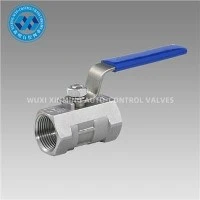
Manual welded ball valves are the traditional workhorses of the valve industry. They are operated by hand, typically using a lever or a wheel to open and close the valve. The simplicity of their design makes them reliable and cost - effective, which is why they are still widely used in many industries.
Construction and Operation
The construction of a manual welded ball valve is fairly straightforward. It consists of a body, a ball, seats, and a stem. The ball has a hole in the middle, and when the valve is open, the hole aligns with the pipe, allowing fluid or gas to flow through. When the lever or wheel is turned 90 degrees, the ball rotates, blocking the flow path and closing the valve. The welding process ensures a tight and permanent connection between the valve and the pipeline, preventing any leakage.
Advantages
- Cost - Effective: Manual valves are generally less expensive than their electric counterparts. They don't require any additional electrical components, such as motors or controllers, which significantly reduces the initial purchase cost.
- Simple Maintenance: With fewer parts and no electrical systems, manual welded ball valves are easier to maintain. Basic maintenance tasks, such as lubricating the stem and inspecting the seats, can be carried out without the need for specialized electrical knowledge.
- Reliability in Low - Tech Environments: In areas where electricity is unreliable or not available, manual valves are the ideal choice. They can be operated under any conditions, as long as there is enough physical force to turn the lever or wheel.
Drawbacks
- Limited Automation: Manual valves require human intervention to open and close. This can be a drawback in large - scale industrial processes where quick and frequent valve operations are needed.
- Operator Fatigue: In applications where valves need to be opened and closed frequently, operators may experience fatigue, which can lead to inconsistent valve operation and potential safety hazards.
Electric Welded Ball Valves
Electric welded ball valves, on the other hand, are designed for applications that require automation and precise control. They use an electric motor to drive the ball's rotation, allowing for remote operation and integration with control systems.


Construction and Operation
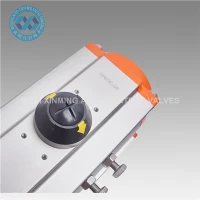
An electric welded ball valve has a similar basic structure to a manual one, but it is equipped with an electric actuator. The actuator is connected to the valve stem and is controlled by an electrical signal. When a signal is sent to the actuator, it rotates the stem, which in turn rotates the ball to open or close the valve. The welding process provides a secure connection between the valve and the pipeline, just like in manual valves.
Advantages
- Automation: The main advantage of electric valves is their ability to be automated. They can be integrated into a control system, such as a Programmable Logic Controller (PLC), allowing for remote operation and precise control of the valve's position. This is particularly useful in large - scale industrial processes where multiple valves need to be coordinated.
- Precise Control: Electric actuators can provide accurate positioning of the ball, allowing for precise control of the flow rate. This is crucial in applications where precise flow control is required, such as in chemical processing or water treatment plants.
- Reduced Operator Intervention: By automating the valve operation, electric valves reduce the need for human intervention. This not only improves efficiency but also reduces the risk of human error.
Drawbacks
- Higher Cost: Electric welded ball valves are more expensive than manual ones. The cost of the electric actuator, along with the associated control systems, can significantly increase the initial investment.
- Dependency on Electricity: Electric valves rely on a stable power supply. In the event of a power outage, the valve may not be able to operate, which can be a problem in critical applications.
- Complex Maintenance: The electrical components in electric valves require specialized knowledge for maintenance and repair. This can increase the maintenance cost and downtime.
Applications
The choice between a manual and an electric welded ball valve depends largely on the specific application.
Manual Valve Applications
- Small - Scale Systems: In small - scale plumbing systems, such as in residential or small commercial buildings, manual welded ball valves are commonly used. They are cost - effective and easy to operate for simple on - off control.
- Isolation Valves: Manual valves are often used as isolation valves in industrial pipelines. They can be used to shut off the flow of fluid or gas during maintenance or in case of an emergency.
Electric Valve Applications
- Industrial Automation: In large - scale industrial processes, such as oil and gas refineries, power plants, and chemical factories, electric welded ball valves are widely used. They can be integrated into the plant's control system to provide automated and precise flow control.
- Remote - Controlled Systems: Electric valves are ideal for applications where remote control is required, such as in offshore platforms or pipelines in remote areas. They can be operated from a central control room, improving safety and efficiency.
Our Product Range
As a welded ball valve supplier, we offer a wide range of manual and electric welded ball valves to meet the diverse needs of our customers. Our product range includes Double Acting Plastic Pneumatic Actuator Ball Valve, Pneumatic 3PC Stainless Steel Ball Valve, and Flange Ball Valve. All our valves are manufactured using high - quality materials and advanced manufacturing techniques to ensure reliability and performance.
Conclusion
In conclusion, both manual and electric welded ball valves have their own unique advantages and drawbacks. The choice between the two depends on factors such as cost, automation requirements, and the specific application. If you need a cost - effective and simple solution for basic on - off control, a manual welded ball valve may be the right choice. On the other hand, if you require automation, precise control, and remote operation, an electric welded ball valve is more suitable.
If you are in the market for welded ball valves and need more information or assistance in choosing the right valve for your application, please don't hesitate to contact us. Our team of experts is ready to help you make the best decision for your project.
References
- Valve Handbook, 4th Edition, by Hans P. Bloch and Heinz P. Kittredge
- Industrial Valves: Selection and Sizing, by Les F. Spitzer
- Welding Handbook, Volume 2: Welding Processes, American Welding Society