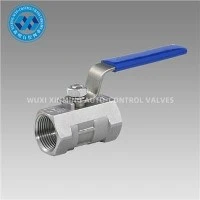
As a PVC Butterfly Valve supplier, I've witnessed firsthand the intricate relationship between valve position and the flow through a PVC butterfly valve. This relationship is not only fundamental to the efficient operation of fluid systems but also crucial for industries relying on precise flow control. In this blog, we'll delve into the effects of valve position on flow, exploring the underlying principles, practical implications, and real-world applications.
Understanding PVC Butterfly Valves
Before we discuss the impact of valve position on flow, let's briefly understand what a PVC butterfly valve is. A PVC butterfly valve is a quarter-turn valve that uses a disc (the "butterfly") to regulate the flow of fluid through a pipe. The disc rotates on a shaft, and by turning the valve handle or actuator, the disc can be positioned anywhere between fully open and fully closed. This simple yet effective design makes PVC butterfly valves popular in a wide range of applications, including water treatment, irrigation, chemical processing, and HVAC systems.
The Basics of Flow Control
Flow control is the process of regulating the volume, pressure, and velocity of a fluid flowing through a pipe. In the context of a PVC butterfly valve, flow control is achieved by adjusting the position of the valve disc. When the disc is fully open, it is parallel to the flow direction, allowing maximum flow through the valve. Conversely, when the disc is fully closed, it is perpendicular to the flow direction, blocking the flow completely.
The relationship between valve position and flow is not linear. At low valve openings, a small change in valve position can result in a significant change in flow rate. As the valve approaches the fully open position, the change in flow rate becomes less pronounced for the same change in valve position. This non-linear relationship is due to the complex flow patterns around the valve disc and the resulting pressure drop across the valve.
Effects of Valve Position on Flow
1. Flow Rate
The most obvious effect of valve position on flow is the change in flow rate. As mentioned earlier, the flow rate is maximum when the valve is fully open and zero when the valve is fully closed. In between these two extremes, the flow rate is proportional to the effective cross-sectional area of the valve opening. The effective cross-sectional area is determined by the position of the valve disc and the shape of the valve body.
For example, when the valve is partially open, the disc creates a restriction in the flow path, reducing the effective cross-sectional area and thus the flow rate. The degree of restriction depends on the angle of the disc relative to the flow direction. A smaller angle (closer to fully open) results in a larger effective cross-sectional area and a higher flow rate, while a larger angle (closer to fully closed) results in a smaller effective cross-sectional area and a lower flow rate.
2. Pressure Drop
Another important effect of valve position on flow is the pressure drop across the valve. Pressure drop is the difference in pressure between the upstream and downstream sides of the valve. When the valve is fully open, the pressure drop is minimal because the flow path is relatively unrestricted. However, as the valve is closed, the pressure drop increases due to the increased resistance to flow caused by the valve disc.
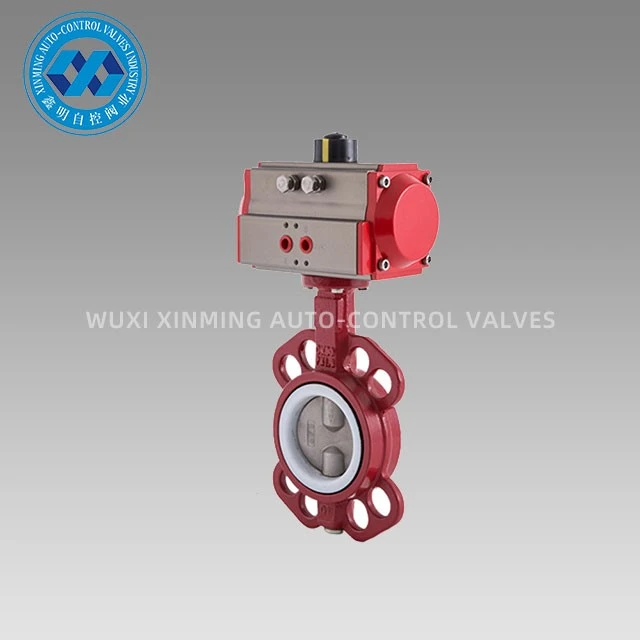
The pressure drop across a PVC butterfly valve is influenced by several factors, including the valve size, the valve position, the flow rate, and the fluid properties. In general, the pressure drop increases with decreasing valve opening and increasing flow rate. Excessive pressure drop can lead to energy losses, reduced system efficiency, and potential damage to the valve and other components in the system.
3. Flow Turbulence
Valve position also affects the flow turbulence within the valve and the downstream pipe. Turbulence is the irregular and chaotic motion of fluid particles, which can cause noise, vibration, and erosion. When the valve is fully open, the flow is relatively laminar (smooth and orderly), resulting in minimal turbulence. However, as the valve is closed, the flow becomes more turbulent due to the separation of the flow from the valve disc and the formation of eddies and vortices.
The degree of turbulence depends on the valve position, the flow rate, and the valve design. In some applications, such as in pipelines transporting abrasive fluids, excessive turbulence can cause significant erosion of the valve disc and the pipe walls, leading to premature failure of the valve and the system.
Practical Implications and Applications
1. Flow Regulation
The ability to control the flow rate by adjusting the valve position makes PVC butterfly valves ideal for applications where precise flow regulation is required. For example, in water treatment plants, PVC butterfly valves are used to control the flow of water through various treatment processes, such as filtration, disinfection, and sedimentation. By adjusting the valve position, operators can ensure that the correct amount of water is flowing through each process, optimizing the treatment efficiency and water quality.
2. On/Off Control
In addition to flow regulation, PVC butterfly valves are also commonly used for on/off control. When the valve is fully open, it allows the fluid to flow freely through the pipe, and when the valve is fully closed, it stops the flow completely. This makes PVC butterfly valves suitable for applications where a simple and reliable on/off control is needed, such as in irrigation systems, where the valve can be used to turn the water supply on and off as needed.
3. Isolation
PVC butterfly valves can also be used for isolation purposes. In a pipeline system, isolation valves are used to isolate a section of the pipeline for maintenance, repair, or inspection. By closing the isolation valve, the flow of fluid to the isolated section can be stopped, allowing the maintenance work to be carried out safely. PVC butterfly valves are often used as isolation valves due to their quick closing time and reliable sealing performance.
Real-World Examples
To illustrate the practical effects of valve position on flow, let's consider a few real-world examples.
1. Chemical Processing Plant
In a chemical processing plant, PVC butterfly valves are used to control the flow of various chemicals through different stages of the production process. For example, in a reaction vessel, a PVC butterfly valve is used to control the flow of reactants into the vessel. By adjusting the valve position, the operator can control the rate of reaction and ensure that the reaction proceeds at the desired rate.
2. HVAC System
In an HVAC (heating, ventilation, and air conditioning) system, PVC butterfly valves are used to control the flow of air or water through the system. For example, in a chilled water system, a PVC butterfly valve is used to control the flow of chilled water to the air handling units. By adjusting the valve position, the operator can control the temperature and humidity of the air in the building, ensuring a comfortable and healthy indoor environment.
3. Water Distribution System
In a water distribution system, PVC butterfly valves are used to control the flow of water through the pipes. For example, in a water main, a PVC butterfly valve is used to control the flow of water to different neighborhoods or districts. By adjusting the valve position, the water utility can ensure that the water is distributed evenly and efficiently throughout the system.
Conclusion
In conclusion, the valve position has a significant effect on the flow through a PVC butterfly valve. By adjusting the valve position, operators can control the flow rate, pressure drop, and flow turbulence, which are essential for the efficient operation of fluid systems. PVC butterfly valves are widely used in various industries for flow regulation, on/off control, and isolation purposes, thanks to their simple design, reliable performance, and cost-effectiveness.
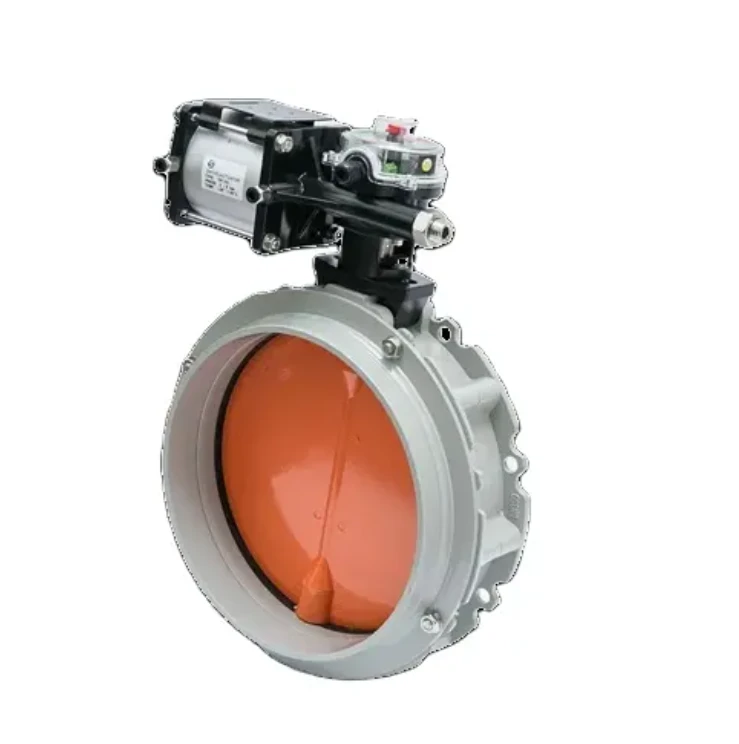
If you're looking for high-quality PVC butterfly valves for your application, we offer a wide range of products, including Penumatic Actuator Ductile Iron Wafer Butterfly Valve, Pneumatic Dust Aluminum Butterfly Valve, and PVC Butterfly Valve With Pneumatic Actuator. Our valves are designed and manufactured to meet the highest standards of quality and performance, ensuring reliable operation and long service life.
We invite you to contact us to discuss your specific requirements and explore how our PVC butterfly valves can meet your needs. Our experienced sales team is ready to assist you with product selection, technical support, and procurement advice. Let's work together to achieve efficient and reliable flow control in your system.
References
- Miller, R. W. (1996). Flow measurement engineering handbook. McGraw-Hill.
- Streeter, V. L., & Wylie, E. B. (1981). Fluid mechanics. McGraw-Hill.
- Idelchik, I. E. (1994). Handbook of hydraulic resistance. CRC Press.