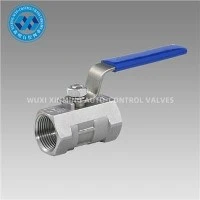
Hey there! As a supplier of soft - seal ball valves, I often get asked about the high - temperature performance of these valves. So, I thought I'd sit down and write this blog to share all the ins and outs with you.
First off, let's understand what a soft - seal ball valve is. It's a type of valve that uses a soft sealing material, like rubber or PTFE, to create a tight seal between the ball and the valve seat. This kind of valve is widely used in various industries because it can provide a reliable shut - off function, and it's relatively easy to operate.
Now, when it comes to high - temperature performance, there are several key factors we need to look at.
1. Sealing Material
The sealing material is the heart of the soft - seal ball valve's performance in high - temperature environments. Different materials have different temperature limits. For example, rubber seals are pretty common, but they usually can't handle extremely high temperatures. Natural rubber, for instance, starts to lose its elasticity and sealing ability at around 80 - 100°C. Synthetic rubbers like nitrile rubber (NBR) can withstand slightly higher temperatures, up to about 120 - 150°C.
On the other hand, PTFE (polytetrafluoroethylene) is a superstar when it comes to high - temperature resistance. It can handle temperatures up to 260°C without significant degradation. PTFE has excellent chemical resistance and low friction coefficient, which makes it a great choice for soft - seal ball valves in high - temperature and corrosive applications. However, even PTFE has its limits. At very high temperatures close to its melting point, it may start to deform, which can affect the valve's sealing performance.
2. Valve Body Material
The valve body also plays a crucial role in high - temperature performance. Common valve body materials include cast iron, carbon steel, and stainless steel. Cast iron is relatively inexpensive, but its high - temperature performance is limited. It can be used in applications where the temperature doesn't exceed 200 - 250°C. Beyond that, the mechanical properties of cast iron may deteriorate, leading to potential cracking or failure.
Carbon steel is a more popular choice for high - temperature applications. It can handle temperatures up to 400 - 500°C. Stainless steel, especially grades like 304 and 316, offers even better high - temperature resistance. They can be used in applications where the temperature reaches 600 - 800°C, depending on the specific grade and operating conditions.
3. Thermal Expansion
One of the challenges in high - temperature environments is thermal expansion. When the valve is exposed to high temperatures, both the valve body and the ball inside will expand. If the design of the valve doesn't take this into account, it can lead to problems. For example, if the expansion of the ball is not properly compensated for, it may get stuck in the valve seat, making it difficult to operate the valve.
To deal with thermal expansion, valve manufacturers often use special designs. Some valves have adjustable seats that can accommodate the expansion of the ball. Others use materials with similar coefficients of thermal expansion for the ball and the valve body to minimize the differential expansion.
4. Lubrication
Lubrication is another important aspect of high - temperature performance. In high - temperature environments, the lubricant needs to have good thermal stability. Traditional lubricants may break down at high temperatures, leading to increased friction and wear between the ball and the valve seat.
Special high - temperature lubricants are available that can withstand the heat. These lubricants help to reduce friction, prevent galling, and ensure smooth operation of the valve. They also protect the sealing surfaces from damage caused by wear and corrosion.
Applications of Soft - Seal Ball Valves in High - Temperature Environments
Soft - seal ball valves are used in a variety of high - temperature applications. In the chemical industry, they are used to control the flow of hot chemicals in pipelines. For example, in a chemical plant where reactions occur at high temperatures, soft - seal ball valves with PTFE seals can be used to regulate the flow of reactants and products.
In the power generation industry, soft - seal ball valves are used in steam systems. Steam can reach very high temperatures, and valves in these systems need to be able to handle the heat. Carbon steel or stainless steel valve bodies with high - temperature - resistant seals are commonly used in power plants.
Our Product Range
As a supplier, we offer a wide range of soft - seal ball valves suitable for different high - temperature applications. For example, our Pneumatic Actuator Tri - clamp Three Way Ball Valve is designed for precise flow control in high - temperature pipelines. It has a robust valve body and high - quality sealing materials that can withstand elevated temperatures.
Our Thread Ball Valve is another great option. It's easy to install and can be used in various high - temperature systems. The thread connection provides a reliable seal, and the valve is available with different sealing materials to meet your specific temperature requirements.
If you need a valve for precise opening control in high - temperature environments, our Intelligent - driven Double - acting Pneumatic Plastic Actuator Ball Valve For Precise Opening Control is the way to go. It combines intelligent control technology with high - temperature - resistant materials to ensure accurate and reliable operation.
Conclusion
In conclusion, the high - temperature performance of a soft - seal ball valve depends on multiple factors, including the sealing material, valve body material, design to handle thermal expansion, and proper lubrication. By choosing the right valve and ensuring its proper installation and maintenance, you can ensure reliable operation in high - temperature environments.
If you're in the market for soft - seal ball valves for high - temperature applications, don't hesitate to reach out to us. We're here to help you find the perfect valve solution for your needs. Whether you have a small - scale project or a large - scale industrial application, we have the expertise and products to meet your requirements. Contact us for more information and let's start a fruitful business relationship.


References
- Valve Handbook, Valve Manufacturers Association
- Materials Science and Engineering Textbooks for high - temperature materials properties.