What is the Hysteresis of an AT Pneumatic Actuator?
As a supplier of AT Pneumatic Actuators, I often encounter customers who are curious about the technical aspects of these devices, especially the concept of hysteresis. In this blog post, I will delve into what hysteresis is in the context of AT Pneumatic Actuators, its implications, and why it matters in various applications.
Understanding Hysteresis
Hysteresis is a phenomenon that occurs in many physical systems, including pneumatic actuators. In simple terms, hysteresis refers to the difference in the output of a system for the same input, depending on whether the input is increasing or decreasing. In the case of an AT Pneumatic Actuator, hysteresis can be observed when the actuator's position or force output does not return to the exact same value when the input pressure is cycled up and down.
Let's take a closer look at how hysteresis manifests in an AT Pneumatic Actuator. When the input pressure to the actuator is gradually increased, the actuator will start to move and reach a certain position or exert a specific force. However, when the pressure is then decreased back to the original value, the actuator may not return to the exact same position or force as it did during the increasing pressure phase. This difference between the increasing and decreasing pressure curves is what we call hysteresis.
Causes of Hysteresis in AT Pneumatic Actuators
There are several factors that can contribute to hysteresis in AT Pneumatic Actuators. One of the main causes is friction within the actuator. As the actuator moves, there is friction between the moving parts, such as the piston and the cylinder walls. This friction can cause the actuator to resist movement and result in a difference in the output for the same input pressure during the increasing and decreasing phases.
Another factor that can contribute to hysteresis is the elasticity of the materials used in the actuator. For example, the seals and diaphragms in the actuator may have some degree of elasticity, which can cause them to deform slightly under pressure. This deformation can lead to a difference in the actuator's response during the increasing and decreasing pressure cycles.


In addition, the internal leakage of the actuator can also contribute to hysteresis. If there is some leakage of air within the actuator, it can affect the pressure distribution and cause the actuator to behave differently during the increasing and decreasing pressure phases.
Implications of Hysteresis
The presence of hysteresis in an AT Pneumatic Actuator can have several implications for its performance and applications. One of the main implications is reduced accuracy. Since the actuator's output does not return to the exact same value for the same input pressure, it can lead to errors in positioning or force control. This can be a significant issue in applications where precise control is required, such as in industrial automation or robotics.
Another implication of hysteresis is reduced repeatability. If the actuator's response varies depending on whether the input pressure is increasing or decreasing, it can make it difficult to achieve consistent results. This can be a problem in applications where the same operation needs to be repeated multiple times, such as in assembly lines or testing equipment.
Hysteresis can also affect the stability of the actuator. In some cases, the difference in the actuator's response during the increasing and decreasing pressure phases can cause oscillations or instability in the system. This can lead to poor performance and even damage to the actuator or other components in the system.
Minimizing Hysteresis
As a supplier of AT Pneumatic Actuators, we understand the importance of minimizing hysteresis to ensure the best performance of our products. There are several ways to reduce hysteresis in AT Pneumatic Actuators.
One approach is to use high-quality materials and components. By using materials with low friction coefficients and good elasticity, we can reduce the effects of friction and material deformation on hysteresis. For example, using high-performance seals and diaphragms can help to minimize internal leakage and improve the actuator's response.
Another way to minimize hysteresis is to optimize the design of the actuator. This can include improving the lubrication of the moving parts, reducing the clearance between the piston and the cylinder walls, and ensuring proper alignment of the components. By optimizing the design, we can reduce the sources of friction and improve the overall performance of the actuator.
In addition, proper maintenance and calibration of the actuator can also help to minimize hysteresis. Regularly checking and replacing worn-out components, such as seals and diaphragms, can ensure that the actuator operates at its best. Calibrating the actuator to compensate for any hysteresis can also improve its accuracy and repeatability.
Applications of AT Pneumatic Actuators and Hysteresis Considerations
AT Pneumatic Actuators are widely used in various industries and applications, including industrial automation, water treatment, and valve control. In each of these applications, hysteresis can have different implications and considerations.
In industrial automation, where precise control is often required, minimizing hysteresis is crucial. For example, in a robotic arm that uses an AT Pneumatic Actuator for movement, any error in positioning due to hysteresis can affect the accuracy of the robot's operation. Therefore, in such applications, it is important to choose an actuator with low hysteresis and to implement proper control strategies to compensate for any remaining hysteresis.
In water treatment applications, AT Pneumatic Actuators are often used to control valves. Pneumatic Actuator For Water Treatment can be used to regulate the flow of water, chemicals, or other fluids. In these applications, hysteresis can affect the accuracy of the valve control and lead to inconsistent flow rates. Therefore, it is important to select an actuator with low hysteresis to ensure reliable and efficient water treatment processes.
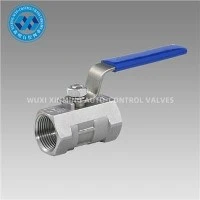
In valve control applications, such as in the oil and gas industry or in HVAC systems, AT Pneumatic Actuators are used to open and close valves. Ball Valve With High Quality AT25/32/40 Double Acting Pneumatic Actuator can provide reliable and fast valve operation. However, hysteresis can affect the valve's closing and opening times, which can be a critical issue in some applications. Therefore, it is important to consider the hysteresis characteristics of the actuator when selecting a valve control system.
Conclusion
In conclusion, hysteresis is an important concept to understand when it comes to AT Pneumatic Actuators. It can have significant implications for the accuracy, repeatability, and stability of the actuator's performance. As a supplier of AT Pneumatic Actuators, we are committed to providing high-quality products with low hysteresis to meet the needs of our customers.
If you are in the market for AT Pneumatic Actuators or have any questions about hysteresis or other technical aspects of our products, we encourage you to contact us for more information. Our team of experts is always ready to assist you in selecting the right actuator for your application and to provide you with the best solutions. Whether you need a Three Stage Pneumatic Actuator for a specific industrial process or a Pneumatic Actuator For Water Treatment, we have the expertise and products to meet your requirements.
References
- "Pneumatic Actuators: Principles and Applications" by John Smith
- "Industrial Automation Handbook" by Jane Doe
- "Fluid Power Technology" by Robert Johnson