

Hey there! As a supplier of Sanitary Ball Valves, I often get asked about the reliability of these valves in continuous operation. So, I thought I'd write this blog to share some insights and experiences on the topic.
First off, let's talk about what makes a sanitary ball valve so important in continuous operation. In industries like food and beverage, pharmaceuticals, and biotechnology, maintaining a high level of hygiene and preventing contamination is crucial. Sanitary ball valves are designed specifically to meet these strict requirements. They are made from high - quality materials such as stainless steel, which is resistant to corrosion and easy to clean. This ensures that the valve can operate in a clean and sterile environment, making it ideal for continuous processes.
One of the key factors that contribute to the reliability of a sanitary ball valve in continuous operation is its design. These valves typically have a simple yet effective design. The ball inside the valve rotates to control the flow of fluid. This design minimizes the number of moving parts, which in turn reduces the chances of mechanical failure. Fewer moving parts also mean less wear and tear, so the valve can last longer even under continuous use.
Another aspect is the sealing mechanism. A good sanitary ball valve has a reliable sealing system that prevents leakage. Leakage can not only lead to product loss but also pose a contamination risk. Most sanitary ball valves use high - quality seals made from materials like PTFE (polytetrafluoroethylene). These seals are resistant to chemicals and high temperatures, ensuring a tight and long - lasting seal during continuous operation.
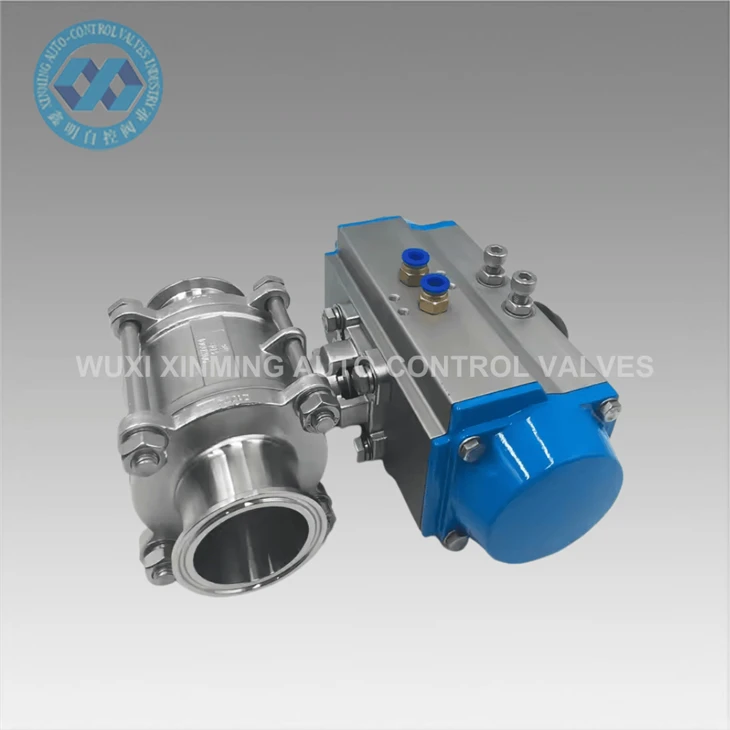
Now, let's consider the different types of sanitary ball valves available. There's the Sanitary Pneumatic Ball Valve. This type of valve is powered by compressed air, which allows for quick and precise control of the flow. In continuous operation, where rapid adjustments may be needed, the pneumatic ball valve shines. It can be easily integrated into automated control systems, making it a popular choice for large - scale continuous processes.
The Thin Ball Valve is another option. It has a more compact design, which can be beneficial in applications where space is limited. Despite its thin profile, it still offers reliable performance in continuous operation. Its reduced size doesn't compromise on the essential functions of a sanitary ball valve, such as sealing and flow control.
Then there's the Thread Ball Valve. This valve is easy to install and remove, which is useful for maintenance during continuous operation. Threaded connections provide a secure fit, and the valve can be quickly replaced or serviced without causing long - term disruptions to the process.
But of course, the reliability of a sanitary ball valve also depends on proper installation and maintenance. During installation, it's important to ensure that the valve is correctly aligned and tightened. Any misalignment can lead to uneven stress on the valve components, which may cause premature failure. Regular maintenance is also essential. This includes cleaning the valve to remove any debris or buildup, inspecting the seals for wear, and lubricating the moving parts if necessary.
In continuous operation, monitoring the performance of the sanitary ball valve is crucial. You can use sensors to detect any changes in pressure, flow rate, or temperature. If there are any deviations from the normal operating parameters, it could be a sign of a problem with the valve. Early detection allows for timely repairs or replacements, preventing more serious issues from occurring.
However, like any mechanical device, a sanitary ball valve is not completely immune to problems. Over time, even with proper maintenance, the seals may start to degrade, or the ball may experience some wear. But if you choose a high - quality valve from a reputable supplier, these issues can be minimized.
When it comes to choosing a sanitary ball valve for continuous operation, you need to consider your specific requirements. Think about the type of fluid you'll be handling, the pressure and temperature conditions, and the level of automation you need. Our company offers a wide range of sanitary ball valves to meet different needs. We understand the importance of reliability in continuous operation, and we're committed to providing products that can stand up to the demands of your processes.
If you're in the market for a reliable sanitary ball valve for your continuous operation, I encourage you to reach out to us. We can help you select the right valve for your application and provide all the support you need. Whether you're a small - scale producer or a large - scale industrial facility, we have solutions that can work for you.
In conclusion, the reliability of a sanitary ball valve in continuous operation is influenced by many factors, including design, materials, installation, and maintenance. By choosing the right valve and taking proper care of it, you can ensure smooth and efficient continuous processes. So, don't hesitate to contact us for more information or to start a procurement discussion. We're here to help you make the best choice for your business.

References
- Valve Handbook, Industrial Valve Manufacturers Association
- Sanitary Equipment Design Guidelines, Food and Beverage Industry Standards Organization




