In the field of industrial automation, limit switch boxes play a crucial role in ensuring the safety and efficiency of various mechanical systems. As a reputable supplier of limit switch boxes, I often encounter inquiries regarding the response time of these essential components. In this blog post, I will delve into the concept of response time, its significance, and the factors that influence it.
Understanding Response Time
The response time of a limit switch box refers to the time interval between the moment when the switch is actuated and the moment when it provides an output signal. In simpler terms, it is the time it takes for the switch to detect a change in its operating conditions and transmit this information to the control system. This time can vary depending on several factors, including the type of switch, its design, and the specific application.
Significance of Response Time
Response time is a critical parameter in many industrial applications. In high - speed processes, a delay in the switch's response can lead to inaccurate positioning, equipment damage, or even safety hazards. For example, in a conveyor belt system, if the limit switch box that controls the belt's movement has a slow response time, the belt may overshoot its intended stopping point, causing products to fall off or collide with other equipment.
In safety - critical applications, such as emergency stop systems, a fast response time is essential to prevent accidents. If a limit switch box fails to send a signal promptly when an abnormal condition is detected, it can compromise the safety of operators and the integrity of the entire system.
Factors Affecting Response Time
Switch Type
There are different types of limit switches, such as mechanical, magnetic, and optical switches. Each type has its own characteristic response time.
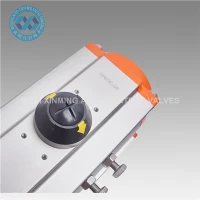
- Mechanical Limit Switches: These switches rely on physical contact to operate. When an object comes into contact with the actuator of the switch, it causes a mechanical movement that closes or opens an electrical circuit. Mechanical switches generally have a relatively longer response time compared to other types, typically in the range of milliseconds. This is because the mechanical movement takes time to occur. For instance, the ISO 5211 Mechanical Limit Switch For Pneumatic Valves is a mechanical switch, and its response time is influenced by the speed at which the valve actuator moves and the mechanical components inside the switch.
- Magnetic Limit Switches: These switches use magnetic fields to detect the presence or absence of an object. They are faster than mechanical switches as there are no moving parts involved in the detection process. Magnetic switches can have response times in the microsecond range, making them suitable for high - speed applications.
- Optical Limit Switches: Optical switches use light beams to detect objects. They are extremely fast, with response times often in the nanosecond range. Optical switches are commonly used in applications where high - speed detection is required, such as in automated packaging lines.
Switch Design
The internal design of the limit switch box also affects its response time. Factors such as the quality of the electrical contacts, the type of circuitry used, and the mechanical construction can all impact how quickly the switch can respond.
- Contact Materials and Quality: High - quality contact materials with low resistance can reduce the time it takes for the electrical signal to be transmitted. For example, gold - plated contacts have better conductivity than other materials, which can result in a faster response time.
- Circuitry Complexity: Simple circuits generally have faster response times than complex ones. A switch with a straightforward electrical design will be able to process the signal more quickly and send it to the control system.
Environmental Conditions
The environment in which the limit switch box operates can also influence its response time.
- Temperature: Extreme temperatures can affect the performance of the switch. High temperatures can cause the materials inside the switch to expand, which may slow down the mechanical movement or affect the electrical properties of the components. Low temperatures, on the other hand, can make the materials more brittle and less responsive.
- Vibration and Shock: Excessive vibration and shock can cause the switch to malfunction or delay its response. In applications where there is a lot of vibration, special mounting techniques or vibration - resistant switches may be required to ensure reliable operation.
Measuring Response Time
Measuring the response time of a limit switch box typically involves using specialized testing equipment. A signal generator is used to actuate the switch, and an oscilloscope is used to measure the time interval between the actuation signal and the output signal. This process allows for accurate determination of the switch's response time under specific conditions.
Our Limit Switch Box Offerings
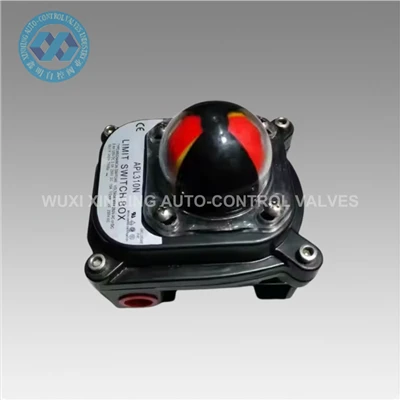
As a supplier, we offer a wide range of limit switch boxes to meet the diverse needs of our customers. Our APL210 Limit Switch Box is a popular choice for many industrial applications. It is designed with high - quality components to ensure reliable and fast operation. The switch is available in different configurations, including mechanical, magnetic, and optical options, allowing customers to choose the type that best suits their requirements.
For applications in hazardous environments, we also provide Explosion - proof Limit Switch Box. These boxes are designed to prevent the ignition of explosive gases or dust, making them suitable for use in industries such as oil and gas, chemical processing, and mining. Despite the additional safety features, our explosion - proof limit switch boxes still offer fast response times to ensure the safety and efficiency of the system.

Conclusion
The response time of a limit switch box is a crucial factor that can significantly impact the performance and safety of industrial systems. By understanding the factors that affect response time, customers can make informed decisions when selecting the right limit switch box for their applications.
As a leading supplier of limit switch boxes, we are committed to providing high - quality products with fast response times. Our team of experts can help you choose the most suitable limit switch box based on your specific requirements. If you are interested in learning more about our products or have any questions regarding response time, please feel free to contact us for a detailed discussion. We look forward to working with you to meet your industrial automation needs.
References
- "Industrial Automation Handbook", John Wiley & Sons, Inc.
- "Limit Switch Technology and Applications", Springer Publishing