As a supplier of manual handwheels, I often encounter inquiries about various technical aspects of our products. One question that comes up quite frequently is, "What is the static friction coefficient of a manual handwheel?" In this blog post, I'll delve into this topic, explaining what the static friction coefficient is, why it matters for manual handwheels, and how it affects the performance of our products.
Understanding the Static Friction Coefficient
Before we discuss the static friction coefficient in the context of manual handwheels, let's first understand what it means. Friction is the force that resists the relative motion between two surfaces in contact. The static friction coefficient, denoted as μs, is a dimensionless quantity that represents the ratio of the maximum static friction force (Ff) between two surfaces to the normal force (Fn) pressing the surfaces together. Mathematically, it can be expressed as:
μs = Ff / Fn
The static friction force is the force that must be overcome to start moving an object at rest. Once the object starts moving, the friction changes to kinetic friction, which is generally lower than static friction. The value of the static friction coefficient depends on the nature of the two surfaces in contact. For example, rubber on concrete has a higher static friction coefficient than ice on ice.
Importance of the Static Friction Coefficient in Manual Handwheels
In the case of manual handwheels, the static friction coefficient plays a crucial role in determining how easy or difficult it is to turn the handwheel. A higher static friction coefficient means that more force is required to start turning the handwheel, while a lower coefficient allows for easier operation.
The appropriate static friction coefficient for a manual handwheel depends on its intended application. For applications where precise control is required, such as in laboratory equipment or precision machinery, a higher static friction coefficient may be desirable. This ensures that the handwheel does not move accidentally and provides better stability during operation. On the other hand, for applications where quick and easy adjustment is needed, such as in some industrial settings, a lower static friction coefficient may be more appropriate.
Factors Affecting the Static Friction Coefficient of Manual Handwheels
Several factors can affect the static friction coefficient of a manual handwheel. Here are some of the key factors:
Material of the Handwheel and the Contact Surface
The materials used to manufacture the handwheel and the surface it comes into contact with have a significant impact on the static friction coefficient. For example, a handwheel made of rubber will generally have a higher static friction coefficient when in contact with a metal surface compared to a plastic handwheel. Different types of metals also have different friction characteristics. Stainless steel, for instance, may have a different static friction coefficient than aluminum.

Surface Finish
The surface finish of the handwheel and the contact surface can also affect the static friction coefficient. A rough surface finish will generally result in a higher static friction coefficient compared to a smooth surface. This is because the rough surface provides more points of contact between the two surfaces, increasing the frictional force. However, a very rough surface may also cause wear and tear over time, which can affect the performance of the handwheel.
Lubrication
Lubrication can significantly reduce the static friction coefficient. By applying a lubricant between the handwheel and the contact surface, the frictional force is reduced, making it easier to turn the handwheel. However, the type of lubricant used and the frequency of application need to be carefully considered. Some lubricants may not be suitable for certain applications, and over - lubrication can also cause problems such as dirt and debris accumulation.
Measuring the Static Friction Coefficient of Manual Handwheels
Measuring the static friction coefficient of a manual handwheel typically involves using a force - measuring device. The handwheel is placed in contact with the relevant surface, and a gradually increasing force is applied until the handwheel starts to move. The maximum force applied just before the handwheel starts moving is the static friction force. The normal force is determined by the weight of the handwheel or any additional forces pressing it against the surface. By dividing the static friction force by the normal force, the static friction coefficient can be calculated.
Our Product Range and the Static Friction Coefficient
At our company, we offer a wide range of manual handwheels to meet different customer needs. Each type of handwheel is designed with the appropriate static friction coefficient in mind, based on its intended application.
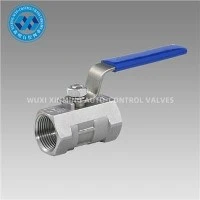
For example, our Pneumatic Actuator Internal Thread Stainless Steel 316 3pcs Pneumatic Bi - directional Ball Valve is designed for applications where a certain level of stability is required. The handwheel is made of high - quality stainless steel, which provides a suitable static friction coefficient when in contact with the valve components. This ensures that the handwheel can be easily adjusted while also maintaining its position during operation.
Our Explosion - Proof ATEX Handwheel – Brass Body For Hazardous Areas is another product where the static friction coefficient is carefully considered. In hazardous areas, it is crucial that the handwheel does not move accidentally. The brass body of the handwheel, combined with the appropriate surface finish, provides a relatively high static friction coefficient, ensuring safe and reliable operation.
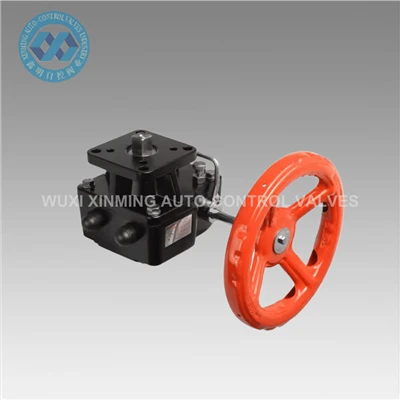
The Manual Override Gearbox in our product range also benefits from an optimized static friction coefficient. The handwheel used in the gearbox is designed to provide smooth and precise operation, with a static friction coefficient that allows for easy turning when needed but also maintains its position when not in use.
Conclusion
The static friction coefficient of a manual handwheel is an important parameter that affects its performance and usability. As a supplier, we understand the significance of this factor and ensure that our products are designed with the appropriate static friction coefficient for their intended applications. Whether you need a handwheel for precise control or quick adjustment, we have the right solution for you.
If you are interested in our manual handwheels or have any questions regarding the static friction coefficient or other technical aspects, we encourage you to contact us for a detailed discussion. Our team of experts is always ready to assist you in finding the best product for your specific needs.
References
- "Engineering Mechanics: Statics" by J.L. Meriam and L.G. Kraige
- "Friction and Wear of Materials" by M. J. Neale