What is the Static Performance of a Solenoid Valve?
As a leading solenoid valve supplier, I often get asked about the static performance of solenoid valves. Understanding the static performance is crucial for customers to choose the right solenoid valve for their specific applications. In this blog post, I'll delve into what static performance means, its key aspects, and how it relates to our range of solenoid valves.
Definition of Static Performance
The static performance of a solenoid valve refers to the characteristics and behaviors of the valve when it is in a steady - state condition. Unlike dynamic performance, which focuses on how the valve responds during the process of opening and closing, static performance is about the valve's state after it has reached a stable position. It provides a snapshot of the valve's capabilities under constant operating conditions.
Key Aspects of Static Performance
1. Flow Rate
One of the most important aspects of static performance is the flow rate. The flow rate of a solenoid valve is the volume of fluid (either gas or liquid) that can pass through the valve per unit of time under specific pressure and temperature conditions. It is typically measured in liters per minute (L/min) for gases and cubic meters per hour (m³/h) for liquids.
Our 2 - way 5 - port High - pressure Pneumatic Solenoid Valve (0 - 10MPa) is designed to handle high - pressure pneumatic applications. It has a well - defined flow rate curve that shows how the flow rate changes with different inlet pressures. For example, at a certain pressure, it can achieve a high flow rate, which is essential for applications where a large volume of air needs to be controlled quickly.
2. Pressure Rating
The pressure rating of a solenoid valve indicates the maximum pressure that the valve can withstand without experiencing damage or leakage. It is a critical parameter, especially in high - pressure applications. Solenoid valves are designed to operate within a specific pressure range, and exceeding this range can lead to valve failure.
Our Durable Pneumatic Solenoid Valve is built to have a high - pressure rating. This makes it suitable for industrial applications where high - pressure air or gas needs to be regulated. The valve's construction materials and design are carefully selected to ensure that it can maintain its integrity under high - pressure conditions.
3. Leakage Rate
Leakage rate is another important aspect of static performance. It refers to the amount of fluid that escapes from the valve when it is in the closed position. A low leakage rate is desirable in most applications, as it ensures that the valve can effectively control the flow of fluid and prevent waste.
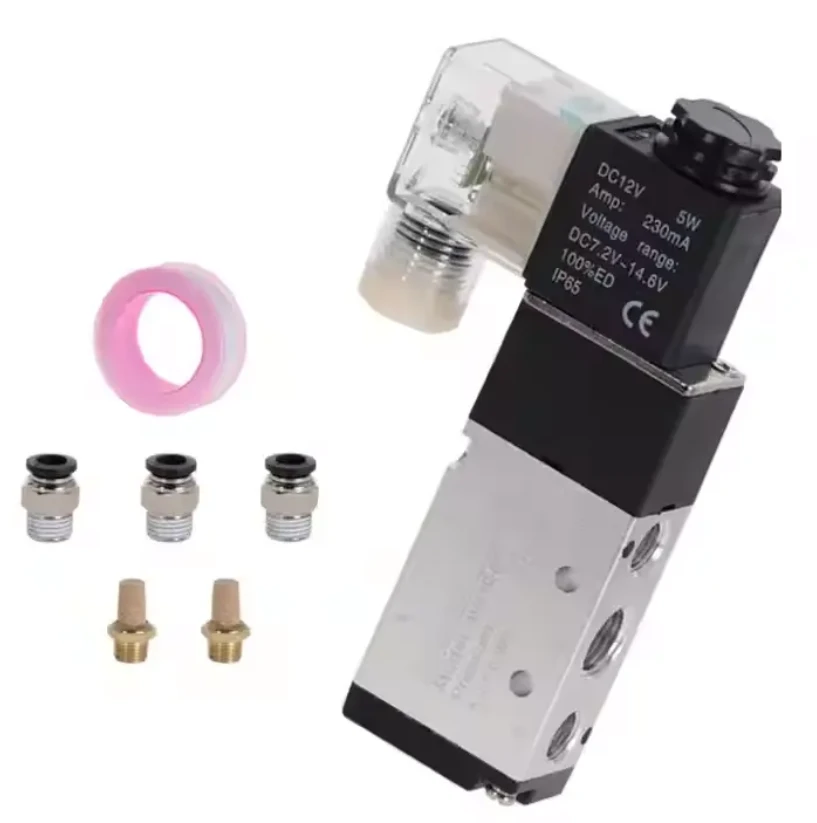
We conduct rigorous testing on our solenoid valves to ensure that they have a low leakage rate. For example, our Pneumatic Solenoid Valve 5 Way 2 - position Control Air 12V 24V is tested to meet strict leakage standards. This is crucial for applications where precise control of air flow is required, such as in pneumatic automation systems.
4. Temperature Range
The temperature range of a solenoid valve is the range of temperatures within which the valve can operate effectively. Different materials used in the construction of the valve have different temperature tolerances. If the operating temperature exceeds the specified range, the valve may experience problems such as material degradation, reduced sealing performance, or even mechanical failure.
Our solenoid valves are designed to operate within a wide temperature range. This allows them to be used in various environments, from cold storage facilities to high - temperature industrial processes. We carefully select the materials for our valves to ensure that they can withstand the temperature variations in different applications.
How Static Performance Affects Application Selection
The static performance of a solenoid valve directly affects its suitability for different applications. For example, in a pneumatic automation system where fast and precise control of air flow is required, a valve with a high flow rate and low leakage rate is essential. On the other hand, in a high - pressure hydraulic application, a valve with a high - pressure rating and good temperature resistance is needed.
Let's take the example of a manufacturing plant that uses pneumatic cylinders for assembly operations. The plant needs to control the air flow to the cylinders accurately. A solenoid valve with a well - defined flow rate and low leakage rate, like our Pneumatic Solenoid Valve 5 Way 2 - position Control Air 12V 24V, would be an ideal choice. This valve can ensure that the cylinders operate smoothly and efficiently, reducing downtime and improving productivity.
Importance of Accurate Static Performance Data
As a solenoid valve supplier, we understand the importance of providing accurate static performance data to our customers. This data helps them make informed decisions when selecting a solenoid valve for their applications. We conduct extensive testing on our valves to obtain reliable performance data, including flow rate, pressure rating, leakage rate, and temperature range.
Our technical support team is also available to assist customers in interpreting the static performance data and choosing the right valve for their specific needs. We believe that by providing accurate information and excellent customer service, we can build long - term relationships with our customers.
Conclusion
In conclusion, the static performance of a solenoid valve is a set of key characteristics that determine its suitability for different applications. Flow rate, pressure rating, leakage rate, and temperature range are some of the most important aspects of static performance. At our company, we are committed to providing high - quality solenoid valves with well - defined static performance.
If you are in the market for a solenoid valve and need more information about static performance or want to discuss your specific application requirements, please feel free to contact us. Our team of experts is ready to assist you in finding the perfect solenoid valve for your needs. Let's start a conversation and explore how our solenoid valves can improve the efficiency and reliability of your systems.

References
- "Solenoid Valve Handbook", published by a leading valve industry association.
- Technical documentation from our in - house research and development department on solenoid valve performance testing.