In the realm of industrial fluid control, vacuum ball valves play a pivotal role. As a dedicated Vacuum Ball Valve supplier, I often encounter a common question from our clients: "Which is more suitable, a manual or an automatic vacuum ball valve?" This blog post aims to delve into the characteristics, advantages, and application scenarios of both types to help you make an informed decision.
Manual Vacuum Ball Valves
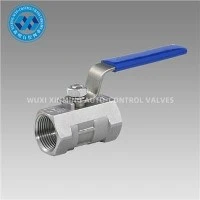
Manual vacuum ball valves are the traditional choice in many industries. They are operated by hand, typically through a lever or a handwheel. One of the most significant advantages of manual valves is their simplicity. With fewer components compared to automatic valves, there are fewer things that can go wrong. This simplicity translates into lower maintenance requirements and costs. For small - scale operations or applications where the valve doesn't need to be adjusted frequently, a manual valve can be a cost - effective solution.
Another advantage of manual vacuum ball valves is their reliability. Since they don't rely on external power sources such as electricity or compressed air, they can function even in the event of a power outage. This makes them ideal for critical applications where continuous operation is essential, and power interruptions are a concern. For example, in some research laboratories where experiments need to be maintained under specific vacuum conditions, a manual valve can ensure that the system remains stable during power fluctuations.
However, manual valves also have their limitations. The operation of manual valves requires physical effort, which can be a drawback in applications where the valve needs to be adjusted frequently or in hard - to - reach locations. In large industrial plants, operators may have to walk long distances to reach the valve, which can be time - consuming and inefficient. Moreover, the accuracy of manual valve adjustment depends on the operator's skill and experience. In applications where precise flow control is required, it can be challenging to achieve consistent results with manual valves.
Automatic Vacuum Ball Valves
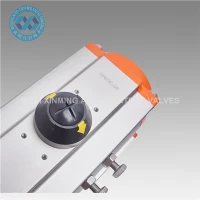
Automatic vacuum ball valves, on the other hand, offer a high level of convenience and precision. These valves can be controlled remotely, either through a control panel or a computer system. This allows for quick and easy adjustment of the valve, regardless of its location. In modern industrial automation systems, automatic valves are often integrated with sensors and controllers to achieve real - time monitoring and adjustment of the fluid flow.
One of the key advantages of automatic valves is their ability to provide precise control. They can be programmed to open or close at specific intervals or in response to certain conditions, such as pressure changes or flow rates. This makes them suitable for applications where accurate control is crucial, such as in the chemical industry, where precise dosing of chemicals is required.
Automatic valves also improve operational efficiency. In large - scale industrial processes, multiple valves can be controlled simultaneously, reducing the time and labor required for manual operation. This can lead to significant cost savings in the long run. Additionally, automatic valves can be integrated with safety systems. For example, in case of an emergency, the valves can be programmed to close automatically to prevent leaks or spills.

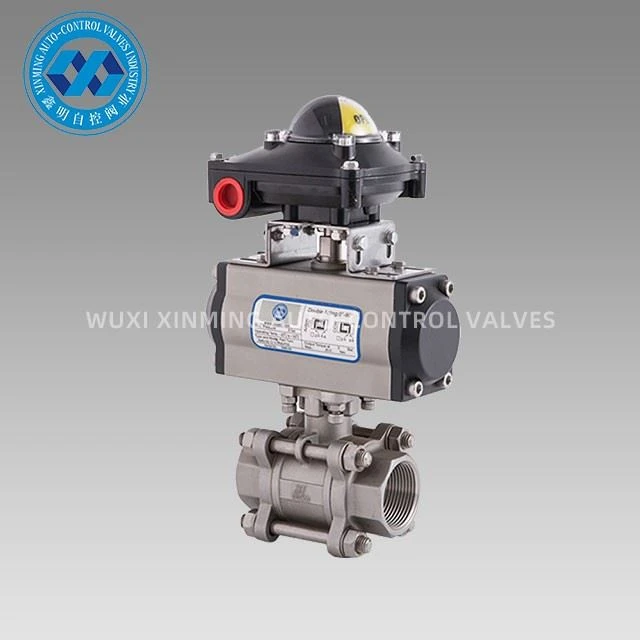
However, automatic valves also have some disadvantages. They are more complex and expensive than manual valves. The installation and maintenance of automatic valves require specialized skills and knowledge. Moreover, they rely on external power sources, which means that a power failure can disrupt their operation. In some cases, backup power systems may need to be installed to ensure continuous operation.
Application Scenarios
The choice between a manual and an automatic vacuum ball valve depends largely on the specific application.
Manual Valve Applications
- Small - scale operations: In small workshops or laboratories where the fluid flow needs to be adjusted infrequently, manual valves are a practical choice. For example, in a small jewelry - making workshop where a vacuum system is used for casting, a manual valve can be easily operated by the technician to control the vacuum level.
- Low - cost projects: When budget is a major concern, manual valves offer a cost - effective solution. They are cheaper to purchase, install, and maintain, making them suitable for projects with limited financial resources.
- Emergency backup: As mentioned earlier, manual valves can serve as a backup in case of power outages or failures in the automatic control system. In a power plant, manual valves can be used to shut down critical systems in an emergency when the automatic valves are not functioning.
Automatic Valve Applications
- Large - scale industrial processes: In industries such as oil and gas, chemical, and power generation, automatic valves are widely used to control the flow of fluids in complex systems. For example, in an oil refinery, automatic valves are used to regulate the flow of crude oil, gasoline, and other products through various pipelines and processing units.
- Precision control applications: In applications where precise control of fluid flow, pressure, or temperature is required, automatic valves are the preferred choice. In the pharmaceutical industry, automatic valves are used to ensure accurate dosing of ingredients in the production of drugs.
- Remote control applications: In situations where the valve is located in a hazardous or hard - to - reach area, automatic valves can be controlled remotely, eliminating the need for operators to be physically present. For example, in an offshore oil rig, automatic valves can be controlled from a control room on the platform.
Our Product Offerings
As a Vacuum Ball Valve supplier, we offer a wide range of manual and automatic vacuum ball valves to meet the diverse needs of our customers. Our product portfolio includes Double Acting Plastic Pneumatic Actuator Ball Valve, Pneumatic Actuator Flange Tee Ball Valve, and Pneumatic 3PC Stainless Steel Ball Valve.
Our manual valves are designed for durability and ease of use. They are made from high - quality materials to ensure long - term performance. Our automatic valves, on the other hand, are equipped with advanced control systems to provide precise and reliable operation. We also offer customized solutions to meet the specific requirements of our customers.
Conclusion
In conclusion, both manual and automatic vacuum ball valves have their own advantages and disadvantages. The choice between the two depends on the specific application, budget, and operational requirements. If simplicity, reliability, and low cost are the main concerns, a manual valve may be the best choice. On the other hand, if precision control, convenience, and efficiency are priorities, an automatic valve is likely to be more suitable.
As a Vacuum Ball Valve supplier, we are committed to providing our customers with the best products and services. If you are interested in our products or need further advice on choosing the right vacuum ball valve for your application, please feel free to contact us for procurement discussions. We look forward to working with you to find the optimal solution for your fluid control needs.
References
- Smith, J. (2018). Industrial Valve Handbook. Elsevier.
- Brown, A. (2020). Fluid Control Systems: Principles and Applications. McGraw - Hill.