The valve seat sealing mechanism of a welded ball valve is a critical aspect that determines its performance and reliability in various industrial applications. As a leading supplier of welded ball valves, I have witnessed firsthand the importance of understanding this mechanism to ensure optimal valve operation.
Basic Structure of a Welded Ball Valve
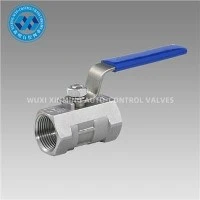
Before delving into the valve seat sealing mechanism, it is essential to understand the basic structure of a welded ball valve. A typical welded ball valve consists of a valve body, a ball, valve seats, stem, and actuator. The valve body is usually welded to ensure a leak - tight and robust structure. The ball, which has a spherical shape with a through - hole, is the main flow - control element. The valve seats are located on either side of the ball and play a crucial role in sealing.
The Role of Valve Seats in a Welded Ball Valve
Valve seats in a welded ball valve serve two primary functions. Firstly, they provide a sealing surface against the ball to prevent fluid leakage when the valve is in the closed position. Secondly, they help to support the ball and guide its movement during the opening and closing process.
Types of Valve Seat Sealing Mechanisms
Elastic Deformation Sealing
One of the most common valve seat sealing mechanisms in welded ball valves is based on elastic deformation. In this mechanism, the valve seats are made of elastic materials such as PTFE (Polytetrafluoroethylene) or other elastomers. When the valve is closed, the ball presses against the valve seats, causing the seats to deform elastically. This elastic deformation fills any small gaps between the ball and the seats, creating a tight seal.
The advantage of elastic deformation sealing is its excellent sealing performance, especially for low - pressure applications. It can effectively prevent leakage even with minor surface irregularities on the ball or the seats. However, it has some limitations. Elastic materials may have a limited temperature and pressure resistance. At high temperatures, the elastic properties of the material may degrade, leading to a loss of sealing performance.
Metal - to - Metal Sealing
For high - temperature and high - pressure applications, metal - to - metal sealing is often used. In this mechanism, both the ball and the valve seats are made of metal. When the valve is closed, the metal surfaces of the ball and the seats come into direct contact. To ensure a good seal, the surfaces are usually machined to a high degree of smoothness and flatness.
Metal - to - metal sealing can withstand extreme temperatures and pressures. It is also more resistant to wear and erosion compared to elastic sealing materials. However, achieving a perfect metal - to - metal seal requires precise machining and assembly. Any misalignment or surface damage can lead to leakage.
Hybrid Sealing
Some welded ball valves use a hybrid sealing mechanism that combines the advantages of elastic and metal - to - metal sealing. For example, a valve may have a metal seat with an elastic insert. The metal seat provides the structural strength and high - temperature resistance, while the elastic insert enhances the sealing performance at lower pressures and fills any small gaps.
Factors Affecting Valve Seat Sealing
Several factors can affect the valve seat sealing performance of a welded ball valve.
Surface Finish
The surface finish of the ball and the valve seats is crucial. A smooth surface reduces the risk of leakage by minimizing the contact gaps. Rough surfaces can allow fluid to pass through, even if the valve is in the closed position.
Pressure
The pressure of the fluid in the pipeline has a significant impact on the sealing mechanism. Higher pressures can increase the contact force between the ball and the seats, improving the sealing performance in some cases. However, excessive pressure can also cause deformation of the valve components, leading to leakage.
Temperature
Temperature can affect the material properties of the valve seats. As mentioned earlier, elastic materials may lose their elasticity at high temperatures, while metals may expand or contract, affecting the fit between the ball and the seats.
Fluid Properties
The properties of the fluid, such as its viscosity, corrosiveness, and abrasiveness, can also impact the sealing performance. Corrosive fluids can damage the valve seats, while abrasive fluids can cause wear and reduce the sealing effectiveness.
Applications of Welded Ball Valves with Different Sealing Mechanisms
The choice of valve seat sealing mechanism depends on the specific application requirements.
Oil and Gas Industry
In the oil and gas industry, where high - pressure and high - temperature conditions are common, welded ball valves with metal - to - metal or hybrid sealing mechanisms are often used. These valves are used in pipelines, refineries, and offshore platforms to control the flow of oil, gas, and other fluids. For example, in a high - pressure gas pipeline, a welded ball valve with a metal - to - metal seal can ensure reliable operation and prevent leakage.
Chemical Industry
The chemical industry requires valves that can withstand corrosive fluids. Welded ball valves with elastic sealing materials or corrosion - resistant metal seats are commonly used. For instance, a valve with a PTFE seat can be used to control the flow of acids or alkalis in a chemical processing plant.


Water Treatment
In water treatment applications, where the pressure and temperature are relatively low, welded ball valves with elastic deformation sealing are often sufficient. These valves are used to control the flow of water in pipelines, treatment plants, and distribution systems.
Our Welded Ball Valve Offerings
As a supplier of welded ball valves, we offer a wide range of products with different valve seat sealing mechanisms to meet the diverse needs of our customers. Our Pneumatic 3PC Stainless Steel Ball Valve is a popular choice for applications that require precise control and reliable sealing. It features a high - quality valve seat design that ensures excellent performance.
Our Thread Ball Valve is another option for smaller - scale applications. It is easy to install and provides a cost - effective solution with good sealing performance.
For more complex applications, our 180 Degree Pneumatic Actuator 3 Way Ball Valve, 3 Way Ball Valve With Pneumatic Actuator offers advanced functionality and reliable sealing.
Conclusion
The valve seat sealing mechanism of a welded ball valve is a complex but essential aspect of its design. Understanding the different types of sealing mechanisms, the factors that affect sealing performance, and the appropriate applications for each mechanism is crucial for selecting the right valve for a specific project. As a supplier, we are committed to providing high - quality welded ball valves with reliable sealing performance. If you are in need of welded ball valves for your industrial applications, we invite you to contact us for further discussion and procurement. We can help you choose the most suitable valve based on your specific requirements.
References
- Valve Handbook, 4th Edition, by J. S. T. Smith
- Industrial Valves: Selection and Sizing, by R. W. Miller
- Ball Valves: Design, Application, and Maintenance, by A. B. Johnson