Hey there! As a supplier of pneumatic ball valves, I've seen firsthand how important it is to understand the different types of seals used in these valves. Seals play a crucial role in ensuring the proper functioning and longevity of pneumatic ball valves. They prevent leaks, keep out contaminants, and maintain the integrity of the system. In this blog post, I'm going to walk you through the various types of seals commonly used in pneumatic ball valves.
1. O - Ring Seals
O - rings are one of the most common types of seals used in pneumatic ball valves. They are simple, yet effective. An O - ring is a circular rubber or elastomeric ring that is placed in a groove around the ball or the valve seat. When the valve is assembled, the O - ring gets compressed, creating a tight seal.
The main advantage of O - ring seals is their versatility. They can be made from different materials such as nitrile rubber (NBR), fluorocarbon rubber (FKM), and ethylene propylene diene monomer (EPDM). Nitrile O - rings are great for general - purpose applications and can handle a wide range of temperatures and pressures. FKM O - rings, on the other hand, are highly resistant to chemicals and high temperatures, making them suitable for more harsh environments. EPDM O - rings are resistant to water, steam, and some chemicals, and are often used in applications where contact with these substances is common.
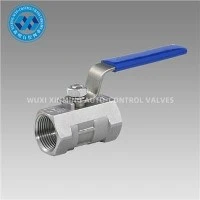
If you're looking for a reliable and cost - effective seal for your pneumatic ball valve, O - rings are a go - to choice. You can find O - ring seals in many of our Stainless Steel Ball Valve products, which offer great performance for a variety of industrial applications.
2. Lip Seals
Lip seals are another important type of seal used in pneumatic ball valves. Unlike O - rings, which have a circular cross - section, lip seals have a flexible lip that makes contact with the surface to be sealed. The lip acts as a barrier, preventing the leakage of air or fluid.
Lip seals are typically made from rubber or elastomers, and they can be designed with different lip configurations depending on the specific application. For example, some lip seals have a single lip, while others have multiple lips for enhanced sealing performance.
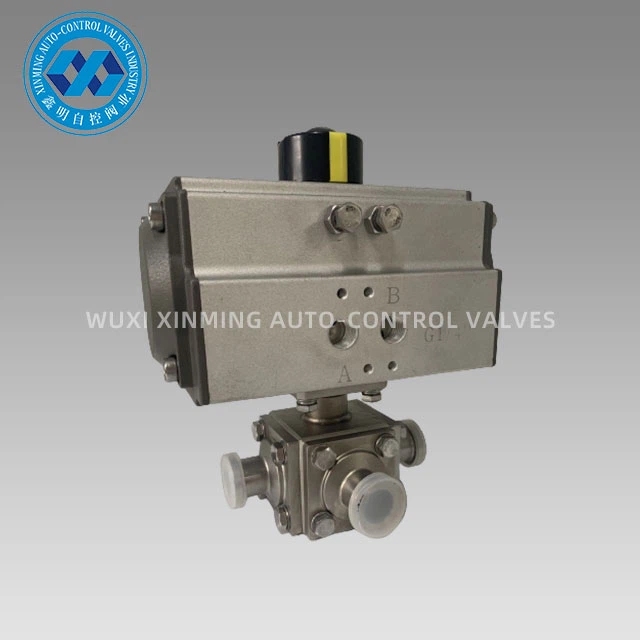
One of the key benefits of lip seals is their ability to adapt to changes in pressure and temperature. They can maintain a good seal even when the conditions inside the valve change. Lip seals are often used in applications where low friction is required, as they have a relatively low contact area with the sealing surface. You can find lip seals in our Pneumatic Actuator Tri - clamp Three Way Ball Valve, which is designed for precise control in various fluid systems.
3. Metal Seals
Metal seals are used in high - performance and high - temperature applications. They are typically made from materials such as stainless steel, brass, or bronze. Metal seals offer excellent durability and can withstand extreme temperatures and pressures that rubber or elastomeric seals may not be able to handle.
One of the main types of metal seals used in pneumatic ball valves is the metal - to - metal seal. In a metal - to - metal seal, the ball and the valve seat are both made of metal, and they come into direct contact with each other to form a seal. This type of seal is very reliable in applications where there is a need for zero leakage, such as in the oil and gas industry.
However, metal seals also have some drawbacks. They are more expensive than rubber or elastomeric seals, and they require more precise machining and installation. But if you're dealing with a high - pressure, high - temperature application, a metal - sealed pneumatic ball valve is definitely worth considering. Our Pneumatic Actuator Flange Tee Ball Valve is available with metal seals for those demanding applications.
4. Graphite Seals
Graphite seals are often used in applications where high - temperature and chemical resistance are required. Graphite is a soft, lubricious material that can form a good seal even at high temperatures. It is also resistant to many chemicals, making it suitable for use in corrosive environments.

Graphite seals can be used in combination with other seals, such as O - rings or metal seals, to enhance the sealing performance. For example, a graphite - filled O - ring can provide better sealing at high temperatures than a regular O - ring.
One of the challenges with graphite seals is that they can be brittle and may require careful handling during installation. But if you need a seal that can withstand high temperatures and harsh chemicals, graphite seals are a good option.
5. PTFE Seals
Polytetrafluoroethylene (PTFE) seals are known for their excellent chemical resistance and low friction properties. PTFE is a synthetic fluoropolymer that is highly resistant to a wide range of chemicals, including acids, bases, and solvents.
PTFE seals can be used in different forms, such as gaskets, O - rings, or valve seats. They are often used in applications where there is a need to prevent the contamination of the fluid or gas being handled. For example, in the food and beverage industry, PTFE - sealed pneumatic ball valves are commonly used to ensure the purity of the products.
However, PTFE seals also have some limitations. They have a relatively low hardness, which means they can be easily damaged if not installed correctly. They also have a high coefficient of thermal expansion, which can cause problems in applications where there are large temperature variations.
Choosing the Right Seal
When it comes to choosing the right seal for your pneumatic ball valve, there are several factors to consider. First, you need to think about the operating conditions, such as temperature, pressure, and the nature of the fluid or gas being handled. If you're dealing with high temperatures, you may need a metal or graphite seal. If chemical resistance is a priority, PTFE or FKM seals could be a better choice.
Second, consider the cost. Some seals, like metal seals, are more expensive than others. You need to balance the performance requirements with the budget.
Finally, think about the installation and maintenance. Some seals may require more precise installation or more frequent maintenance. Make sure you choose a seal that is easy to install and maintain in your specific application.
At our company, we have a wide range of pneumatic ball valves with different types of seals to meet your needs. Whether you need a valve for a general - purpose application or a high - performance, high - temperature application, we've got you covered.
If you're interested in learning more about our pneumatic ball valves or have questions about the seals, don't hesitate to reach out. We'd love to discuss your requirements and help you find the perfect valve for your project. Contact us today to start the procurement process and let's work together to get the best solution for your pneumatic system.