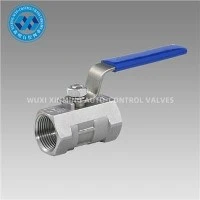
As a trusted supplier of Thread Ball Valves, I understand the critical role that lubricants play in ensuring the optimal performance and longevity of these essential components. Thread ball valves are widely used in various industries, including oil and gas, chemical processing, water treatment, and more. The right lubricant can significantly enhance the valve's functionality, reduce wear and tear, and prevent corrosion, ensuring smooth operation and minimizing downtime. In this blog post, I will explore the different types of lubricants suitable for thread ball valves and provide insights on selecting the best option for your specific application.
Understanding the Function of Lubricants in Thread Ball Valves
Before delving into the types of lubricants, it's important to understand their primary functions in thread ball valves. Lubricants serve several crucial purposes:
- Reducing Friction: Thread ball valves operate by rotating a ball with a bore through it to control the flow of fluid. The movement of the ball against the valve seats and stem can generate friction, which can lead to premature wear and reduced efficiency. Lubricants create a thin film between the moving parts, reducing friction and allowing for smoother operation.
- Preventing Corrosion: Thread ball valves are often exposed to harsh environments, including corrosive chemicals, high temperatures, and moisture. Lubricants can provide a protective barrier against corrosion, preventing rust and other forms of degradation that can compromise the valve's integrity.
- Sealing: A proper lubricant can also improve the sealing performance of the valve. It fills in any microscopic gaps between the ball and the seats, preventing leakage and ensuring a tight seal.
- Extending Lifespan: By reducing friction and preventing corrosion, lubricants can significantly extend the lifespan of thread ball valves. This reduces the need for frequent replacements, saving time and money in the long run.
Types of Lubricants for Thread Ball Valves
There are several types of lubricants available for thread ball valves, each with its own unique properties and applications. The choice of lubricant depends on various factors, including the type of fluid being handled, the operating temperature and pressure, and the valve's material. Here are some of the most common types of lubricants used for thread ball valves:
Greases
Greases are a popular choice for thread ball valves due to their high viscosity and ability to adhere to surfaces. They consist of a base oil thickened with a soap or other thickening agent. Greases offer excellent lubrication and sealing properties, making them suitable for a wide range of applications.
- Silicone Grease: Silicone grease is a versatile lubricant that is resistant to high temperatures, water, and many chemicals. It is commonly used in applications where the valve is exposed to extreme conditions or where a non-reactive lubricant is required. Silicone grease is also compatible with most elastomers, making it suitable for use with rubber seals.
- Polyurea Grease: Polyurea grease is a synthetic lubricant that offers excellent oxidation resistance and high-temperature performance. It is often used in applications where the valve operates at elevated temperatures or in harsh environments. Polyurea grease also has good water resistance and can provide long-lasting lubrication.
- Lithium Grease: Lithium grease is a widely used lubricant that is known for its good lubrication properties and compatibility with a variety of materials. It is suitable for general-purpose applications and can provide effective protection against corrosion and wear. Lithium grease is also relatively inexpensive, making it a cost-effective option for many users.
Oils
Oils are another type of lubricant that can be used for thread ball valves. They have a lower viscosity than greases, which allows them to flow more easily and penetrate into tight spaces. Oils are often used in applications where a thinner lubricant is required or where continuous lubrication is needed.
- Mineral Oil: Mineral oil is a common lubricant that is derived from petroleum. It is relatively inexpensive and offers good lubrication properties. Mineral oil is suitable for general-purpose applications and can provide effective protection against corrosion and wear. However, it may not be suitable for use in applications where the valve is exposed to high temperatures or harsh chemicals.
- Synthetic Oil: Synthetic oil is a lubricant that is artificially manufactured from chemical compounds. It offers superior performance compared to mineral oil, including better oxidation resistance, high-temperature stability, and low-temperature fluidity. Synthetic oil is often used in applications where the valve operates under extreme conditions or where a high-performance lubricant is required.
- Food-Grade Oil: Food-grade oil is a lubricant that is specifically designed for use in applications where the valve comes into contact with food or beverages. It is made from non-toxic and non-allergenic materials and meets strict safety standards. Food-grade oil is commonly used in the food and beverage industry, as well as in pharmaceutical and cosmetic applications.
Dry Lubricants
Dry lubricants are a type of lubricant that do not contain any liquid or grease. They are typically made from solid materials, such as graphite, molybdenum disulfide, or PTFE (polytetrafluoroethylene). Dry lubricants offer several advantages, including low friction, high-temperature resistance, and the ability to operate in dry or dusty environments.
- Graphite: Graphite is a natural mineral that is commonly used as a dry lubricant. It has excellent lubrication properties and can provide effective protection against wear and corrosion. Graphite is also resistant to high temperatures and can operate in dry or dusty environments. It is often used in applications where the valve is exposed to extreme conditions or where a non-greasy lubricant is required.
- Molybdenum Disulfide: Molybdenum disulfide is a synthetic compound that is commonly used as a dry lubricant. It has a low coefficient of friction and can provide excellent lubrication in high-pressure and high-temperature applications. Molybdenum disulfide is also resistant to corrosion and can operate in dry or dusty environments. It is often used in applications where the valve is exposed to extreme conditions or where a high-performance lubricant is required.
- PTFE: PTFE is a synthetic polymer that is commonly used as a dry lubricant. It has a very low coefficient of friction and is highly resistant to chemicals, heat, and wear. PTFE is often used in applications where the valve is exposed to harsh chemicals or where a non-stick surface is required. It is also commonly used in the food and beverage industry, as well as in pharmaceutical and cosmetic applications.
Selecting the Right Lubricant for Your Thread Ball Valve
Selecting the right lubricant for your thread ball valve is crucial to ensure optimal performance and longevity. Here are some factors to consider when choosing a lubricant:
- Fluid Compatibility: The lubricant must be compatible with the fluid being handled by the valve. Some fluids, such as acids, bases, and solvents, can react with certain lubricants, causing degradation or damage. It is important to choose a lubricant that is resistant to the specific fluid or chemicals in your application.
- Operating Temperature and Pressure: The lubricant must be able to withstand the operating temperature and pressure of the valve. High temperatures can cause the lubricant to break down or evaporate, while high pressures can cause the lubricant to be squeezed out of the valve. It is important to choose a lubricant that has a high-temperature and high-pressure rating that is suitable for your application.
- Valve Material: The lubricant must be compatible with the material of the valve. Some lubricants can react with certain metals or elastomers, causing corrosion or swelling. It is important to choose a lubricant that is compatible with the specific material of your valve.
- Application Requirements: The lubricant must meet the specific requirements of your application. For example, if the valve is used in a food or beverage application, the lubricant must be food-grade and meet strict safety standards. If the valve is used in a high-speed application, the lubricant must have a low coefficient of friction to reduce wear and heat generation.
Our Thread Ball Valve Products and Lubrication Recommendations
As a leading supplier of Thread Ball Valves, we offer a wide range of high-quality valves that are designed to meet the needs of various industries. Our valves are available in different sizes, materials, and configurations to suit your specific application. We also provide lubrication recommendations based on the type of valve and the application requirements.
- Intelligent-driven Double-acting Pneumatic Plastic Actuator Ball Valve For Precise Opening Control: This valve is suitable for applications where precise opening control is required. We recommend using a high-quality silicone grease or synthetic oil for lubrication to ensure smooth operation and long-lasting performance.
- Segment Control Valve With Pneumatic Actuator: This valve is designed for applications where accurate flow control is needed. We suggest using a polyurea grease or a high-temperature synthetic oil for lubrication to provide excellent lubrication and protection against wear and corrosion.
- Pneumatic Actuator Flange Tee Ball Valve: This valve is commonly used in applications where the flow needs to be diverted or mixed. We recommend using a lithium grease or a food-grade oil for lubrication, depending on the specific application requirements.
Contact Us for More Information and Purchase Inquiries
If you have any questions about our Thread Ball Valves or need further information on lubrication recommendations, please feel free to contact us. Our team of experts is dedicated to providing you with the best solutions for your valve needs. We can also assist you in selecting the right lubricant for your specific application and provide you with a quote for your purchase.
Don't hesitate to reach out to us for more information and to start a discussion about your thread ball valve requirements. We look forward to serving you and helping you find the perfect valve and lubrication solution for your application.