Last month, I was standing in a damp chemical processing facility, looking at a seized 316 stainless steel pneumatic actuator. The client was frustrated. "We bought stainless," they told me, "so why is it rusted solid?"
When we took it back to the workshop at WUXI XINMING AUTO-CONTROL VALVES INDUSTRY CO., LTD. and cut it open, the answer was obvious: the outer cylinder was stainless, but the internal spring and tie rods were standard carbon steel.
As a technical engineer who spends half my time on the shop floor and the other half visiting client sites, I see this happen all the time. Choosing the right stainless steel pneumatic actuator for your ball or butterfly valves isn't just about picking "metal that doesn't rust." It requires a careful look at the entire assembly. Here is my field-tested guide on how to actually choose the right one.
1. Specify "Full Stainless," Not Just "Stainless Exterior"
This is the biggest trap in the industry. If your actuator is going into a corrosive environment (offshore, chemical, or food processing), you must explicitly specify that the internals are also stainless. At Xinming, when we build a 316 SS actuator, the barrel, end caps, pinion, tie rods, and crucially, the springs, are all stainless alloys. If a supplier can't guarantee the internal spring is coated or made of stainless steel, walk away. It will fail from the inside out.
2. Match the Grade to the Real Threat (304 vs. 316)
Don't overpay if you don't need to, but don't cheap out where it hurts.
304 Stainless is perfectly fine for mild corrosive environments, like standard food and beverage plants or indoor water treatment.
316 (or 316L) Stainless is non-negotiable if you have chlorides. I once worked on a coastal desalination project where the sea breeze was heavy with salt. We specified 316L for all butterfly valve actuators. A year later, while nearby 304 units showed surface pitting, the 316L units just needed a quick wipe down. If your site has chlorides, acids, or marine exposure, choose 316.
3. Size for the Valve Type: Ball vs. Butterfly
Stainless steel is heavier and has different friction characteristics than aluminum. You must size the torque correctly based on your valve type.
For Ball Valves: The challenge is breakaway torque. A stainless steel ball valve with tight PTFE seats requires massive initial force to unseat. I always tell my sales engineers to apply a minimum 30% safety margin on the breakaway torque. If the actuator is under-sized, the sudden jolt can actually strip the stainless steel pinion gear.
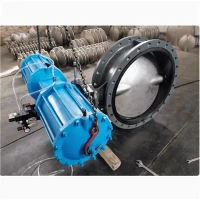
For Butterfly Valves: The challenge is running torque, especially in larger sizes (12 inches and above) with high-pressure or slurry media. The disc is constantly rubbing against the seat. Ensure the actuator's continuous torque output at your minimum plant air pressure (usually 4 to 5 bar, not the ideal 6 bar) exceeds the valve's running torque.
4. Don't Ruin It with Cheap Accessories
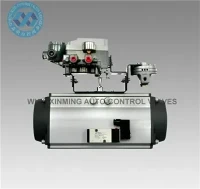
I can't count how many times I've seen a beautiful 316 stainless actuator paired with a cheap, painted aluminum limit switch box or a standard plastic solenoid valve. Six months later, the actuator is fine, but the accessories have corroded, killing the signal. When choosing your actuator, ensure the accessories are also rated for the environment. At Xinming, we automatically pair our SS actuators with IP68 stainless steel or heavy-duty polyamide limit switch boxes and explosion-proof solenoids for harsh zones.
Let's Engineer It Right the First Time
Choosing a stainless steel pneumatic actuator is an investment in your plant's uptime. It shouldn't be a guessing game.
If you are automating ball or butterfly valves in a tough environment, don't just send us a pipe size. Send us your valve torque curve, the specific medium, and the ambient conditions. The engineering team at WUXI XINMING AUTO-CONTROL VALVES INDUSTRY CO., LTD. will provide a free, honest sizing calculation and a true full-stainless solution that won't let you down.
Contact us today, and let's keep your valves moving smoothly, no matter what the environment throws at them.