Selecting the right aluminum pneumatic actuator for ball valves and butterfly valves is critical for achieving reliable valve automation, minimizing maintenance costs, and ensuring long-term system performance. However, many engineers and procurement teams focus only on valve size when choosing an actuator, which often leads to sizing errors, operational failures, and unnecessary expenses.
In reality, successful actuator selection requires a careful evaluation of valve torque, operating conditions, air supply pressure, safety requirements, and environmental factors. This guide explains the key considerations for choosing the right aluminum pneumatic actuator based on practical engineering experience.
Why Aluminum Pneumatic Actuators Are Widely Used
Aluminum pneumatic actuators have become the preferred choice for quarter-turn valve automation across industries such as water treatment, chemical processing, food and beverage, pharmaceuticals, power generation, and oil and gas.
Their popularity comes from several advantages:
- Lightweight yet durable construction
Excellent corrosion resistance through anodized surface treatment
- High strength-to-weight ratio
Cost-effective compared to stainless steel alternatives
- Easy installation and maintenance
Suitable for both indoor and outdoor applications
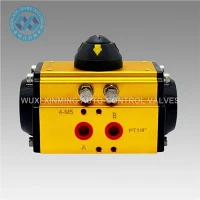
Modern rack and pinion aluminum actuators also provide compact dimensions while delivering high output torque, making them ideal for automating ball valves and butterfly valves.
Step 1: Start with Valve Torque, Not Valve Size
One of the most common mistakes in actuator selection is assuming that larger valves always require larger actuators.
The correct approach is to determine the valve's actual torque requirements.
Three torque values are particularly important:
Breakaway Torque
The force required to move the valve from its fully closed position.
This is usually the highest torque value and often determines actuator sizing.
Running Torque
The torque required while the valve rotates between open and closed positions.
Seating Torque
The torque needed to achieve bubble-tight shutoff at the end of the stroke.
Engineering Example
A DN150 high-performance butterfly valve operating under elevated pressure may require significantly more torque than a DN200 soft-seated ball valve.
This is why experienced engineers always request torque data rather than relying solely on valve dimensions.
Step 2: Evaluate Process Conditions
Valve torque values published in catalogs are typically measured under ideal laboratory conditions.
Actual operating environments can dramatically increase torque requirements.
Important factors include:
Operating Pressure
Higher differential pressure increases valve resistance and operating torque.
This effect is especially noticeable in butterfly valves.
Media Characteristics
Additional torque may be required when handling:
- Slurries
- Wastewater
- Viscous fluids
- Crystallizing chemicals
- Abrasive materials
Temperature
Extreme temperatures can affect:
- Valve seats
- Seals
- Lubrication
- Actuator performance
Operating Frequency
Valves that cycle hundreds of times daily require different actuator specifications than manually operated isolation valves.
Ignoring these conditions can result in premature actuator failure.
Step 3: Apply an Appropriate Safety Factor
In industrial valve automation, sizing an actuator based only on theoretical torque values is risky.
Safety factors help compensate for:
- Pressure fluctuations
- Wear over time
- Media buildup
- Seal aging
- Unexpected operating conditions
Recommended safety factors are:
| Service Condition | Safety Factor |
| Clean water service | 1.25–1.5 |
| General industrial applications | 1.5–2.0 |
| Severe service conditions | 2.0–2.5 |
Example
Maximum valve torque: 400 Nm
Safety factor: 1.5
Required actuator torque:
400 × 1.5 = 600 Nm
The selected actuator should provide at least 600 Nm output torque under actual operating air pressure.
Step 4: Choose Between Double-Acting and Spring-Return Designs
Double-Acting Aluminum Pneumatic Actuators
Double-acting actuators use compressed air to drive both opening and closing movements.
Advantages include:
- Higher torque output
- Compact dimensions
- Faster operation
- Lower overall cost
Suitable applications include:
- Process control systems
- Water treatment plants
- Manufacturing facilities
Spring-Return Aluminum Pneumatic Actuators
Spring-return actuators use air pressure in one direction and spring force in the opposite direction.
Advantages include:
- Fail-safe operation
- Automatic valve positioning during air supply failure
- Enhanced process safety
- Common applications include:
- Emergency shutdown systems
- Hazardous chemical processes
- Fire protection systems
For critical safety applications, spring-return actuators are often mandatory.
Step 5: Verify Available Air Supply Pressure
Actuator torque output depends directly on air pressure.
Many actuator failures occur because calculations were based on ideal air pressure rather than actual field conditions.
Typical instrument air pressures include:
- 4 bar
- 5 bar
- 6 bar
- 7 bar
Real Engineering Experience
A water treatment facility experienced repeated failures on automated butterfly valves despite using correctly sized actuators according to catalog data.
The root cause was discovered during commissioning.
The actuator was rated at 6 bar, but actual pressure at the installation point was only 4.3 bar due to pipeline losses.
After selecting actuators based on the minimum available pressure, valve operation became reliable.
Always calculate actuator torque using the lowest expected air supply pressure.
Step 6: Check Corrosion Resistance Requirements
Although aluminum actuators naturally resist corrosion, environmental conditions may require additional protection.
For outdoor or harsh industrial environments, look for:
- Hard-anodized aluminum bodies
- Epoxy-coated external surfaces
- Stainless steel fasteners
- High-performance sealing systems
These features significantly extend service life in:
- Coastal installations
- Chemical plants
- Wastewater facilities
- Offshore platforms
Step 7: Confirm Mounting Compatibility
The actuator should be compatible with both the valve and automation accessories.
Important considerations include:
- ISO 5211 Mounting Standard
Ensures proper connection between actuator and valve.
Valve Stem Interface
Incorrect stem dimensions can lead to:
- Excessive wear
- Misalignment
- Reduced actuator life
Accessory Integration
Modern pneumatic actuators should support:
- Solenoid valves
- Limit switch boxes
- Position indicators
- Positioners
- Air filter regulators
Proper integration simplifies installation and maintenance.
Common Mistakes When Selecting Aluminum Pneumatic Actuators
Many automation problems originate during the selection phase.
Avoid these common errors:
- Choosing Based Only on Valve Size
Valve torque is far more important than valve diameter.
- Ignoring Safety Margins
Actuators operating near maximum capacity often fail prematurely.
- Overlooking Air Pressure Losses
Actual pressure may differ significantly from design values.
- Selecting the Cheapest Option
Lower-quality actuators may result in higher maintenance costs and downtime.
- Ignoring Environmental Conditions
Corrosion and extreme temperatures can shorten actuator lifespan.
- Why Engineering Support Is Important
Successful valve automation requires more than simply matching actuator torque values.
Experienced manufacturers can assist with:
- Valve torque calculations
- Actuator sizing verification
- Safety factor recommendations
- Air consumption analysis
- Complete valve automation packages
At WUXI XINMING AUTO-CONTROL VALVES INDUSTRY CO., LTD., our engineering team helps customers worldwide select aluminum pneumatic actuators for ball valves and butterfly valves based on actual operating conditions rather than theoretical assumptions. This approach helps improve reliability, reduce maintenance costs, and ensure long-term automation performance.
Conclusion
Choosing the right aluminum pneumatic actuator for ball valves and butterfly valves requires careful consideration of valve torque, process conditions, air supply pressure, safety requirements, and environmental factors.
By focusing on real operating conditions and applying appropriate safety margins, engineers can avoid common sizing mistakes and achieve reliable valve automation. Whether the application involves water treatment, chemical processing, power generation, or industrial manufacturing, proper actuator selection remains the key to maximizing efficiency, safety, and equipment lifespan.