Manual handwheels are a staple in various industrial and mechanical applications, offering a direct and tactile means of controlling equipment. As a supplier of manual handwheels, I've had the privilege of witnessing firsthand the diverse ways these devices are used and the impact they have on operational efficiency. In this blog, I'll explore the question: Are manual handwheels easy to operate?
The Basics of Manual Handwheels
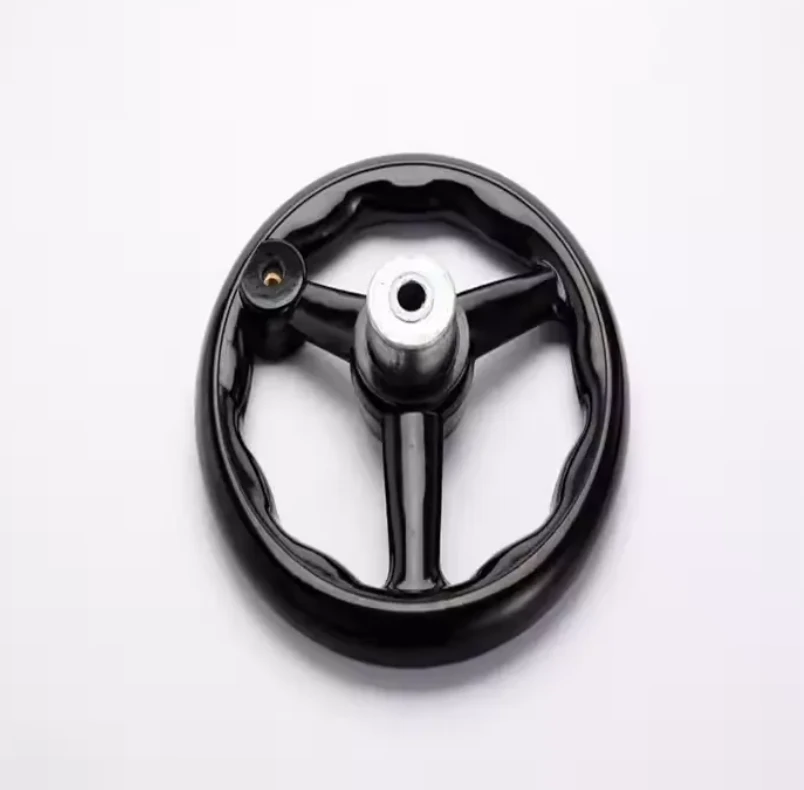
Manual handwheels are simple yet effective devices designed to convert rotational motion into linear or angular movement. They are commonly used in machinery such as lathes, milling machines, valves, and conveyor systems. The design of a manual handwheel typically consists of a circular wheel attached to a shaft or spindle, which can be turned by hand to adjust the position or operation of the equipment.
One of the key advantages of manual handwheels is their simplicity. Unlike automated control systems that rely on complex electronics and software, manual handwheels offer a straightforward and intuitive way to operate machinery. This simplicity makes them easy to understand and use, even for operators with limited technical knowledge.
Ease of Use in Different Applications
Industrial Machinery
In industrial settings, manual handwheels are often used to make fine adjustments to machine tools. For example, on a lathe, a manual handwheel can be used to control the movement of the cutting tool along the workpiece. The operator can turn the handwheel slowly and precisely to achieve the desired depth of cut or to position the tool accurately. This level of control is essential for producing high-quality parts with tight tolerances.
The ease of use of manual handwheels in industrial machinery is further enhanced by their ergonomic design. Most handwheels are designed with a comfortable grip that allows the operator to turn the wheel without excessive force or fatigue. This is particularly important in applications where the operator may need to make frequent adjustments over an extended period.

Valve Control
Manual handwheels are also widely used in valve control applications. Valves are used to regulate the flow of fluids or gases in pipelines, and manual handwheels provide a reliable and convenient way to open or close the valves. In a water treatment plant, for example, manual handwheels can be used to control the flow of water through various treatment processes.
The operation of a manual handwheel on a valve is relatively straightforward. The operator simply turns the handwheel in the appropriate direction to open or close the valve. The amount of force required to turn the handwheel depends on the size and type of the valve, as well as the pressure of the fluid or gas being controlled. However, in most cases, the force required is within the range of what a human operator can comfortably apply.
Factors Affecting Ease of Operation
Design and Construction
The design and construction of a manual handwheel can have a significant impact on its ease of operation. A well-designed handwheel will have a smooth and balanced rotation, allowing the operator to turn the wheel with minimal effort. The grip of the handwheel should also be comfortable and provide good traction to prevent slipping.
In addition, the size and shape of the handwheel can affect its usability. A larger handwheel may be easier to turn, especially for applications that require a significant amount of force. However, a larger handwheel may also take up more space and be more difficult to maneuver in tight quarters.
Maintenance and Lubrication
Proper maintenance and lubrication are essential for ensuring the smooth operation of a manual handwheel. Over time, dirt, debris, and wear can cause the handwheel to become stiff or difficult to turn. Regular cleaning and lubrication can help prevent these problems and keep the handwheel operating smoothly.
In some cases, the handwheel may need to be adjusted or repaired to maintain its ease of operation. For example, if the handwheel is loose or wobbling, it may need to be tightened or realigned. If the bearings or other components are worn, they may need to be replaced.
Our Product Range
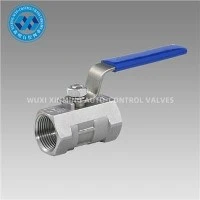
As a supplier of manual handwheels, we offer a wide range of products to meet the needs of different applications. Our product range includes Pneumatic Actuator Internal Thread Stainless Steel 316 3pcs Pneumatic Bi-directional Ball Valve, which is designed for use in pneumatic systems. This valve features a stainless steel construction and a manual handwheel for easy operation.
We also offer High Quality Circular Hand Wheel Chemical Plant Emergency Cut-off Control, which is specifically designed for use in chemical plants. This handwheel is made from high-quality materials and is designed to withstand the harsh conditions found in chemical processing environments.
In addition, our High-Torque Manual Handwheel For Pneumatic Valves is ideal for applications that require a high level of torque. This handwheel is designed to provide a greater amount of force, making it easier to operate large or high-pressure pneumatic valves.
Conclusion
In conclusion, manual handwheels are generally easy to operate. Their simplicity, ergonomic design, and direct control make them a popular choice for a wide range of applications. However, the ease of operation can be affected by factors such as design, construction, maintenance, and the specific application.
If you're in the market for manual handwheels, we invite you to explore our product range. Our team of experts is available to help you select the right handwheel for your needs and to provide you with the support and service you deserve. Whether you're looking for a simple handwheel for a small machine or a high-torque handwheel for a large industrial valve, we have the solution for you. Contact us today to start the procurement discussion and find out how our manual handwheels can improve the efficiency and performance of your operations.
References
- "Industrial Machinery Handbook," McGraw-Hill Education
- "Valve Handbook," Elsevier
- "Ergonomics in Design," Human Factors and Ergonomics Society