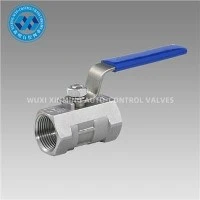
Can a flange ball valve be used for high - temperature applications?


As a reputable flange ball valve supplier, I often encounter inquiries from customers regarding the suitability of flange ball valves for high - temperature applications. This is a crucial question, as the performance and safety of industrial systems can be significantly affected by the choice of valves under high - temperature conditions.
Understanding Flange Ball Valves
Flange ball valves are a type of quarter - turn valve that uses a hollow, perforated, and pivoting ball to control flow through it. The ball has a port in the center, and when the valve is open, the port aligns with the pipeline, allowing fluid or gas to pass. When the valve is closed, the ball is rotated 90 degrees, blocking the flow. Flange connections are used to attach the valve to the pipeline, providing a secure and leak - tight joint.
High - Temperature Requirements in Industrial Applications
High - temperature applications are common in many industries, such as power generation, chemical processing, and oil and gas refining. In power plants, for example, steam at extremely high temperatures is used to drive turbines. In chemical processes, reactions may occur at elevated temperatures, and the flow of hot chemicals needs to be precisely controlled. In these scenarios, valves must be able to withstand high temperatures without losing their functionality or integrity.
Factors Affecting the Use of Flange Ball Valves in High - Temperature Applications
Material Selection
The materials used in the construction of flange ball valves play a vital role in their performance at high temperatures. The body, ball, and stem of the valve need to be made of materials that can resist thermal expansion, oxidation, and corrosion. Stainless steel is a popular choice due to its good mechanical properties and corrosion resistance at high temperatures. For even more demanding applications, alloys such as Inconel or Hastelloy may be used. These alloys have excellent high - temperature strength and resistance to oxidation and corrosion.
Sealing Materials
The sealing materials in a flange ball valve are also critical for high - temperature applications. Traditional elastomeric seals, such as rubber, are not suitable for high - temperature environments as they can lose their elasticity and start to degrade. Instead, materials like graphite or PTFE (polytetrafluoroethylene) with high - temperature additives are commonly used. Graphite has excellent thermal stability and can maintain a good seal even at very high temperatures.
Design Considerations
The design of the flange ball valve can also impact its performance in high - temperature applications. For example, a floating ball design may be more suitable than a trunnion - mounted design in some cases. Floating ball valves rely on the fluid pressure to force the ball against the seat, creating a seal. This design can adapt better to thermal expansion and contraction compared to trunnion - mounted valves, which have a more rigid structure.
Advantages of Using Flange Ball Valves in High - Temperature Applications
Flange ball valves offer several advantages when used in high - temperature applications. Firstly, they have a quick - acting quarter - turn operation, which allows for rapid shut - off or flow adjustment. This is essential in emergency situations where the flow of hot fluids or gases needs to be stopped immediately. Secondly, their full - bore design provides a straight - through flow path, minimizing pressure drop and reducing energy consumption. Additionally, flange ball valves are relatively easy to maintain, which is important in high - temperature environments where regular inspection and servicing may be required.
Limitations and Challenges
Despite their advantages, flange ball valves also face some limitations and challenges in high - temperature applications. One of the main challenges is the potential for thermal expansion to cause binding or misalignment of the valve components. This can lead to increased operating torque and reduced valve life. Another challenge is the degradation of sealing materials over time due to high - temperature exposure. Regular replacement of seals may be necessary to ensure proper valve operation.
Real - World Examples
In the power generation industry, flange ball valves are commonly used to control the flow of high - temperature steam. For instance, in a coal - fired power plant, these valves are used in the steam lines to regulate the flow of steam from the boiler to the turbine. The valves need to withstand steam temperatures of up to 540°C (1004°F) and pressures of several hundred pounds per square inch. In the chemical industry, flange ball valves are used to control the flow of hot chemicals such as sulfuric acid or nitric acid. These chemicals can be highly corrosive, and the valves need to be made of materials that can resist both corrosion and high temperatures.
Our Product Offerings
As a flange ball valve supplier, we offer a wide range of products suitable for high - temperature applications. Our valves are made of high - quality materials and are designed to meet the strictest industry standards. We also offer customization options to meet the specific requirements of our customers. For example, we can provide valves with different types of seals, depending on the temperature and chemical compatibility requirements.
If you are looking for a valve for a high - temperature application, you may also be interested in our other products, such as the 180 Degree Pneumatic Actuator 3 Way Ball Valve, 3 Way Ball Valve With Pneumatic Actuator, which can provide precise control of flow in complex piping systems. Our Intelligent - driven Double - acting Pneumatic Plastic Actuator Ball Valve For Precise Opening Control is another option for applications that require accurate and automated control. And for those who prefer electrical operation, our Electrical Ball Valve is a reliable choice.
Conclusion
In conclusion, flange ball valves can be used for high - temperature applications, provided that the appropriate materials, design, and sealing solutions are selected. They offer many advantages, such as quick operation, low pressure drop, and ease of maintenance. However, they also face some challenges, such as thermal expansion and seal degradation. By understanding these factors and working with a reputable supplier, you can ensure that your flange ball valves will perform reliably in high - temperature environments.
If you have any questions about our flange ball valves or need assistance in selecting the right valve for your high - temperature application, please do not hesitate to contact us. We are here to help you make the best choice for your industrial needs.
References
- ASME Boiler and Pressure Vessel Code
- API Standards for Valves in the Oil and Gas Industry
- Manufacturer's Technical Data Sheets for High - Temperature Valve Materials