Hey there! As a supplier of manual handwheels, I often get asked if a manual handwheel can be used for fine - tuning. Well, let's dig into this topic and find out.
First off, what exactly is fine - tuning? Fine - tuning means making very small, precise adjustments to a system or a device. It's like when you're adjusting the focus on a camera to get that perfect shot, or when you're tuning a musical instrument to get just the right note.


Now, let's talk about manual handwheels. A manual handwheel is a simple yet effective device. It's basically a wheel that you turn by hand to control the movement of something. Manual handwheels are used in all sorts of industries, from manufacturing to aerospace.
So, can a manual handwheel be used for fine - tuning? The answer is a resounding yes! Manual handwheels are actually great for fine - tuning for several reasons.
One of the main advantages of using a manual handwheel for fine - tuning is the level of control it offers. When you turn a handwheel, you're in direct contact with the mechanism. You can feel the movement and make adjustments as you go. This tactile feedback is something that you just can't get with some automated systems. For example, in a machine tool, an operator can use a manual handwheel to make tiny adjustments to the cutting tool's position. They can feel if the adjustment is too much or too little and correct it right away.
Another reason is precision. Manual handwheels can be designed with high - precision gears or leadscrews. These components allow for very accurate and repeatable movements. For instance, in a laboratory setting, a manual handwheel can be used to precisely position a microscope stage. The operator can turn the handwheel in small increments to move the stage just a few micrometers at a time, which is crucial for getting clear and accurate images.
Cost - effectiveness is also a big plus. Compared to some high - tech automated fine - tuning systems, manual handwheels are relatively inexpensive. They don't require complex electronics or software, which means lower upfront costs and less maintenance. For small businesses or hobbyists, this can be a huge advantage. You can get a reliable fine - tuning solution without breaking the bank.
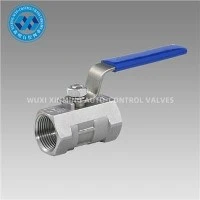
Now, let me introduce some of the manual handwheels we offer. We have the Pneumatic Actuator Internal Thread Stainless Steel 316 3pcs Pneumatic Bi - directional Ball Valve. This handwheel is made of high - quality stainless steel 316, which is corrosion - resistant. It's designed for use with pneumatic bi - directional ball valves, and it provides smooth and precise control.
Our AT/GT Actuator Nodular Cast Iron Pneumatic Handwheel is another great option. Made from nodular cast iron, it's strong and durable. This handwheel is suitable for use with AT/GT actuators and offers excellent fine - tuning capabilities.
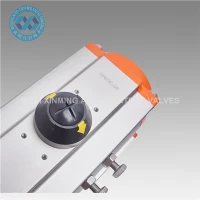
And then there's the Emergency Manual Operation Mechanism With Pneumatic Valve Actuator. This is a very important product, especially in situations where automated systems might fail. It allows for manual fine - tuning of the pneumatic valve actuator during emergencies, ensuring the safety and proper operation of the system.
However, it's not all sunshine and rainbows. There are some limitations to using manual handwheels for fine - tuning. One of the main drawbacks is the speed. Manual handwheels are relatively slow compared to automated systems. If you need to make a large number of rapid fine - adjustments, a manual handwheel might not be the best choice. For example, in a high - speed production line, an automated system can make adjustments much faster than an operator turning a handwheel.
Another limitation is the physical effort required. Turning a handwheel for long periods can be tiring, especially if the mechanism has a high resistance. This can lead to operator fatigue and potentially less accurate fine - tuning over time.
Despite these limitations, manual handwheels still have a very important place in the world of fine - tuning. They are a reliable, cost - effective, and precise solution for many applications.
If you're in the market for a manual handwheel for fine - tuning, we've got you covered. Our products are designed to meet the highest standards of quality and performance. Whether you're in the manufacturing, aerospace, laboratory, or any other industry, we have a manual handwheel that will suit your needs.
Don't hesitate to reach out if you're interested in purchasing our manual handwheels. We're always ready to have a chat about your specific requirements and help you find the best solution for your fine - tuning needs. We can offer you detailed product information, answer any questions you might have, and even provide you with a quote. So, let's start a conversation and see how we can work together!
References
- "Industrial Automation Handbook", John Wiley & Sons
- "Precision Engineering: Theory and Practice", Springer