

Can an air filter regulator be used in a cement factory? This is a question that many cement factory operators and managers often ask. As a supplier of air filter regulators, I'm here to provide a comprehensive answer to this question, exploring the feasibility, benefits, and considerations of using air filter regulators in cement factories.
The Working Environment in Cement Factories
Cement factories are known for their harsh working conditions. The production process involves various stages, such as raw material crushing, grinding, clinker burning, and cement grinding. During these processes, a large amount of dust, particulate matter, and other contaminants are generated. The air in cement factories is often filled with fine cement dust, which can cause serious problems for pneumatic equipment and systems.
In addition to dust, the air in cement factories may also contain high levels of moisture, oil, and other impurities. These contaminants can damage pneumatic components, reduce the efficiency of equipment, and even lead to system failures. Therefore, it is crucial to ensure the quality of the compressed air used in cement factories.
The Function of Air Filter Regulators
An air filter regulator is a device that combines the functions of an air filter and a pressure regulator. Its main functions are as follows:
- Filtering: The air filter part of the device can remove dust, particulate matter, oil, and moisture from the compressed air. By using high - efficiency filter elements, it can effectively capture contaminants of different sizes, ensuring that the compressed air supplied to the equipment is clean.
- Pressure Regulation: The pressure regulator part can adjust the pressure of the compressed air to a stable and appropriate level. This is important because different pneumatic equipment requires different operating pressures. A stable pressure can ensure the normal operation of the equipment and improve its performance.
Feasibility of Using Air Filter Regulators in Cement Factories
The use of air filter regulators in cement factories is highly feasible. Here are the reasons:

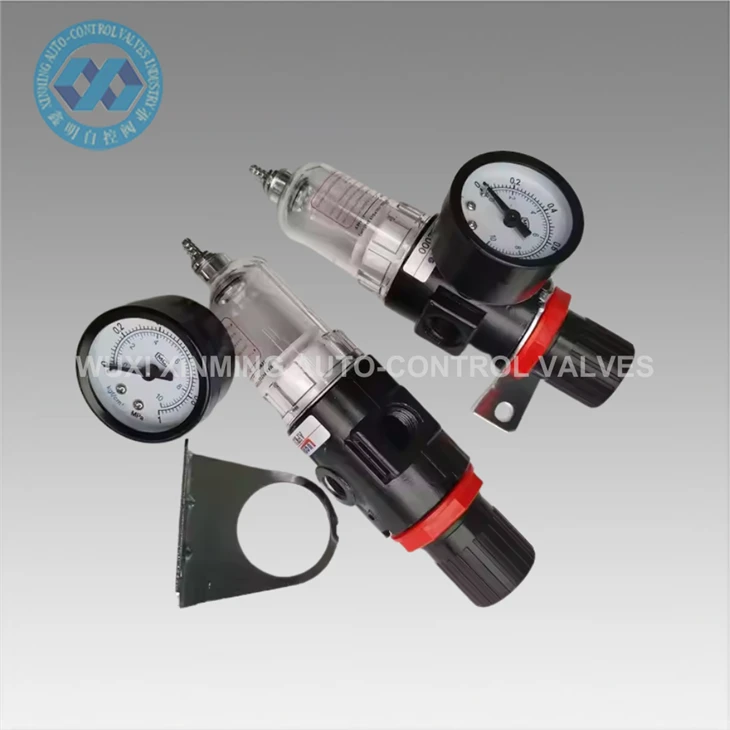
- Protecting Pneumatic Equipment: In cement factories, many pneumatic devices are used, such as pneumatic valves, cylinders, and air motors. These devices are very sensitive to the quality of compressed air. By using air filter regulators, the contaminants in the compressed air can be removed, reducing the wear and tear of pneumatic components, and extending their service life. For example, the Air Filter Regulator with Pressure Gauge can provide a high - level of filtration and accurate pressure regulation, which is suitable for protecting various pneumatic equipment in cement factories.
- Improving System Efficiency: Clean and stable compressed air can improve the efficiency of pneumatic systems. When the compressed air is free of contaminants and the pressure is stable, the pneumatic equipment can operate more smoothly, reducing energy consumption and improving production efficiency.
- Meeting Production Requirements: In some cement production processes, such as cement packaging and conveying, a certain quality of compressed air is required. Air filter regulators can ensure that the compressed air meets the production requirements, improving the quality of the final product.
Benefits of Using Air Filter Regulators in Cement Factories
- Cost Savings: Although the initial investment in air filter regulators is required, in the long run, they can bring significant cost savings. By reducing the maintenance and replacement frequency of pneumatic equipment, the overall cost of the production line can be reduced.
- Enhanced Safety: Clean compressed air can reduce the risk of equipment failures and malfunctions, which is beneficial for the safety of the production process. In addition, stable pressure regulation can prevent over - pressure situations, further enhancing the safety of the system.
- Environmental Protection: By filtering out dust and other contaminants from the compressed air, air filter regulators can also contribute to environmental protection. Less dust is released into the environment, reducing air pollution.
Considerations When Using Air Filter Regulators in Cement Factories
- Filter Element Selection: Due to the high concentration of dust in cement factories, it is necessary to select filter elements with high dust - holding capacity and high filtration efficiency. Regular replacement of filter elements is also required to ensure the continuous and effective operation of the air filter regulator.
- Pressure Requirements: Different pneumatic equipment in cement factories may have different pressure requirements. Therefore, it is important to select an air filter regulator with appropriate pressure regulation range and accuracy. The AW2000 - 02 Precision Single - Stage Filter Regulator For Air Pumps is a good choice for applications that require precise pressure control.
- Harsh Environment Adaptability: Cement factories have harsh environmental conditions, including high temperatures, high humidity, and strong vibrations. It is necessary to choose air filter regulators that can adapt to these harsh conditions. The No Worries in Harsh Conditions! Multi - scenario Adaptive Filter Pressure Reducing Valve is designed to operate reliably in such harsh environments.
Conclusion
In conclusion, air filter regulators can be effectively used in cement factories. They can protect pneumatic equipment, improve system efficiency, and bring many other benefits. However, when using air filter regulators in cement factories, it is necessary to consider factors such as filter element selection, pressure requirements, and harsh environment adaptability.
If you are a cement factory operator or manager and are interested in improving the quality of compressed air in your factory, we are here to help. As a professional air filter regulator supplier, we can provide you with high - quality products and professional technical support. Please feel free to contact us for more information and to start a procurement negotiation. We look forward to working with you to improve the efficiency and reliability of your cement production line.
References
- Compressed Air Handbook, Compressed Air and Gas Institute
- Pneumatic Systems Design and Application, various industry - specific publications.




