In the food industry, ensuring the safety and quality of products is of utmost importance. Every piece of equipment used in the production process must meet strict sanitary requirements to prevent contamination and ensure the well - being of consumers. As a Lug Butterfly Valve supplier, I understand the critical role these valves play in maintaining the hygiene standards of food production facilities. In this blog, I will discuss the sanitary requirements that a Lug Butterfly Valve should meet in the food industry.
Material Selection
The first and most fundamental requirement for a Lug Butterfly Valve in the food industry is the use of appropriate materials. The valve body, disc, and other components should be made from materials that are non - toxic, corrosion - resistant, and easy to clean.
Stainless steel is the most commonly used material for food - grade Lug Butterfly Valves. It offers excellent corrosion resistance, which is crucial as the valves may come into contact with various food products, cleaning agents, and disinfectants. Stainless steel grades such as 304 and 316 are popular choices. Grade 304 is a general - purpose stainless steel that provides good corrosion resistance in most food applications. Grade 316, on the other hand, contains molybdenum, which enhances its resistance to pitting and crevice corrosion, making it suitable for more aggressive environments, such as those involving acidic or salty food products.
In addition to the valve body and disc, the seat material is also vital. The seat should be made from a food - grade elastomer, such as EPDM (Ethylene Propylene Diene Monomer) or FKM (Fluoroelastomer). EPDM is known for its excellent resistance to water, steam, and many chemicals commonly used in food processing. FKM, on the other hand, offers superior resistance to high temperatures and aggressive chemicals, making it suitable for applications where the valve may be exposed to harsh cleaning agents or high - temperature sterilization processes.
Surface Finish
The surface finish of a Lug Butterfly Valve is another important sanitary requirement. A smooth surface finish helps to prevent the accumulation of food particles, bacteria, and other contaminants. The valve components should have a surface finish with a roughness average (Ra) of less than 0.8 micrometers. This smooth surface can be achieved through processes such as mechanical polishing or electropolishing.
Mechanical polishing involves using abrasive materials to remove surface irregularities and create a smooth finish. Electropolishing, on the other hand, is an electrochemical process that not only improves the surface finish but also enhances the corrosion resistance of the stainless steel. By removing a thin layer of the metal surface, electropolishing eliminates micro - cracks and crevices where contaminants could potentially accumulate.
Design Features
The design of the Lug Butterfly Valve also plays a significant role in meeting sanitary requirements. The valve should have a simple and clean design with minimal dead spaces and crevices. Dead spaces are areas where food particles or cleaning solutions can become trapped, providing a breeding ground for bacteria.
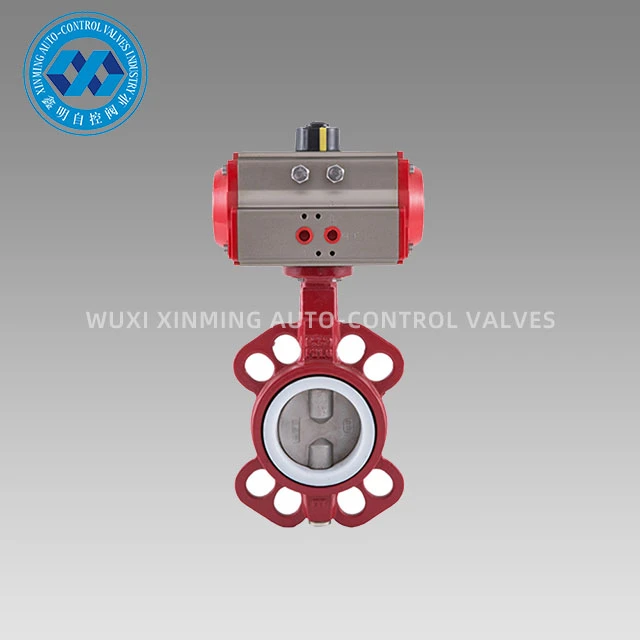

A well - designed Lug Butterfly Valve should have a full - port design, which means that the flow path through the valve is the same size as the pipeline. This minimizes pressure drop and reduces the risk of food product accumulation inside the valve. Additionally, the valve should have a tight shut - off mechanism to prevent leakage, which could lead to cross - contamination between different food products or between the process fluid and the environment.
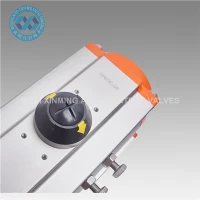
The valve's actuation system should also be designed with sanitation in mind. For example, Penumatic Actuator Ductile Iron Wafer Butterfly Valve and Pneumatic Actuator - operated Butterfly And Piston Valves are designed to be easy to clean and maintain. The actuator should be protected from the process fluid and the cleaning agents to prevent damage and ensure reliable operation.
Cleanability
Cleanability is a key requirement for any equipment used in the food industry. A Lug Butterfly Valve should be easy to disassemble and reassemble for cleaning and maintenance. The valve components should be designed in such a way that they can be easily accessed and cleaned using standard cleaning methods, such as CIP (Clean - in - Place) and SIP (Sterilize - in - Place).
CIP systems use cleaning solutions to clean the interior surfaces of the valve and the pipeline without the need for disassembly. The valve should be able to withstand the high - pressure cleaning and the chemicals used in the CIP process. SIP systems, on the other hand, use steam or other sterilizing agents to kill bacteria and other microorganisms. The valve should be able to withstand the high temperatures and pressures associated with SIP processes.
Certification and Compliance
To ensure that a Lug Butterfly Valve meets the sanitary requirements of the food industry, it should be certified by relevant regulatory bodies. Certifications such as FDA (Food and Drug Administration) approval in the United States and EC (European Community) 1935/2004 compliance in Europe are essential. These certifications indicate that the valve materials and design meet the strict standards for food contact applications.
In addition to these international certifications, the valve may also need to comply with industry - specific standards, such as 3 - A Sanitary Standards in the dairy industry. These standards provide detailed guidelines for the design, construction, and testing of equipment used in food processing to ensure the highest level of sanitation.
Leakage Prevention
Leakage is a major concern in the food industry as it can lead to product contamination and loss. A Lug Butterfly Valve should have a low leakage rate to prevent the escape of food products or cleaning agents. Pneumatic Sanitary Butterfly Valve With Low Leakage Rate is an example of a valve that is designed to minimize leakage.
The valve's seat and disc should be designed to provide a tight seal even under high - pressure conditions. The seat material should have good resilience to ensure that it can maintain a seal over a long period of time. Additionally, the valve should be properly installed and maintained to prevent leakage due to misalignment or damage.
Monitoring and Testing
Regular monitoring and testing of the Lug Butterfly Valve are necessary to ensure that it continues to meet the sanitary requirements. The valve should be inspected for signs of wear, corrosion, or damage on a regular basis. Non - destructive testing methods, such as ultrasonic testing or dye penetrant testing, can be used to detect internal defects in the valve components.
Flow testing can also be performed to ensure that the valve is operating properly and that there are no blockages or restrictions in the flow path. Pressure testing can be used to verify the integrity of the valve's seal and to detect any leakage.
In conclusion, a Lug Butterfly Valve used in the food industry must meet a variety of sanitary requirements to ensure the safety and quality of food products. From material selection and surface finish to design features, cleanability, and certification, every aspect of the valve's construction and operation is crucial. As a Lug Butterfly Valve supplier, I am committed to providing high - quality valves that meet these strict requirements. If you are in the food industry and are looking for a reliable Lug Butterfly Valve, please feel free to contact me for more information and to discuss your specific needs.
References
- "Food Safety Modernization Act (FSMA) Guidance Documents", U.S. Food and Drug Administration
- "European Union Regulation (EC) No 1935/2004 on Materials and Articles Intended to Come into Contact with Food", European Commission
- "3 - A Sanitary Standards for Dairy Equipment", 3 - A Sanitary Standards, Inc.