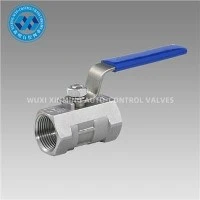
Hey there! As a supplier of ceramic ball valves, I get asked all the time, "How do I choose the right ceramic ball valve for my application?" Well, you've come to the right place. In this blog, I'll break down the key factors you need to consider when making this important decision.
1. Understanding Your Application
First things first, you gotta understand the ins and outs of your application. What kind of fluid or gas are you dealing with? Is it corrosive, abrasive, or high - temperature? For example, if you're working in a chemical plant, you'll likely be dealing with highly corrosive substances. In such a case, a ceramic ball valve is a great choice because ceramics are known for their excellent corrosion resistance.
On the other hand, if your application involves slurries or abrasive particles, the hardness of ceramic can withstand the wear and tear better than traditional metal valves. And when it comes to high - temperature applications, ceramics can handle the heat without deforming or losing their integrity.
2. Pressure and Temperature Ratings
Pressure and temperature are two crucial factors. You need to know the maximum pressure and temperature your valve will be exposed to. Ceramic ball valves come with different pressure and temperature ratings. Make sure to choose a valve that can handle the conditions of your application.
If the pressure in your system is too high for the valve's rating, it could lead to leaks or even valve failure. Similarly, if the temperature exceeds the valve's limit, the ceramic material might crack or lose its sealing properties. Always check the manufacturer's specifications for accurate pressure and temperature ratings.
3. Valve Size
The size of the valve is also important. You need to match the valve size to the pipe size in your system. A valve that's too small can restrict the flow, causing pressure drops and inefficiencies. On the other hand, a valve that's too large can be costly and might not operate properly.
Measure the inner diameter of your pipes accurately. Most ceramic ball valves are available in standard sizes, so it should be relatively easy to find a match. If you have non - standard pipe sizes, you might need to look for custom - made valves.
4. End Connections
End connections are how the valve attaches to the pipes in your system. There are different types of end connections, such as threaded, flanged, and welded.
Threaded connections are easy to install and are suitable for small - diameter pipes and low - pressure applications. Flanged connections, on the other hand, are more secure and are commonly used in high - pressure and large - diameter pipe systems. Welded connections provide a permanent and leak - proof joint but require professional welding skills.
Think about the installation requirements and the type of pipes you have when choosing the end connections for your ceramic ball valve.
5. Flow Characteristics
The flow characteristics of the valve can affect the performance of your system. You need to consider factors like flow rate, flow coefficient (Cv), and the type of flow (laminar or turbulent).


A valve with a high flow coefficient allows more fluid to pass through with less pressure drop. This is important if you need a high flow rate in your system. Also, depending on the nature of your application, you might need a valve that can handle laminar or turbulent flow effectively.
6. Actuation Method
There are different ways to actuate a ceramic ball valve. You can choose between manual, pneumatic, electric, or hydraulic actuation.
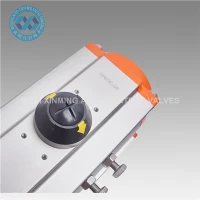
Manual valves are the simplest and most cost - effective option. They're suitable for applications where the valve doesn't need to be operated frequently. Pneumatic Actuator 3PC Thread Ball Valve are great for applications where you need quick and reliable operation. They use compressed air to open and close the valve. Electric actuators are convenient for remote operation and can be integrated with control systems. Hydraulic actuators are used in high - force applications.
Consider your operational needs and the level of automation required when choosing the actuation method.
7. Sealing Performance
The sealing performance of the valve is crucial to prevent leaks. Ceramic ball valves can provide excellent sealing due to the smooth surface of the ceramic material. However, the quality of the seals and the design of the valve also play a role.
Look for valves with high - quality seals that can withstand the pressure, temperature, and chemical properties of your application. A good seal will not only prevent leaks but also ensure the efficient operation of your system.
8. Cost and Budget
Of course, cost is always a consideration. Ceramic ball valves can be more expensive than traditional metal valves, but they often offer better performance and longer service life.
When evaluating the cost, consider the total cost of ownership, including installation, maintenance, and replacement costs. A more expensive valve that lasts longer and requires less maintenance might be a better investment in the long run.
9. Quality and Reputation
Finally, don't forget to consider the quality and reputation of the valve manufacturer. A reliable manufacturer will use high - quality materials and advanced manufacturing processes to produce their valves.
Look for manufacturers with a good track record and positive customer reviews. You can also ask for certifications and test reports to ensure the valve meets the required standards.
We offer a wide range of ceramic ball valves, including 3PC Thread Ball Valve and Metal - to - metal Ball Valve. Our valves are designed to meet the highest standards of quality and performance. If you're still not sure which valve is right for your application, don't hesitate to contact us. Our team of experts is always ready to help you make the right choice.
If you're interested in purchasing ceramic ball valves for your application, reach out to us for a detailed discussion. We can provide you with customized solutions based on your specific requirements. Let's work together to find the perfect ceramic ball valve for your needs.
References
- Valve Handbook, 4th Edition by J. S. M. Campbell
- Industrial Valves: Selection, Installation, and Maintenance by R. K. Sinha