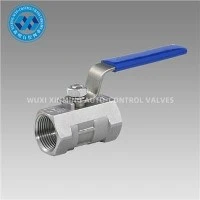
Hey there! As a supplier of welded ball valves, I often get asked about the opening and closing torque of these valves. So, I thought I'd write this blog to break it down for you in a simple way.
First off, let's talk about what torque is. In simple terms, torque is the force that causes an object to rotate. When it comes to welded ball valves, the opening and closing torque refers to the amount of force needed to turn the valve from the closed position to the open position and vice versa.
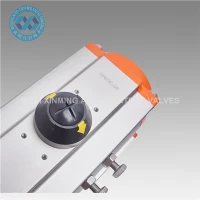
Why is this important? Well, understanding the opening and closing torque is crucial for several reasons. For one, it helps in selecting the right actuator for the valve. An actuator is a device that provides the power to open and close the valve. If the torque requirements of the valve are not properly matched with the actuator's capabilities, it can lead to problems like the valve not opening or closing fully, or even damage to the valve or the actuator itself.
Another reason is safety. If the torque needed to operate the valve is too high, it can pose a risk to the operators. They might not be able to apply enough force to open or close the valve, which could lead to operational issues or even accidents.


Now, let's look at the factors that affect the opening and closing torque of a welded ball valve.
Factors Affecting Torque
1. Valve Size
The size of the valve plays a significant role in determining the torque. Generally, larger valves require more torque to operate. This is because the surface area of the ball and the seat in a larger valve is greater, which means there is more friction between them. For example, a 2 - inch welded ball valve will typically have a lower opening and closing torque compared to a 6 - inch one.
2. Pressure
The pressure within the pipeline also affects the torque. Higher pressure means more force is pushing against the ball, making it harder to turn. So, in high - pressure applications, the opening and closing torque will be higher.
3. Friction
Friction between the ball and the seat is another major factor. The type of material used for the ball and the seat, as well as the surface finish, can impact the friction. For instance, if the seat material is a soft polymer, it might have less friction compared to a metal seat. However, the soft polymer might also wear out faster, which could change the torque requirements over time.
4. Design of the Valve
The design of the welded ball valve can have a big impact on the torque. Some valves are designed with features that reduce friction, such as special coatings or ball - seat geometries. These valves will generally have lower opening and closing torques.
Measuring the Torque
Measuring the opening and closing torque of a welded ball valve is not a simple task. It usually requires specialized equipment. One common method is to use a torque wrench. The torque wrench is attached to the valve stem, and as the valve is opened or closed, the wrench measures the amount of torque applied.
However, it's important to note that the torque can vary depending on the operating conditions. For example, the torque might be different when the valve is new compared to after it has been in service for a while. Also, the temperature and the fluid flowing through the valve can affect the torque.
Our Welded Ball Valves
At our company, we take great care in designing and manufacturing our welded ball valves to ensure optimal opening and closing torque. We use high - quality materials for the ball and the seat to reduce friction and increase durability. Our valves are also designed with precision to minimize the torque requirements, which means you can use smaller and more cost - effective actuators.
We offer a wide range of welded ball valves to suit different applications. Whether you need a valve for a low - pressure water pipeline or a high - pressure oil and gas application, we've got you covered.
If you're interested in our products, you can check out some of our other valve offerings:
- Segment Control Valve With Pneumatic Actuator
- Intelligent - driven Double - acting Pneumatic Plastic Actuator Ball Valve For Precise Opening Control.
- Pneumatic Ball Valve With Internal Thread
Contact Us for Purchase and洽谈
If you're in the market for welded ball valves or have any questions about the opening and closing torque, don't hesitate to get in touch with us. We have a team of experts who can help you select the right valve for your specific needs and provide you with all the technical details you require. Whether you're a small business or a large industrial company, we're here to serve you.
References
- Valve Handbook, by J. S. Tuzson
- Industrial Valves: Selection and Sizing, by R. W. Miller