

Hey there! I'm a supplier of PVC butterfly valves, and today I wanna chat about how the viscosity of the fluid can affect the operation of a PVC butterfly valve.
First off, let's quickly go over what viscosity is. Viscosity is basically a measure of a fluid's resistance to flow. Think of honey and water. Honey has a high viscosity because it flows very slowly, while water has a low viscosity and flows much more easily.
Now, when it comes to PVC butterfly valves, the viscosity of the fluid passing through them can have some significant impacts.
Low - Viscosity Fluids
Fluids with low viscosity, like water or certain solvents, generally play nice with PVC butterfly valves. The valve can easily open and close because the fluid doesn't put up much resistance. This means that the actuation force required to operate the valve is relatively low. For example, if you're using a manual PVC butterfly valve, it'll be a breeze to turn the handle to open or close the valve when dealing with low - viscosity fluids.
The flow characteristics are also quite predictable. The fluid flows smoothly through the valve, and the valve can accurately control the flow rate. These valves can be adjusted to allow a precise amount of the low - viscosity fluid to pass through. This makes them great for applications where accurate flow control is essential, such as in water treatment plants or in some chemical mixing processes where small amounts of low - viscosity chemicals need to be added at a specific rate.
However, even with low - viscosity fluids, there are still some things to watch out for. Sometimes, the fast - flowing low - viscosity fluid can cause erosion inside the valve. Over time, this can wear down the valve components, especially the disc and the seats. That's why it's important to choose a High - Performance PVC Butterfly Valve that's built to withstand such wear. These high - performance valves are made with better - quality PVC and have reinforced designs to resist the erosive effects of the fast - flowing fluid.

High - Viscosity Fluids
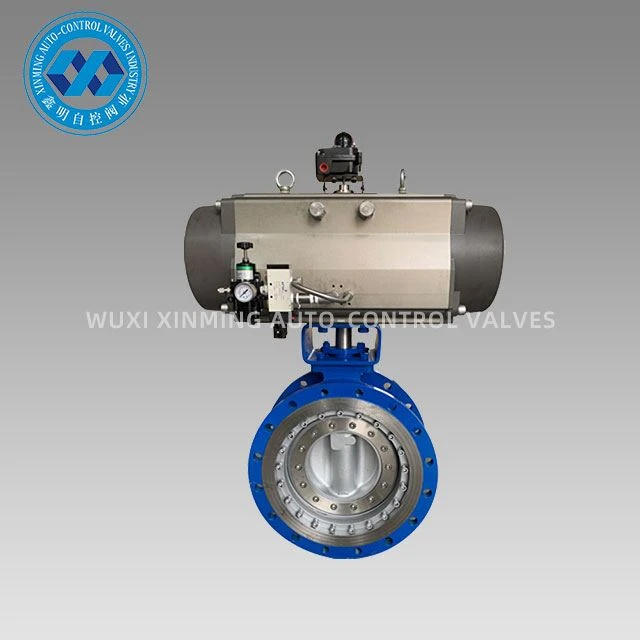
When we talk about high - viscosity fluids, such as thick oils or slurries, things get a bit more complicated. The high resistance to flow of these fluids means that the valve needs more force to operate. For example, if you're using a pneumatically actuated valve, you might need a more powerful Pneumatic Actuator Tri - eccentric Butterfly Valve to overcome the resistance of the high - viscosity fluid. Manual valves can be extremely difficult to operate with high - viscosity fluids, as the person turning the handle has to put in a lot of effort.
The flow control of high - viscosity fluids is also less precise. The fluid tends to stick to the valve components, and it doesn't flow as smoothly as low - viscosity fluids. This can lead to uneven flow, and it might be challenging to adjust the valve to a specific flow rate. There's also a higher risk of clogging. The thick fluid can build up inside the valve, especially around the disc and the seats, which can eventually prevent the valve from closing properly or even cause it to jam completely.
To deal with high - viscosity fluids, special considerations need to be taken. The valve design might need to be modified. For example, the disc might need to have a smoother surface finish to reduce the adhesion of the fluid. The valve might also need to be larger in size to accommodate the slower flow of the high - viscosity fluid and reduce the risk of clogging.
Impact on Valve Sealing
Viscosity also has a big impact on the sealing performance of the PVC butterfly valve. With low - viscosity fluids, the valve needs to have a tight seal to prevent leakage. Even a small gap can allow the fluid to seep through easily. The valve seats need to be in good condition and properly aligned to ensure a reliable seal.
On the other hand, high - viscosity fluids can sometimes help with sealing. The thick fluid can fill in small gaps and act as a natural sealant. However, this is a double - edged sword. If the fluid dries or solidifies inside the valve, it can damage the seats and cause permanent leakage problems. So, it's important to choose a valve with good sealing materials that can withstand the effects of the high - viscosity fluid over time.
Maintenance Considerations
The viscosity of the fluid affects the maintenance requirements of the PVC butterfly valve. For low - viscosity fluids, regular maintenance mainly involves checking for erosion and making sure the sealing is intact. The valve components can be cleaned relatively easily, as the fluid doesn't leave much residue.
For high - viscosity fluids, maintenance is more frequent and more involved. The valve needs to be disassembled and thoroughly cleaned to remove the thick fluid that has built up. The seats and discs need to be inspected for damage caused by the sticky fluid. Any signs of wear or damage should be addressed immediately to prevent further problems.
Other Factors to Consider Along with Viscosity
It's not just the viscosity of the fluid that matters. Other factors like temperature and pressure also interact with viscosity to affect the valve operation. For example, an increase in temperature usually reduces the viscosity of a fluid. So, if you're operating a valve in a high - temperature environment, the fluid might flow more easily than it would at room temperature. On the other hand, an increase in pressure can increase the resistance of the fluid to flow, similar to the effect of high viscosity.
Conclusion
In summary, the viscosity of the fluid passing through a PVC butterfly valve has a major impact on its operation. Low - viscosity fluids offer easier operation and more precise flow control but can cause erosion. High - viscosity fluids require more force to operate, lead to less precise flow control, and have a higher risk of clogging.
As a PVC butterfly valve supplier, I know how important it is to choose the right valve for the specific fluid viscosity and other operating conditions. We have a wide range of valves, including Pneumatic Dust Butterfly Valve, Pneumatic Actuator Tri - eccentric Butterfly Valve and High - Performance PVC Butterfly Valve, to meet different needs.
If you're in the market for PVC butterfly valves and need some advice on which valve is best for your fluid viscosity and application, don't hesitate to reach out. Let's have a chat and find the perfect valve solution for you.
References
- White, F. M. (2016). Fluid Mechanics. McGraw - Hill Education.
- Walas, S. M. (1990). Chemical Process Equipment: Selection and Design. Butterworth - Heinemann.




