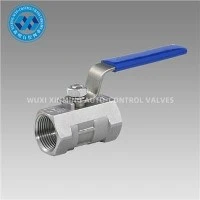
As a supplier of soft-seal ball valves, I've witnessed firsthand the importance of mastering the opening and closing mechanisms of these essential components. Soft-seal ball valves are widely used in various industries, from water treatment to chemical processing, due to their reliable sealing performance and ease of operation. In this blog post, I'll share some insights on how to control the opening and closing of a soft-seal ball valve effectively.
Understanding the Basics of Soft-Seal Ball Valves
Before delving into the control methods, it's crucial to understand the basic structure and working principle of a soft-seal ball valve. A typical soft-seal ball valve consists of a ball with a bore, a stem, a seat, and a body. The ball is the core component that controls the flow of fluid. When the ball is rotated 90 degrees, the bore aligns with the flow path, allowing fluid to pass through (open position). Conversely, when the ball is rotated back 90 degrees, the bore is perpendicular to the flow path, blocking the fluid flow (closed position).
The soft seal, usually made of materials like PTFE (polytetrafluoroethylene) or NBR (nitrile butadiene rubber), provides a tight seal between the ball and the seat, preventing leakage. This sealing mechanism makes soft-seal ball valves suitable for applications where zero leakage is required.
Manual Control
Manual control is the simplest and most straightforward method of operating a soft-seal ball valve. It involves using a handwheel or a lever to rotate the stem, which in turn rotates the ball. Manual control is commonly used in small-scale applications or where automation is not necessary.
To open a manually operated soft-seal ball valve, turn the handwheel or lever clockwise (in most cases) until the valve reaches the fully open position. You can usually feel a slight resistance when the valve is fully open, indicating that the ball is aligned with the flow path. To close the valve, turn the handwheel or lever counterclockwise until the valve is fully closed. Again, you may feel a slight increase in resistance when the valve is completely shut off.
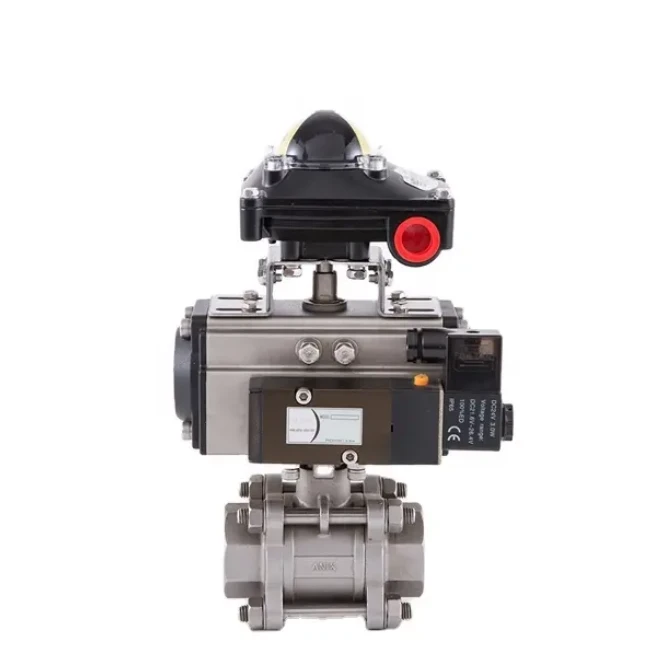
Manual control has its advantages, such as simplicity, low cost, and easy maintenance. However, it also has limitations, especially in large-scale or high-pressure applications, where manual operation can be time-consuming and physically demanding.
Electric Actuation
Electric actuation is a popular choice for controlling soft-seal ball valves in industrial settings. An electric actuator is a device that converts electrical energy into mechanical motion to open and close the valve. It offers several benefits, including precise control, remote operation, and the ability to integrate with automation systems.

There are two main types of electric actuators: multi-turn and quarter-turn. Multi-turn actuators are used for valves that require multiple rotations of the stem to open or close, while quarter-turn actuators are designed for valves that only need a 90-degree rotation, such as soft-seal ball valves.

To operate a soft-seal ball valve with an electric actuator, you typically need to connect the actuator to a power source and a control system. The control system can be a simple on/off switch or a more sophisticated programmable logic controller (PLC) that allows for precise control of the valve's opening and closing speed, position, and timing.
When using an electric actuator, it's important to ensure that the actuator is properly sized and configured for the valve. This includes selecting the appropriate torque rating, speed, and voltage to match the valve's requirements. Additionally, regular maintenance and inspection of the actuator are necessary to ensure its reliable operation.
Pneumatic Actuation
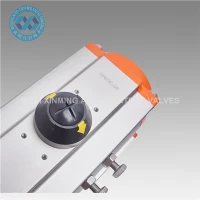
Pneumatic actuation is another common method of controlling soft-seal ball valves. A pneumatic actuator uses compressed air to generate the force needed to open and close the valve. It is known for its fast response time, high torque output, and suitability for hazardous environments.
Pneumatic actuators can be either double-acting or spring-return. Double-acting actuators use compressed air to both open and close the valve, while spring-return actuators use compressed air to open the valve and a spring to close it.
To operate a soft-seal ball valve with a pneumatic actuator, you need to connect the actuator to a compressed air supply and a control valve. The control valve regulates the flow of compressed air to the actuator, allowing you to control the valve's opening and closing.
One of the key advantages of pneumatic actuation is its ability to provide fail-safe operation. In the event of a power failure or loss of compressed air, a spring-return actuator will automatically close the valve, preventing the flow of fluid. This feature makes pneumatic actuation a popular choice in applications where safety is a top priority.
Hydraulic Actuation
Hydraulic actuation is typically used in applications where high torque and precise control are required, such as in large-scale industrial processes or offshore oil and gas operations. A hydraulic actuator uses hydraulic fluid to generate the force needed to open and close the valve.
Hydraulic actuation systems consist of a hydraulic pump, a control valve, and an actuator. The hydraulic pump pressurizes the hydraulic fluid, which is then directed to the actuator by the control valve. The actuator converts the hydraulic energy into mechanical motion to open and close the valve.
Hydraulic actuation offers several advantages, including high force output, precise control, and the ability to operate in harsh environments. However, it also requires a more complex and expensive system compared to other actuation methods, and proper maintenance is essential to ensure its reliable operation.
Choosing the Right Actuation Method
When choosing an actuation method for a soft-seal ball valve, several factors need to be considered, including the application requirements, the size and type of the valve, the operating environment, and the budget.
- Application Requirements: Consider the flow rate, pressure, temperature, and media of the fluid being controlled. For example, in applications where rapid opening and closing are required, pneumatic or electric actuation may be more suitable. In applications where high torque is needed, hydraulic actuation may be the best choice.
- Valve Size and Type: The size and type of the valve can also influence the choice of actuation method. Larger valves typically require more torque to operate, so a more powerful actuator may be needed. Additionally, some valves may have specific requirements for actuation, such as a certain type of connection or mounting.
- Operating Environment: The operating environment, including factors such as temperature, humidity, and the presence of hazardous substances, can affect the performance and durability of the actuator. For example, in a corrosive environment, a stainless steel or coated actuator may be required. In a hazardous area, an explosion-proof actuator may be necessary.
- Budget: The cost of the actuation system is also an important consideration. Manual control is the most cost-effective option, but it may not be suitable for all applications. Electric, pneumatic, and hydraulic actuation systems can vary significantly in cost, depending on the size, type, and features of the actuator.
Conclusion
Controlling the opening and closing of a soft-seal ball valve is essential for ensuring the efficient and reliable operation of various industrial processes. By understanding the different actuation methods available and choosing the right one for your application, you can optimize the performance of your valve and minimize the risk of leakage and other problems.

As a supplier of soft-seal ball valves, we offer a wide range of products and actuation options to meet your specific needs. Whether you need a manually operated valve for a small-scale application or an automated system for a large industrial plant, we have the expertise and experience to provide you with the right solution.
If you're interested in learning more about our soft-seal ball valves or have any questions about valve control, please don't hesitate to contact us. Our team of experts is ready to assist you with your procurement needs and help you find the best valve for your application.
References
- "Valve Handbook," by Clark Wright.
- "Industrial Valves: A Practical Guide," by Tom Jenkins.
- Manufacturer's manuals and technical documentation for soft-seal ball valves and actuators.
For more information about our products, you can check out the following links:
- China Flow Control Valve With Neles Ne724 Ne726 Valve Positioner
- Pneumatic Insulated Ball Valve
- Double Sleeve Polyvinyl Chloride Ball Valve
We look forward to hearing from you and discussing your valve requirements.