Hey there! As a ball valve supplier, I often get asked about how to operate a ball valve manually. In this blog, I'll break it down for you in simple terms so you can handle these valves like a pro.
Understanding the Basics of a Ball Valve
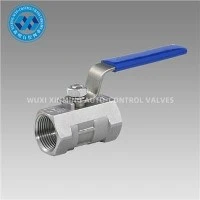
First off, let's talk about what a ball valve is. A ball valve is a type of valve that uses a spherical disc to control the flow of a fluid. The ball has a hole, or port, through the middle. When the port is in line with the flow of the fluid, the valve is open, and the fluid can pass through. When the ball is rotated 90 degrees, the port is perpendicular to the flow, and the valve is closed, blocking the fluid.
Tools You'll Need
Before you start operating a ball valve manually, you'll need a few basic tools. Most ball valves can be operated with a simple wrench or a lever. If the valve is large or if you're dealing with high-pressure applications, you might need a more specialized tool, like a gear operator. But for most common household and industrial applications, a standard wrench or lever will do the trick.
Pre - operation Checks
Before you start turning that valve, it's important to do a few checks. First, make sure the valve is the right type for your application. Check the valve's specifications to ensure it can handle the pressure, temperature, and type of fluid you're working with.
Inspect the valve for any visible damage. Look for cracks, leaks, or signs of wear on the valve body, the ball, and the seals. If you notice any damage, don't operate the valve. Instead, replace it or have it repaired by a professional.


Also, check the valve's position. Some ball valves have indicators that show whether the valve is open or closed. Make sure you know which position corresponds to the open and closed states before you start operating the valve.
Manual Operation Steps
Step 1: Approach the Valve
Walk up to the valve and take a good look at it. Identify the handle or the wrench - fitting point. If it's a lever - operated valve, the lever will be attached directly to the valve stem. If it's a wrench - operated valve, you'll need to find the nut or bolt on the valve stem where you can attach your wrench.
Step 2: Open the Valve
To open a ball valve, you'll need to turn the handle or the wrench in the appropriate direction. In most cases, turning the handle counter - clockwise will open the valve. As you turn, you'll feel the resistance decrease as the ball rotates and the port aligns with the flow of the fluid.
Keep turning until the handle is in the fully open position. You can usually tell when the valve is fully open because the handle will stop moving or because you'll feel a distinct "click" or change in resistance.
Once the valve is open, check for any leaks around the valve body or the connections. If you notice any leaks, turn the valve off immediately and investigate the cause.
Step 3: Close the Valve
To close the valve, turn the handle or the wrench in the opposite direction. In most cases, this means turning it clockwise. As you turn, you'll feel the resistance increase as the ball rotates and the port moves out of alignment with the flow of the fluid.
Keep turning until the handle is in the fully closed position. Again, you'll usually be able to tell when the valve is fully closed because the handle will stop moving or because you'll feel a distinct change in resistance.
After closing the valve, check for any residual flow. If you notice that fluid is still flowing through the valve, it might not be fully closed. Try turning the handle a little more to make sure the valve is completely shut off.
Special Considerations
If you're operating a ball valve in a high - pressure system, be extra careful. High - pressure systems can be dangerous, and any mistakes in valve operation can lead to serious accidents. Make sure you follow all safety procedures and wear appropriate protective gear.
Some ball valves are designed for specific applications, like throttling or controlling the flow rate. These valves might require more precise operation. If you're using a valve for throttling, you'll need to turn the handle or the wrench in small increments to control the flow rate accurately.
Our Ball Valve Products
As a ball valve supplier, we offer a wide range of high - quality ball valves to meet your needs. For example, we have the [High Performance Pneumatic Thin Ball Valve](/ball - valve/high - performance - pneumatic - thin - ball - valve.html). This valve is designed for high - performance applications and offers excellent flow control.
We also have the [Segment Control Valve With Pneumatic Actuator](/ball - valve/segment - control - valve - with - pneumatic - actuator.html). This valve is great for applications where precise control of the flow is required.
And if you're looking for a durable and reliable valve, check out our [Stainless Steel Flange Ball Valve Equipped With Pneumatic Actuator](/ball - valve/stainless - steel - flange - ball - valve - equipped.html). It's made of high - quality stainless steel and is suitable for a variety of industrial applications.
Conclusion
Operating a ball valve manually isn't rocket science, but it does require a little knowledge and some basic safety precautions. By following the steps outlined in this blog, you should be able to operate a ball valve safely and effectively.
If you're in the market for a new ball valve or if you have any questions about our products, don't hesitate to reach out. We're here to help you find the right valve for your application and to provide you with all the support you need. Whether you're a DIY enthusiast or a professional in the industry, we've got the ball valves you need. So, let's start a conversation and see how we can work together to meet your valve requirements.
References
- Valve Handbook, 4th Edition, by Ernest O. Doebelin
- Fluid Mechanics and Thermodynamics of Turbomachinery, 7th Edition, by S. L. Dixon and C. A. Hall