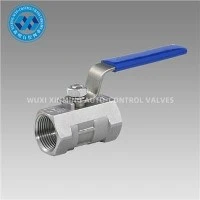
Hey there! As a supplier of thin ball valves, I often get asked about how to test the performance of these valves. It's a crucial step, whether you're a manufacturer ensuring quality control or a buyer making sure you're getting a top - notch product. In this blog, I'll walk you through the key steps and methods to test the performance of a thin ball valve.
1. Visual Inspection
First things first, a visual inspection is super important. Before you even start any fancy testing, take a good look at the valve. Check for any obvious signs of damage, like cracks, dents, or scratches on the valve body, ball, or stem. Make sure all the parts are properly assembled and there are no loose components. A damaged valve can lead to leaks and other performance issues down the line.
2. Pressure Testing
Pressure testing is one of the most fundamental tests for a thin ball valve. There are two main types of pressure tests: hydrostatic and pneumatic.
Hydrostatic Testing
In hydrostatic testing, we use water as the test medium. We seal the valve and fill it with water. Then, we gradually increase the pressure to a specified level and hold it there for a certain period, usually around 5 - 10 minutes. During this time, we carefully check for any leaks. You can use a pressure gauge to monitor the pressure accurately. If there are any drops in pressure, it could indicate a leak in the valve.
Pneumatic Testing
Pneumatic testing, on the other hand, uses air or gas. It's often used when water can't be used, for example, in applications where water might cause corrosion. Similar to hydrostatic testing, we seal the valve, introduce the gas, and increase the pressure. However, pneumatic testing requires extra caution because gas can be more dangerous than water. We need to use proper safety equipment and follow strict safety procedures.

3. Flow Testing
Flow testing helps us understand how well the valve allows fluid to pass through it. We measure the flow rate of the fluid through the valve at different pressure differentials. A good thin ball valve should have a smooth and consistent flow. If there are any restrictions or fluctuations in the flow, it could be a sign of a problem, such as a partially blocked valve or an improper valve design.
To conduct a flow test, we usually set up a test rig with a flow meter. We open the valve fully and measure the flow rate. Then, we can also test the valve at different opening positions to see how it affects the flow. This gives us a better understanding of the valve's performance under various operating conditions.
4. Torque Testing
Torque testing is about measuring the amount of force required to open and close the valve. A valve that requires too much torque to operate can be difficult to use and may also indicate internal problems, such as excessive friction or misalignment.
We use a torque wrench to measure the torque. We start by closing the valve and then gradually apply force to open it, recording the maximum torque required. Then, we do the same when closing the valve. The torque values should be within the manufacturer's specified range. If they're too high or too low, it's a red flag.
5. Sealing Performance Testing
The sealing performance of a thin ball valve is crucial to prevent leaks. We test the sealing performance in two main areas: the seat - to - ball seal and the stem seal.
For the seat - to - ball seal, we can use a pressure test similar to the ones mentioned above. We apply pressure to the valve and check for any leakage past the seat. For the stem seal, we can use a special dye penetrant test or a pressure - based test. A good seal should prevent any fluid from escaping around the stem.
6. Cycle Testing
Cycle testing involves opening and closing the valve multiple times to simulate real - world usage. We usually perform a large number of cycles, sometimes thousands or even tens of thousands. During cycle testing, we monitor the valve's performance, including the torque required for each cycle, the sealing performance, and the flow rate.
If the valve starts to show signs of wear or degradation during cycle testing, it may not be suitable for long - term use. This test helps us identify any potential issues with the valve's durability and reliability.
7. Temperature Testing
In some applications, thin ball valves need to operate at extreme temperatures. Temperature testing helps us ensure that the valve can perform well under these conditions.
We place the valve in a temperature - controlled chamber and subject it to different temperature ranges. We then conduct the other tests, such as pressure, flow, and sealing tests, at these different temperatures. This allows us to see how the valve's performance is affected by temperature changes.
Related Products
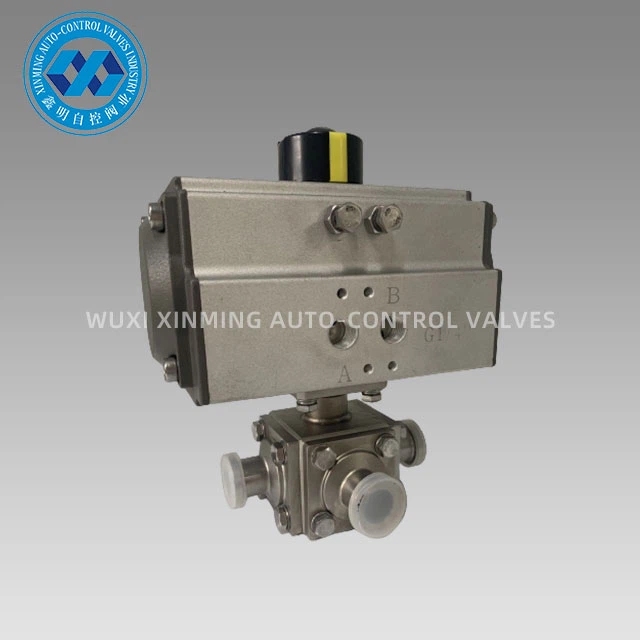
If you're interested in other types of ball valves, we also offer some great options. Check out our Pneumatic Actuator Y Type Three Way Ball Valve, Pneumatic Actuator 3PC Thread Ball Valve, and Pneumatic Actuator Tri - clamp Three Way Ball Valve. These valves are designed with high - quality materials and advanced technology to ensure excellent performance.
Conclusion
Testing the performance of a thin ball valve is a comprehensive process that involves multiple steps and methods. By conducting these tests, we can ensure that the valve meets the required standards and performs well in real - world applications. If you're in the market for high - quality thin ball valves or need more information about valve testing, don't hesitate to contact us for procurement and further discussions.
References
- "Valve Testing Handbook" by Valve Manufacturers Association
- "Fluid Mechanics and Thermodynamics of Turbomachinery" by S. L. Dixon