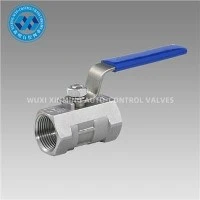
Hey there! As a supplier of welded ball valves, I often get asked about the sealing performance of these valves. It's a crucial aspect, especially when you're dealing with various industrial applications. So, let's dive right into what makes the sealing performance of a welded ball valve so important and how it actually works.
First off, what exactly is a welded ball valve? Well, it's a type of valve that uses a ball with a hole in the middle to control the flow of fluid. The ball is placed inside a valve body, and when the valve is open, the hole in the ball aligns with the flow path, allowing fluid to pass through. When the valve is closed, the ball is rotated so that the hole is perpendicular to the flow path, blocking the fluid. The "welded" part means that the valve body is welded together, which gives it some unique advantages in terms of sealing.
Now, let's talk about why sealing performance matters. In any industrial setting, leaks can be a huge problem. They can lead to loss of product, environmental contamination, and even safety hazards. A good sealing performance ensures that the valve can effectively control the flow of fluid without any unwanted leakage. This is especially important in applications where the fluid is hazardous, expensive, or needs to be kept at a specific pressure or temperature.
One of the key factors that affect the sealing performance of a welded ball valve is the material of the sealing components. The most common materials used for seals in welded ball valves are elastomers and metals. Elastomer seals, like rubber or Teflon, are known for their flexibility and ability to form a tight seal. They can conform to the surface of the ball and valve body, even if there are small irregularities. However, they may not be suitable for high-temperature or high-pressure applications, as they can degrade over time.
On the other hand, metal seals are more durable and can withstand higher temperatures and pressures. They are often used in applications where the fluid is corrosive or where the valve needs to operate in extreme conditions. Metal seals can be made from materials like stainless steel, carbon steel, or alloy steel. The choice of material depends on the specific requirements of the application, such as the type of fluid, the temperature, and the pressure.
Another important factor is the design of the valve. A well-designed welded ball valve will have a precise fit between the ball and the valve body. This ensures that the seal is tight and that there is minimal clearance between the two components. The valve should also have a proper seating mechanism to ensure that the ball is held in place and that the seal is maintained even under high pressure.
The manufacturing process also plays a significant role in the sealing performance. Welding the valve body together requires a high level of precision to ensure that there are no gaps or defects in the weld. Any imperfections in the weld can lead to leaks. Additionally, the surface finish of the ball and the valve body needs to be smooth to ensure a good seal. Rough surfaces can cause the seal to break down over time.
Now, let's take a look at some of the specific applications where the sealing performance of a welded ball valve is crucial. In the oil and gas industry, welded ball valves are used to control the flow of oil, gas, and other fluids in pipelines. A leak in a pipeline can be extremely dangerous and costly, so a high sealing performance is essential. These valves are also used in refineries, where they need to withstand high temperatures and pressures.
In the chemical industry, welded ball valves are used to handle corrosive chemicals. The sealing performance needs to be excellent to prevent any leakage of these hazardous substances. In power plants, these valves are used to control the flow of steam and water. A good sealing performance ensures that the power plant operates efficiently and safely.
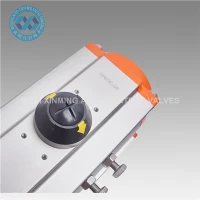
If you're in the market for a welded ball valve, you might also be interested in our Pneumatic Ball Valve. These valves are operated by compressed air, which makes them ideal for applications where quick and precise control is required. We also offer Pneumatic Control Ball Valve, which provide even more advanced control options. And for those applications where you need a valve with internal thread connections, check out our Pneumatic Ball Valve With Internal Thread.
In conclusion, the sealing performance of a welded ball valve is a critical factor that determines its effectiveness and reliability in various industrial applications. By choosing the right materials, design, and manufacturing process, you can ensure that your valve has a high sealing performance. If you're interested in learning more about our welded ball valves or have any questions about their sealing performance, feel free to reach out to us. We're here to help you find the right valve for your specific needs.
References


- Valve Handbook, by J. S. Tuzson
- Industrial Valves: Selection, Specification, and Installation, by R. A. N. Rogers