As a seasoned supplier of pneumatic actuators, I've witnessed firsthand the remarkable versatility and reliability of these devices across various industries. Pneumatic actuators are a cornerstone in many automated systems, converting compressed air energy into mechanical motion to control valves, dampers, and other industrial equipment. However, when it comes to high - altitude environments, a set of unique challenges emerges that demand careful consideration.
Pressure Variation
One of the most significant challenges of using pneumatic actuators in high - altitude environments is the substantial change in atmospheric pressure. At sea level, the standard atmospheric pressure is approximately 101.3 kPa. As altitude increases, the atmospheric pressure drops significantly. For instance, at an altitude of 5000 meters, the atmospheric pressure can be as low as around 54 kPa.
This drop in pressure affects the performance of pneumatic actuators in several ways. First, the force output of a pneumatic actuator is directly related to the pressure difference between the compressed air inside the actuator and the external atmospheric pressure. With lower atmospheric pressure at high altitudes, the pressure differential may not be sufficient to generate the required force for proper operation. This can lead to slower actuation speeds, incomplete valve closures or openings, and reduced overall system efficiency.
Second, the compressed air supply systems designed for sea - level conditions may not function optimally at high altitudes. Compressors that are sized and calibrated for standard atmospheric pressure may struggle to build up the necessary pressure in a low - pressure environment. This can result in insufficient air supply to the actuators, further exacerbating the performance issues.
Temperature Fluctuations
High - altitude environments are also characterized by extreme temperature variations. Temperatures can drop well below freezing at night and rise significantly during the day, especially in regions with large diurnal temperature ranges. These temperature fluctuations pose a serious challenge to pneumatic actuators.
Pneumatic actuators rely on the physical properties of air and the materials used in their construction. As the temperature drops, the viscosity of the lubricants used in the actuator increases. This can cause increased friction within the moving parts of the actuator, leading to wear and tear, and potentially jamming the actuator. On the other hand, high temperatures can cause the seals and gaskets in the actuator to expand, lose their elasticity, and eventually leak. This can result in air leakage, reduced pressure, and a loss of actuator performance.
Moreover, temperature changes can also affect the volume of the compressed air. According to the ideal gas law (PV = nRT), where P is pressure, V is volume, n is the number of moles of gas, R is the ideal gas constant, and T is temperature. A decrease in temperature will cause the volume of the compressed air to decrease if the pressure and the amount of gas remain constant. This can lead to a reduction in the force output of the actuator.
Low Oxygen Levels
Another challenge associated with high - altitude environments is the low oxygen levels. The concentration of oxygen decreases with increasing altitude, which can have implications for the operation and maintenance of pneumatic actuators.
In some pneumatic systems, oxygen is present in the compressed air. Low oxygen levels can affect the combustion process in systems that use air - fuel mixtures for certain types of actuators. For example, in some pneumatic - powered engines or motors, a lack of sufficient oxygen can lead to incomplete combustion, reduced power output, and increased emissions.
Furthermore, the low oxygen environment can also pose a risk to maintenance personnel. When working on pneumatic actuators at high altitudes, the reduced oxygen levels can cause fatigue, dizziness, and other health problems, making it more difficult to perform maintenance tasks safely and effectively.
Dust and Debris
High - altitude areas, especially mountainous regions, are often prone to dust storms and the presence of fine particulate matter. Dust and debris can enter the pneumatic actuator through small openings, such as air intake ports and exhaust vents.
Once inside the actuator, the dust can accumulate on the moving parts, such as pistons, cylinders, and valves. This can cause abrasion, increased friction, and eventually damage to the components. The dust can also clog the air passages, restricting the flow of compressed air and affecting the actuator's performance. In addition, fine particulate matter can contaminate the lubricants in the actuator, reducing their effectiveness and accelerating the wear of the parts.
Solutions and Mitigations
Despite these challenges, there are several strategies that can be employed to overcome the difficulties of using pneumatic actuators in high - altitude environments.
For pressure - related issues, one solution is to use high - pressure compressors that are specifically designed for high - altitude operation. These compressors can generate the necessary pressure even in a low - atmospheric - pressure environment. Additionally, pressure regulators can be used to ensure a stable and sufficient pressure supply to the actuators.
To address temperature - related problems, special lubricants that are formulated to maintain their viscosity over a wide temperature range can be used. Heat - resistant and cold - resistant seals and gaskets can also be installed to prevent leakage and ensure proper functioning of the actuator under extreme temperature conditions. Insulation can be added to the actuator to protect it from rapid temperature changes.
To deal with low oxygen levels, alternative power sources or air - supply systems can be considered. For example, using nitrogen - based pneumatic systems can eliminate the need for oxygen in the compressed air. Additionally, proper safety protocols should be established for maintenance personnel, including providing oxygen - enriched breathing apparatus if necessary.
To prevent dust and debris from entering the actuator, air filters can be installed at the air intake ports. Regular maintenance and cleaning of the actuators can also help to remove any accumulated dust and debris.
Our Products and the High - Altitude Challenge
At our company, we understand the unique challenges of using pneumatic actuators in high - altitude environments. We offer a range of high - quality pneumatic actuators that are designed to withstand these harsh conditions.
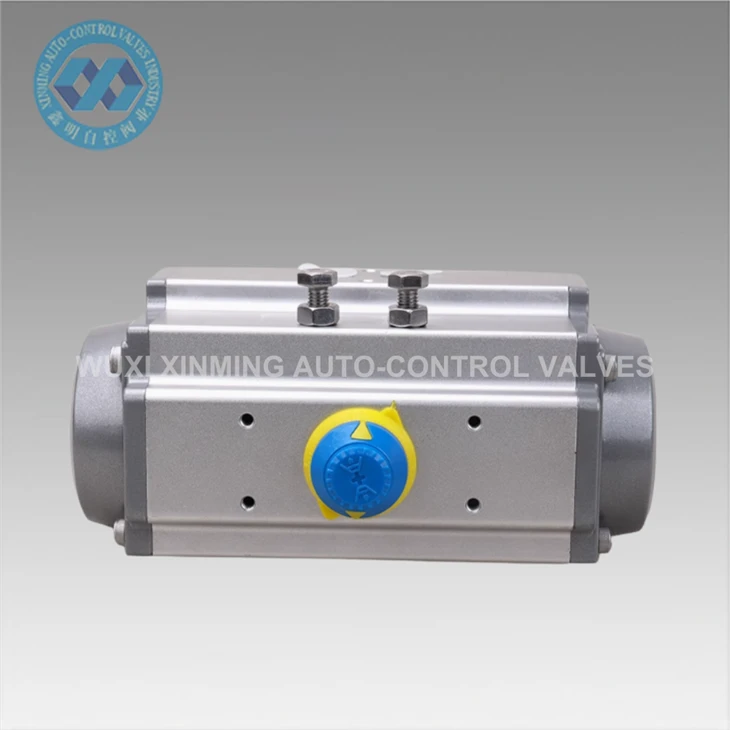
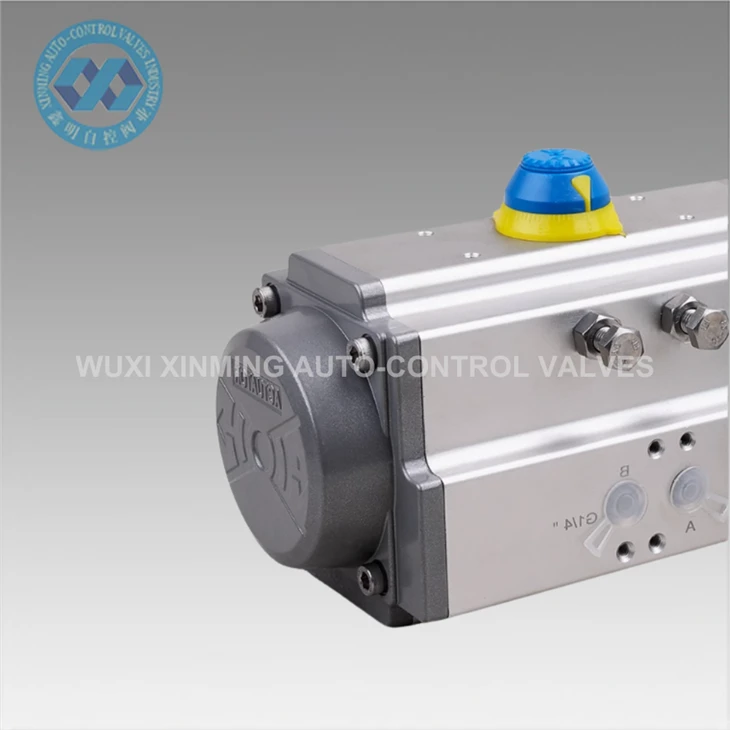
Our Chinese Factory Single Acting Pneumatic Valve Actuator (CE, ATEX, SIL3) is built with robust materials and advanced sealing technology to resist temperature fluctuations and prevent dust ingress. It is also compatible with high - pressure compressors, ensuring reliable performance even at high altitudes.
The Valve Pneumatic Actuator RT/AT/DA52 Butterfly Valve Ball Valve Pneumatic Head Cylinder Mechanism features a precision - engineered design that provides consistent force output, regardless of the atmospheric pressure changes. It is equipped with temperature - resistant lubricants and seals to ensure smooth operation in extreme temperature conditions.
Our Industrial Pneumatic Actuator Butterfly Valve Limit Switch is designed to be highly reliable in high - altitude environments. It has a dust - proof and weather - resistant housing, protecting the internal components from dust and debris.
Conclusion and Call to Action
In conclusion, using pneumatic actuators in high - altitude environments presents a set of unique challenges related to pressure, temperature, oxygen levels, and dust. However, with the right solutions and high - quality products, these challenges can be effectively overcome.
If you are looking for reliable pneumatic actuators for high - altitude applications, we invite you to explore our product range. Our team of experts is ready to assist you in selecting the most suitable actuators for your specific needs. Whether you are involved in a high - altitude industrial project, a mountain - based infrastructure development, or any other application, we can provide you with the solutions you need. Contact us today to start a procurement discussion and find out how our pneumatic actuators can meet your requirements in high - altitude environments.
References
- Engineering Thermodynamics, Moran and Shapiro.
- Pneumatic Systems Handbook, ASME.
- High - Altitude Engineering Guidelines, National Research Council.