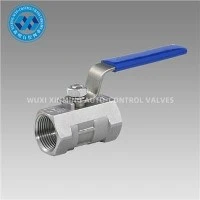
What are the installation clearances for a WCB Ball Valve?
As a trusted WCB ball valve supplier, I understand the importance of proper installation clearances for ensuring the optimal performance and longevity of these valves. In this blog post, I will delve into the key aspects of installation clearances for WCB ball valves, providing you with the knowledge you need to make informed decisions during the installation process.
Understanding WCB Ball Valves
WCB (Wrought Carbon Steel B) is a common material used in the manufacturing of ball valves. These valves are known for their durability, strength, and resistance to corrosion, making them suitable for a wide range of applications in various industries, including oil and gas, chemical, and water treatment.
A ball valve consists of a spherical disc (the ball) with a hole in the center. When the valve is open, the hole aligns with the pipeline, allowing fluid to flow through. When the valve is closed, the ball rotates 90 degrees, blocking the flow of fluid.
Importance of Installation Clearances
Proper installation clearances are crucial for several reasons:


- Preventing interference: Adequate clearances ensure that the valve can operate freely without any interference from surrounding components. This helps to prevent damage to the valve and ensures smooth operation.
- Allowing for thermal expansion: WCB ball valves can expand and contract due to changes in temperature. Sufficient clearances provide room for this thermal expansion, preventing stress on the valve and the pipeline.
- Facilitating maintenance and repair: Having enough space around the valve makes it easier to access and perform maintenance or repair work when needed.
Key Installation Clearances
There are several key installation clearances that need to be considered when installing a WCB ball valve:
- Side Clearance: This is the clearance required on either side of the valve to allow for proper installation and operation. A general rule of thumb is to provide at least 2-3 times the valve diameter as side clearance. This ensures that there is enough space to access the valve for maintenance and repair work.
- Top Clearance: The top clearance is the space required above the valve to allow for the installation of actuators, if any, and to provide room for the valve to operate. A minimum of 6-12 inches of top clearance is typically recommended.
- Bottom Clearance: Similar to the top clearance, the bottom clearance is the space required below the valve. This is important for drainage and to prevent the accumulation of debris or sediment. A minimum of 6-12 inches of bottom clearance is usually sufficient.
- Pipe Clearance: It is also important to ensure that there is enough clearance between the valve and the pipeline. This helps to prevent stress on the valve and the pipeline due to thermal expansion or vibration. A minimum of 1-2 inches of pipe clearance is recommended.
Considerations for Different Applications
The installation clearances may vary depending on the specific application and the requirements of the system. For example:
- High-pressure applications: In high-pressure systems, additional clearances may be required to accommodate the increased stress on the valve and the pipeline.
- Corrosive environments: In corrosive environments, it is important to provide sufficient clearances to allow for easy access to the valve for inspection and maintenance.
- Space-constrained installations: In some cases, space may be limited, and it may not be possible to provide the recommended clearances. In such situations, it is important to consult with a professional engineer to determine the best approach.
Recommended Installation Practices
To ensure proper installation of a WCB ball valve, the following practices are recommended:
- Follow the manufacturer's instructions: Always refer to the manufacturer's installation instructions for specific guidelines and recommendations.
- Use proper tools and equipment: Use the appropriate tools and equipment for the installation to ensure that the valve is installed correctly.
- Check for leaks: After installation, check for leaks using a pressure test or a leak detection solution.
- Maintain proper clearances: Ensure that the recommended clearances are maintained during the installation and throughout the operation of the valve.
Our Product Offerings
At our company, we offer a wide range of WCB ball valves to meet the diverse needs of our customers. Some of our popular products include:
- Intelligent-driven Double-acting Pneumatic Plastic Actuator Ball Valve For Precise Opening Control: This valve is designed for precise control of fluid flow and is suitable for a variety of applications.
- 3 Way Ball Valve With Pneumatic Actuator: This valve is ideal for applications where the flow of fluid needs to be diverted or mixed.
- Pneumatic Actuator Tri-clamp Three Way Ball Valve: This valve is designed for easy installation and maintenance and is suitable for use in sanitary applications.
Conclusion
Proper installation clearances are essential for the optimal performance and longevity of WCB ball valves. By understanding the key installation clearances and following the recommended installation practices, you can ensure that your valves operate smoothly and efficiently. If you have any questions or need further information about our WCB ball valves, please feel free to contact us. We are here to help you find the right solution for your needs.