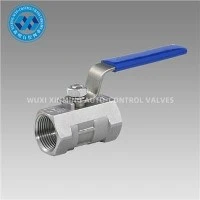
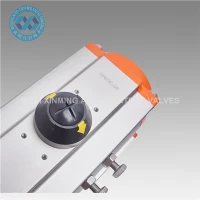
When it comes to industrial fluid control systems, pneumatic ball valves play a crucial role in regulating the flow of various media. As a trusted Pneumatic Ball Valve supplier, we understand the importance of providing our customers with in - depth knowledge about different types of pneumatic ball valves. In this blog, we will explore the differences between direct - acting and pilot - operated pneumatic ball valves.
1. Basic Working Principles
Direct - Acting Pneumatic Ball Valve
A direct - acting pneumatic ball valve operates based on a relatively straightforward principle. The valve is directly actuated by the air pressure applied to the actuator. When air pressure is introduced into the actuator chamber, it exerts force on the piston or diaphragm within the actuator. This force then causes the ball inside the valve to rotate, either opening or closing the valve.
The simplicity of its operation makes it suitable for applications where quick and direct control is required. For example, in small - scale industrial processes or laboratory setups, direct - acting pneumatic ball valves can be used to control the flow of liquids or gases with a simple on - off operation.
Pilot - Operated Pneumatic Ball Valve
A pilot - operated pneumatic ball valve, on the other hand, uses a pilot valve to control the main valve. The pilot valve is a smaller valve that regulates the air pressure applied to the actuator of the main ball valve. When the pilot valve is energized, it allows air to flow into or out of the actuator of the main valve, causing the ball to rotate.
This type of valve is often used in applications where a large amount of force is required to operate the valve. The pilot valve can provide a more precise and efficient way of controlling the main valve, especially in high - pressure or large - diameter applications.
2. Structural Differences
Direct - Acting Pneumatic Ball Valve
The structure of a direct - acting pneumatic ball valve is relatively simple. It typically consists of a ball, a stem, an actuator, and a valve body. The actuator is directly connected to the stem, which in turn is connected to the ball. When the actuator receives an air signal, it directly rotates the ball to open or close the valve.
The simplicity of the structure also means that it has fewer components, which can lead to lower maintenance requirements and a more compact design. This makes it a popular choice for applications where space is limited.
Pilot - Operated Pneumatic Ball Valve
A pilot - operated pneumatic ball valve has a more complex structure. In addition to the main valve components (ball, stem, and valve body), it also includes a pilot valve. The pilot valve is usually a small, solenoid - operated valve that controls the air flow to the actuator of the main valve.
The presence of the pilot valve adds an extra layer of control, but it also means that there are more components that can potentially fail. However, with proper maintenance, the reliability of a pilot - operated pneumatic ball valve can be very high.
3. Performance Characteristics
Flow Capacity
Direct - acting pneumatic ball valves generally have a lower flow capacity compared to pilot - operated valves. This is because the direct - acting valve is limited by the size and force of the actuator. In contrast, pilot - operated valves can be designed to handle larger flow rates, as the pilot valve can control the main valve more effectively, allowing for a larger opening of the ball.
Pressure Rating
Pilot - operated pneumatic ball valves are often better suited for high - pressure applications. The pilot valve can provide the necessary force to operate the main valve against high pressures. Direct - acting valves, on the other hand, may struggle to operate effectively at very high pressures due to the limitations of the actuator.
Response Time
Direct - acting pneumatic ball valves typically have a faster response time. Since there is no intermediate pilot valve, the valve can open or close as soon as the air pressure is applied to the actuator. Pilot - operated valves may have a slightly slower response time due to the time it takes for the pilot valve to open or close and for the air pressure to act on the main valve actuator.
4. Application Scenarios
Direct - Acting Pneumatic Ball Valve
These valves are commonly used in applications where quick and simple on - off control is required. For example, in small - scale water treatment plants, direct - acting pneumatic ball valves can be used to control the flow of water in different stages of the treatment process. They are also suitable for applications in the food and beverage industry, where the valves need to be easily cleaned and maintained.
Pilot - Operated Pneumatic Ball Valve
Pilot - operated pneumatic ball valves are ideal for large - scale industrial applications, such as chemical processing plants and oil refineries. In these applications, high - pressure and large - flow - rate control is often required. The pilot - operated valve can handle these demanding conditions more effectively than a direct - acting valve.
5. Cost Considerations
Direct - Acting Pneumatic Ball Valve
Direct - acting pneumatic ball valves are generally less expensive than pilot - operated valves. This is due to their simpler structure and fewer components. They are a cost - effective solution for applications where the requirements are not very demanding.
Pilot - Operated Pneumatic Ball Valve
Pilot - operated pneumatic ball valves are more expensive due to their more complex design and additional components. However, in applications where high - performance and high - reliability are required, the higher cost may be justified.
6. Our Product Offerings
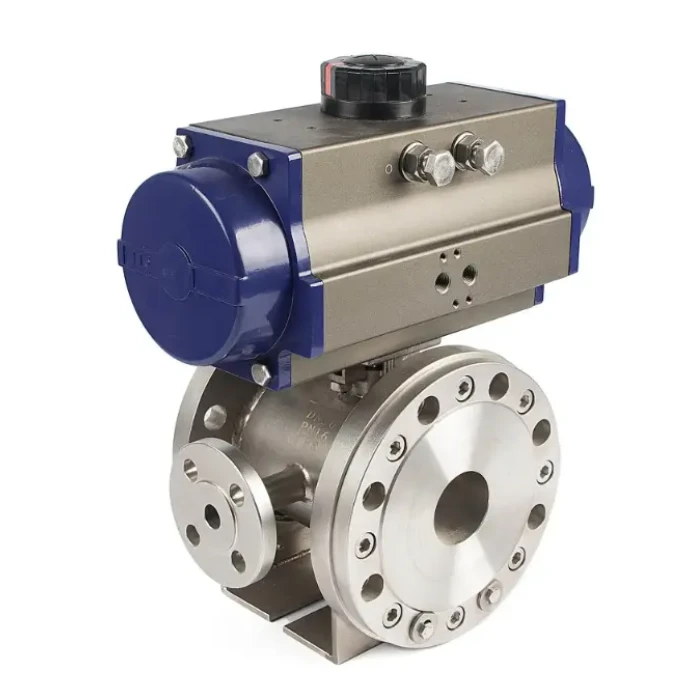
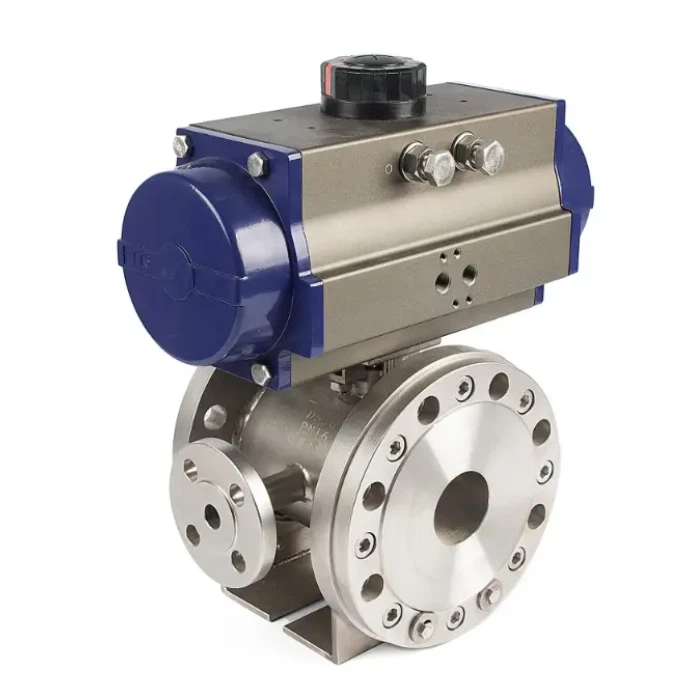
As a Pneumatic Ball Valve supplier, we offer a wide range of both direct - acting and pilot - operated pneumatic ball valves. Our Pneumatic Ball Valve products are designed to meet the diverse needs of our customers. We also provide PVC Ball Valve options for applications where corrosion resistance is important. Additionally, our Stainless Steel Flanged Floating Jacketed Ball Valve For Investment Casting is suitable for high - temperature and high - pressure applications.
7. Conclusion and Call to Action
In conclusion, understanding the differences between direct - acting and pilot - operated pneumatic ball valves is essential for choosing the right valve for your specific application. Whether you need a simple and cost - effective solution or a high - performance valve for demanding industrial applications, we have the expertise and products to meet your needs.
If you are interested in learning more about our pneumatic ball valves or are looking to make a purchase, we encourage you to reach out to us for a detailed discussion. Our team of experts is ready to assist you in selecting the most suitable valve for your project.