

The maximum load capacity of an AT Pneumatic Actuator is a critical parameter that determines its performance and suitability for various industrial applications. As a supplier of AT Pneumatic Actuators, we understand the importance of this factor and are committed to providing our customers with accurate information and high - quality products.
Understanding Pneumatic Actuators
Pneumatic actuators are devices that convert compressed air energy into mechanical motion. They are widely used in industrial automation, process control, and many other fields due to their simplicity, reliability, and cost - effectiveness. AT Pneumatic Actuators, in particular, are known for their high - quality construction and efficient operation.
Factors Affecting the Maximum Load Capacity
Several factors influence the maximum load capacity of an AT Pneumatic Actuator. These include the size of the actuator, the air pressure supplied, and the type of application.
Actuator Size
The physical size of the actuator plays a significant role in determining its load - carrying capacity. Larger actuators generally have a higher maximum load capacity because they can generate more force. This is due to the larger piston area in the actuator, which allows for a greater force to be exerted when the compressed air is applied. For example, a large - bore AT Pneumatic Actuator can handle heavier loads compared to a small - bore one.
Air Pressure
The air pressure supplied to the actuator is another crucial factor. Higher air pressure results in greater force generation, which in turn increases the maximum load capacity. However, it is important to note that the actuator must be designed to withstand the maximum air pressure that will be applied. Exceeding the rated pressure can lead to damage to the actuator and pose safety risks.
Application Type
The type of application also affects the maximum load capacity. For instance, in a linear motion application, the actuator needs to overcome the friction and inertia of the load. In a rotary motion application, factors such as the torque required to rotate the load come into play. Different applications may require different levels of force and torque, and the actuator must be selected accordingly.
Calculating the Maximum Load Capacity
Calculating the maximum load capacity of an AT Pneumatic Actuator involves a combination of theoretical calculations and practical considerations.
The force generated by a pneumatic actuator can be calculated using the formula (F = P\times A), where (F) is the force, (P) is the air pressure, and (A) is the piston area. However, this is a simplified calculation and does not take into account factors such as friction, mechanical losses, and the dynamic nature of the load.
In practical applications, it is often necessary to conduct tests to determine the actual maximum load capacity. This may involve applying a gradually increasing load to the actuator until it reaches its limit. The results of these tests can then be used to accurately determine the maximum load capacity for a specific application.
Our Product Range and Load Capacities
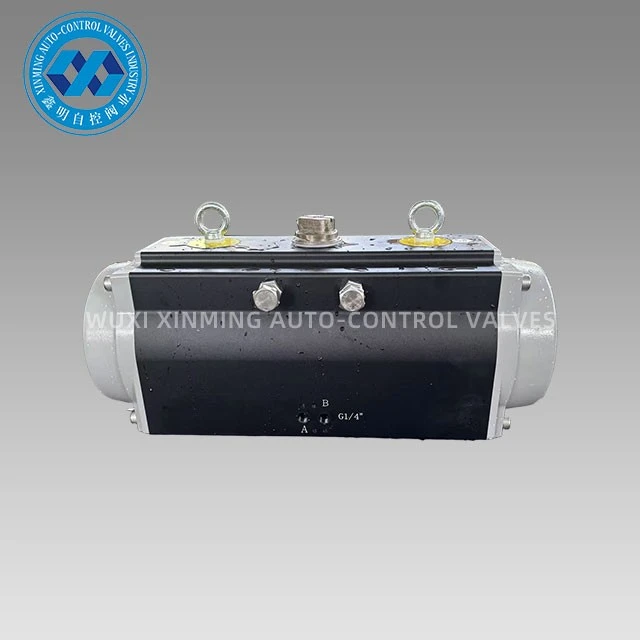
As a supplier of AT Pneumatic Actuators, we offer a wide range of products with different load capacities to meet the diverse needs of our customers. Our Anodized Pneumatic Actuator is designed for applications that require high - precision and durability. It has a moderate to high load capacity, making it suitable for a variety of industrial tasks.

Our Pneumatic Threaded Stainless Steel Ball Valve is another popular product. It is often used in fluid control applications and has a load capacity that is tailored to the requirements of these systems.
We also offer Air Driven Actuator which can provide high - speed and high - force operation. These actuators are capable of handling heavy loads in demanding industrial environments.
Importance of Selecting the Right Actuator
Selecting the right actuator with the appropriate maximum load capacity is crucial for the success of any industrial application. If the actuator is under - sized, it may not be able to handle the load, leading to premature failure and downtime. On the other hand, if the actuator is over - sized, it can result in unnecessary costs and inefficiencies.
By understanding the specific requirements of your application, such as the type of load, the required speed, and the operating environment, you can choose the most suitable AT Pneumatic Actuator. Our team of experts is available to assist you in making the right selection.
Case Studies
To illustrate the importance of maximum load capacity, let's consider a few case studies.
In a manufacturing plant, an AT Pneumatic Actuator was used to automate the movement of heavy machinery components. By carefully selecting an actuator with the appropriate maximum load capacity, the plant was able to increase productivity and reduce the risk of breakdowns.
In a chemical processing facility, a Pneumatic Threaded Stainless Steel Ball Valve was used to control the flow of corrosive fluids. The actuator's load capacity was chosen to ensure reliable operation under high - pressure conditions, preventing leaks and ensuring the safety of the process.
Conclusion
The maximum load capacity of an AT Pneumatic Actuator is a complex but essential factor to consider when selecting an actuator for your industrial application. It is influenced by various factors such as actuator size, air pressure, and application type. As a supplier, we are dedicated to providing high - quality products with accurate load - capacity specifications.
If you are in the market for AT Pneumatic Actuators and need assistance in selecting the right product for your application, we encourage you to contact us for a detailed discussion. Our team of experts can help you understand the maximum load capacity requirements of your project and recommend the most suitable actuator.




